
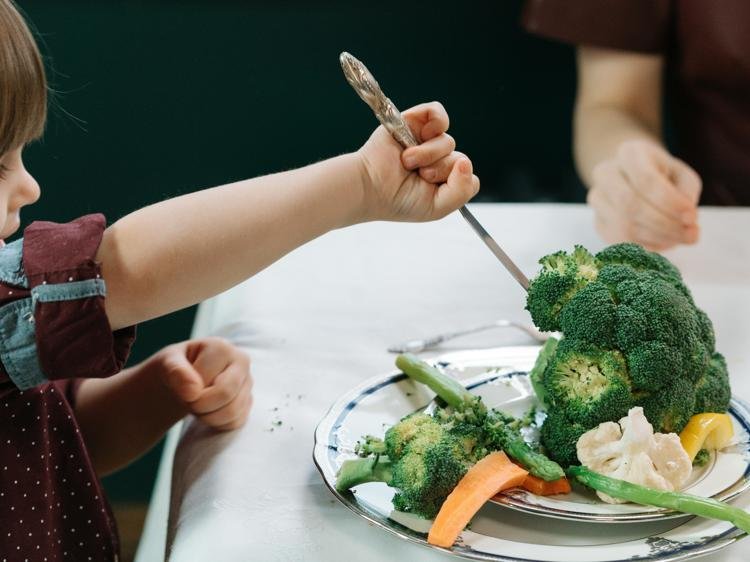
If your kid treats broccoli like a personal insult, you’re not alone — and you’re not doing anything wrong. Kids are biologically wired to prefer sweet flavors and reject bitter ones; it’s an evolutionary leftover from when bitter meant potentially poisonous. But knowing the best way to cook vegetables so kids will eat them can genuinely turn things around. It’s not about tricking them (though a little stealth never hurt); it’s about cooking vegetables in ways that actually taste good, because let’s be honest — boiled-to-gray cauliflower tastes bad to adults too.
The core insight: most vegetable hatred is really hatred of bad cooking. Roasted, caramelized, crispy, cheesy, dipped — these preparations transform vegetables. Mushy, boiled, plain — these confirm every suspicion.
What Is the Best Way to Cook Vegetables So Kids Will Eat Them?
1. Roast everything at high heat
This is the number one technique, full stop. Roasting at 425°F caramelizes natural sugars (the Maillard reaction plus caramelization), turning bitter edges sweet and crispy. Broccoli, cauliflower, carrots, Brussels sprouts, sweet potatoes — cut them, toss with olive oil and salt, spread on a pan, roast 20–30 minutes until the edges char slightly. I know grown adults who “hated” vegetables until they tried them roasted. The Harvard Nutrition Source backs the goal — more vegetables, prepared in ways people actually enjoy — over any specific method.
2. Add fat and salt without guilt
A little butter, olive oil, or cheese isn’t “ruining” the vegetable — it’s making it palatable, which is the entire point. Fat carries flavor and improves texture; salt suppresses bitterness perception. Roasted broccoli with parmesan, green beans with butter and garlic, carrots glazed with honey — these aren’t compromises, they’re just good cooking.
3. Go crispy
Kids love crunchy textures. Kale chips (tossed with oil and salt, baked until crisp), roasted chickpeas, sweet potato fries, crispy smashed potatoes — the crunch factor overrides vegetable skepticism. My method for crispy oven fries works beautifully for sweet potato and carrot fries too.
4. Serve with dips
This is almost unfair in its effectiveness. Raw bell peppers, cucumbers, snap peas, and cherry tomatoes become infinitely more appealing next to ranch, hummus, or even ketchup. The dip is the delivery vehicle; the vegetable is along for the ride. Don’t fight it — lean in.
5. Involve them in cooking
Kids who help prepare vegetables are dramatically more likely to eat them — this is one of the most consistent findings in feeding research. Let them tear lettuce, snap green beans, choose which vegetables go in the stir-fry, or shake the seasoning bag. Ownership changes the dynamic completely. My guide to baking projects with kids covers the collaboration principles that apply to vegetables too.
The Stealth Approach (Use Sparingly)
Hiding vegetables in food — spinach in smoothies, cauliflower in mac and cheese, zucchini in muffins, blended carrots in pasta sauce — works, and there’s no shame in it. But use it as a supplement, not the whole strategy. If kids never see or taste actual vegetables, they never learn to like them. The goal is a kid who eats roasted broccoli willingly, not one who only gets vegetables via deception. Blend the sauce and serve the roasted side.
What NOT to Do
- Don’t force bites or make it a battle. Pressure backfires — research consistently shows forced eating increases aversion. Offer, don’t coerce.
- Don’t boil vegetables into submission. Mushy, waterlogged, gray-green — this is how vegetable hatred is manufactured.
- Don’t give up after one rejection. It can take 10–15 exposures before a kid accepts a new food. Keep serving it neutrally, no commentary.
- Don’t make separate “kid meals.” Serve the same food, deconstructed if needed (taco components separate, sauce on the side). Short-order cooking teaches them that refusing works.
- Don’t bribe with dessert. “Eat your broccoli and you get ice cream” teaches them broccoli is the punishment and ice cream is the reward — the opposite of the intended lesson.
Vegetable Wins by Picky-Eater Level
Easy wins (most kids accept): corn, carrots (especially roasted or glazed), sweet potatoes, peas, cucumbers with dip.
Medium (roasting converts many): broccoli, cauliflower, green beans, bell peppers, zucchini.
Advanced (patience required): Brussels sprouts, asparagus, eggplant, leafy greens. Keep offering; tastes genuinely change as kids grow — the bitter sensitivity dulls with age.
The Practical Takeaway
The best way to cook vegetables so kids eat them: roast at high heat for caramelization, add fat/salt/cheese generously, go crispy when possible, always offer a dip, and get them cooking alongside you. Keep exposures pressure-free and frequent.
And remember — you’re playing a long game. The kid who spits out broccoli at six might be roasting it themselves at sixteen. Keep cooking it well, keep serving it calmly, and trust the process.
When to Actually Worry (and When Not To)
Most picky eating is completely normal and not a nutritional emergency — kids are remarkably good at getting what they need over the course of a week even if individual days look dire. That said, talk to your pediatrician if your child eats fewer than 10–15 foods total, gags or vomits on textures, is losing weight or not growing, or mealtimes cause genuine distress. Those can signal sensory issues or ARFID (avoidant/restrictive food intake disorder), which are real and treatable — not parenting failures. For the vast majority of kids, though, the prescription is patience plus good cooking. Keep offering without pressure, eat the vegetables yourself with visible enjoyment (modeling matters enormously), and remember that your job is to provide nutritious options — their job is to decide what goes in their mouth. That division of responsibility, from feeding specialist Ellyn Satter’s well-known framework, removes the power struggle that makes everything worse.
A final encouragement for tired parents: this is a marathon, not a sprint, and every small win counts. The roasted carrot they ate without complaint, the broccoli dipped in ranch, the peas they picked out of the fried rice — it all adds up. Research on food acceptance shows that repeated, pressure-free exposure works on a timeline of months, not days. Keep cooking vegetables well, keep serving them calmly alongside foods your kids already love, and trust that their palates are developing exactly as they should.


