
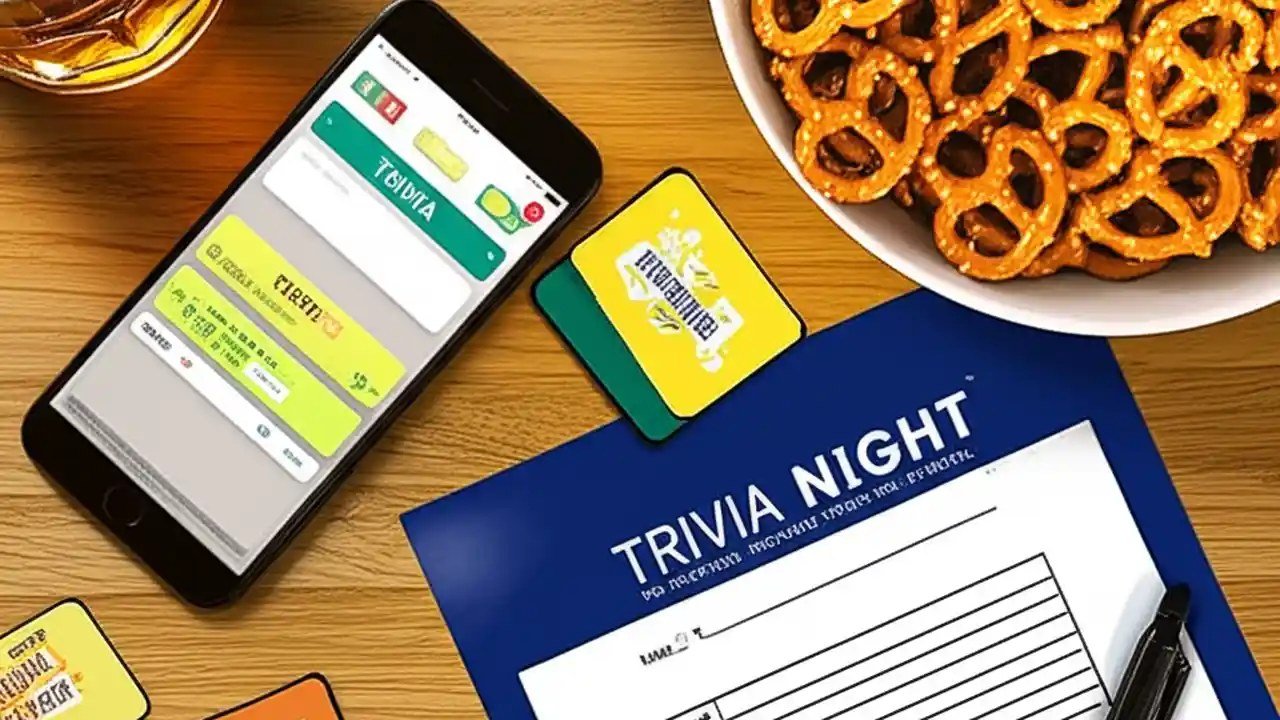
Trivia night is the perfect social activity — competitive enough to be exciting, collaborative enough to be fun, and it makes everyone feel smart when their obscure knowledge finally pays off. But if you’re hosting for beginners, the questions make or break the night. Too hard and people check out; too easy and it’s boring. Here are the best trivia night questions for beginners — plus the hosting guide that turns a good question set into a great night.
What Are the Best Trivia Night Questions for Beginners? The Golden Rules
Before the questions, the principles. Beginner-friendly trivia means:
- Mix difficulty within every round. 2 easy + 2 medium + 1 hard per round of 5. Everyone gets some right, nobody gets them all — that’s the sweet spot.
- Reward different knowledge types. Not everyone knows capitals; some know movies, some know sports, some know food. Variety keeps every team member valuable.
- Make wrong answers fun. The best trivia nights have teams proudly defending terrible guesses. Build in questions with funny possible answers.
- Keep rounds short. 5–8 questions per round, 5–6 rounds total. Attention spans are finite.
The Question Bank (Ready to Use)
Round 1: General knowledge (warm-up)
- How many colors are in a rainbow? (7)
- What is the largest planet in our solar system? (Jupiter)
- Which animal is known as the “King of the Jungle”? (Lion)
- How many days are in a leap year? (366)
- What is the hardest natural substance on Earth? (Diamond)
Round 2: Movies & TV
- Which movie features the quote “I’ll be back”? (The Terminator)
- What is the name of the cowboy in Toy Story? (Woody)
- Which TV show is set in the fictional town of Hawkins, Indiana? (Stranger Things)
- Who directed the movie Jaws? (Steven Spielberg)
- What does the “D” stand for in the movie WALL-E‘s name? (Nothing — trick question! It’s just WALL-E. Award creativity for the best wrong answer.)
Round 3: Food & drink
- Which country invented pizza? (Italy)
- What is the main ingredient in guacamole? (Avocado)
- Which nut is in the middle of a Ferrero Rocher? (Hazelnut)
- Sushi is a cuisine from which country? (Japan)
- What does “al dente” mean in cooking? (Firm to the bite)
Round 4: Geography
- What is the capital of France? (Paris)
- Which is the longest river in the world? (The Nile — or the Amazon; accept either, then enjoy the debate)
- Mount Everest is in which mountain range? (The Himalayas)
- Which U.S. state is the Grand Canyon in? (Arizona)
- What is the smallest country in the world? (Vatican City)
Round 5: Music
- Which band sang “Bohemian Rhapsody”? (Queen)
- How many members are in the band BTS? (7)
- Which artist is known as the “King of Pop”? (Michael Jackson)
- What instrument does Yo-Yo Ma play? (Cello)
- Which decade was rock ‘n’ roll born in? (1950s)
Round 6: The wildcard (fun format round)
Change the format for the final round to keep energy high:
- Picture round: printed close-ups (a celebrity’s eyes, a zoomed-in logo, a famous landmark cropped weirdly)
- Audio round: 5-second song intros — name that tune
- “Before and after”: combine two answers (e.g., “A Shakespeare play + a breakfast food” = Hamlet Omelet… you get the idea)
- Wager round: teams bet points on the final question — Jeopardy-style drama
Hosting Like a Pro
- Teams of 3–5. Fewer and it’s too hard; more and people disengage. Let people form their own teams (with a “free agents” table for strays).
- Read each question twice. Then give 30–60 seconds. Keep a visible timer — urgency is fun.
- Score between rounds, announce standings. The leaderboard narrative (“Team Quiztopher Nolan is closing in!”) is half the entertainment.
- Have tiebreakers ready. “How many jellybeans in this jar?” — closest wins. Always have two planned.
- Prizes for 1st, 2nd, and last place. The last-place prize (“Most Creative Wrong Answers”) keeps losing teams engaged to the end.
- Don’t Google-check mid-game. The host’s answer is final. Disputes get settled after (or never — the debate is fun).
Writing Your Own Questions
The best trivia nights include custom rounds about the group: “Which team member once…?” or workplace/neighborhood-specific questions. These get the biggest reactions. Sources for more: JetPunk quizzes for inspiration, Open Trivia Database (free, thousands of questions with difficulty ratings), and pub quiz question books. Vary your sources — pulling all questions from one site creates patterns sharp players will spot.
Trivia also works brilliantly as a birthday party game, a game night anchor, or a girls’ night activity — the format adapts to any crowd.
The Practical Takeaway
Beginner trivia night = mixed difficulty (2 easy + 2 medium + 1 hard per round), varied categories, teams of 3–5, 5–6 short rounds, scored between rounds, prizes for winners AND losers, one wildcard format round, and custom questions about the group for maximum laughs.
Use the question bank above for your first night. By round three, you’ll have a room full of people arguing passionately about whether the Nile or the Amazon is longer — and that’s when you know it’s working.
Virtual Trivia Nights (The Remote Playbook)
Trivia works brilliantly over video call — arguably better than in person, since screen-sharing handles picture and audio rounds elegantly. Setup: host shares screen with questions (slides or a shared doc), teams collaborate in breakout rooms or separate group chats, answers submitted via chat or a form. Tools: Kahoot and Crowdpurr handle scoring automatically; a simple slideshow works fine for casual games. Tips: keep rounds shorter (attention fades faster on video), use more visual/audio rounds (they play better on screen), and have everyone keep cameras on — the reactions are half the fun. Monthly virtual trivia keeps far-flung friend groups connected with minimal effort. My virtual watch party guide covers the tech setup that applies here too.
The best trivia hosts aren’t the ones with the hardest questions — they’re the ones who make everyone feel clever. Celebrate the weird guesses, applaud the comebacks, and remember that the team in last place is having just as much fun as the leaders (especially with that last-place prize on the line). Run it with warmth, keep it moving, and your trivia night will become the event people ask about. ‘When’s the next one?’ is the only review that matters.


