
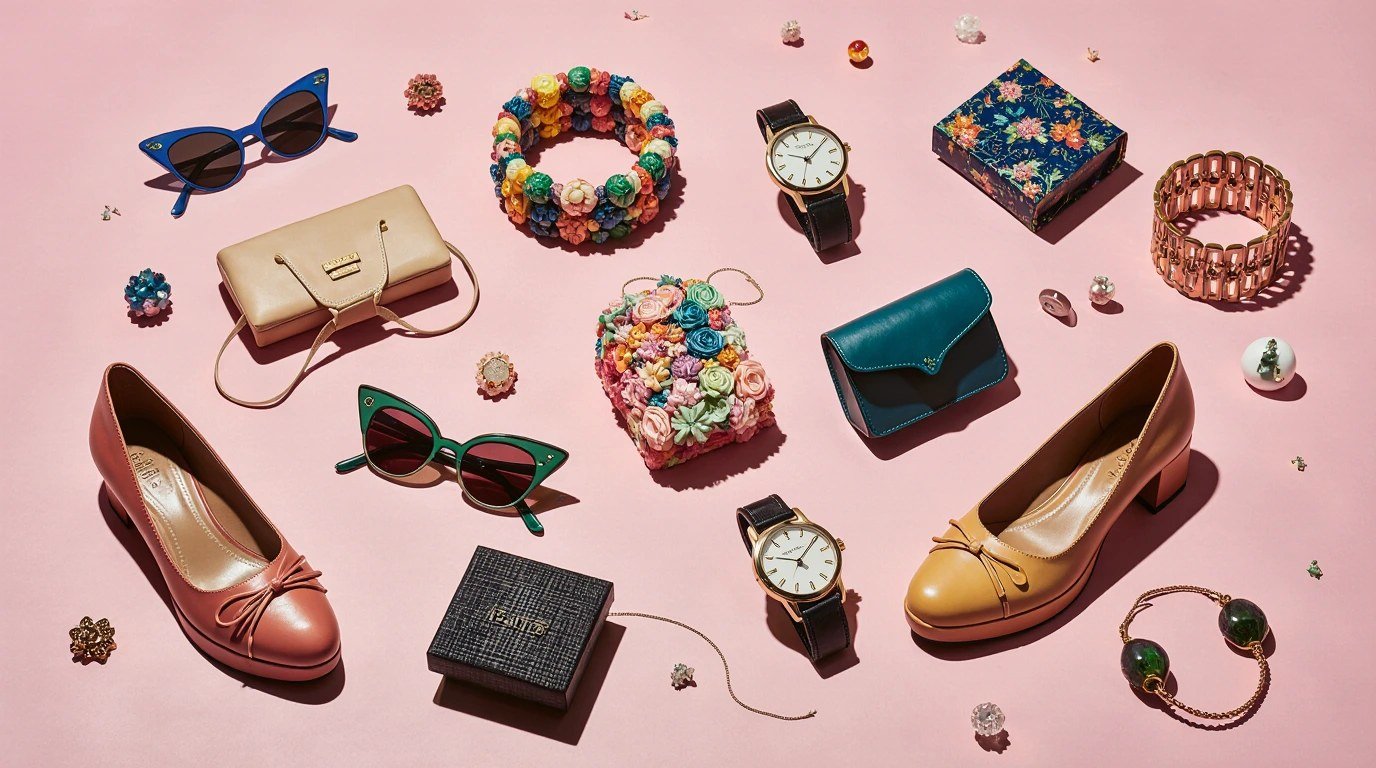
Here’s a styling truth: a $50 outfit with the right accessories looks more expensive than a $500 outfit with the wrong ones. Accessories are the finishing layer that signals intention, polish, and taste — and they’re the cheapest way to upgrade everything you own. What accessories make an outfit look more expensive? Nine specific categories, all available at every price point.
1. A Structured Handbag
The #1 expensive-looking accessory. Structure — clean lines, holds its shape, quality hardware — reads luxury regardless of price. A $60 structured tote in a neutral looks richer than a $200 slouchy logo bag. Choose: medium size, neutral color (black, tan, navy), minimal hardware, no visible logos. Keep it clean and conditioned. For choosing well, see picking the right handbag size — and on the luxury question, whether designer bags are worth it.
2. A Classic Watch
A simple watch — clean dial, leather or metal strap — is the universal polish signal. It says you value time (literally and figuratively). You don’t need luxury: our affordable watches guide has excellent options under $100 that look far more expensive.
3. Gold (or Gold-Tone) Jewelry
Gold tones read warm and rich against most skin tones; layered delicate gold necklaces or a single bold cuff instantly upgrades basics. The key: cohesive metal (don’t mix randomly), and quality-looking finish (no chipping plate). Even affordable gold-tone pieces look expensive when the design is clean. Our jewelry styling guide covers pairing.
4. Sunglasses With Presence
Good sunglasses — classic shapes (wayfarer, aviator, round), quality-feeling frames, no visible logos — add instant mystique and polish. They’re also the cheapest “luxury” signal: $20 well-chosen frames beat $200 trendy ones for the expensive look.
5. A Quality Belt
A leather belt with a clean buckle, in black or brown, worn visibly (tucked tops, defined waists) — it structures the outfit and signals attention to detail. Reversible black/brown belts double the value. Avoid: oversized logo buckles (reads cheap, not rich).
6. A Silk (or Silk-Look) Scarf
Tied on a bag handle, at the neck, or in hair — a scarf in a rich print adds the kind of detail associated with European elegance. Even affordable satin scarves achieve the effect if the print is tasteful.
7. Polished Shoes
Shoes are an accessory in the expensive-look equation. Clean, polished, intentional footwear — whether loafers, heels, or minimal sneakers — lifts everything above it. Scuffed shoes drag down the priciest outfit. Our leather shoe care guide keeps them looking rich.
8. Understated Hair Accessories
A sleek claw clip, a simple headband, quality hair ties (no stretched-out elastics) — polished hair reads expensive. The “expensive” hairstyle is really just healthy, intentional hair: neat, conditioned, deliberate.
9. A Signature Fragrance (Subtle)
Invisible but powerful — a subtle, quality fragrance completes the expensive impression. One or two sprays, never a cloud. The expensive signal is restraint; over-application reads the opposite.
The Principles Behind the List
- Cohesion over quantity: three coordinated accessories beat ten random ones. Pick a metal, a color story, a vibe — and commit.
- Condition is everything: a scuffed bag, chipped jewelry, or dirty shoes destroy the effect. Maintain accessories like they matter — because they do.
- Less logo, more design: visible logos read as trying; clean design reads as having. Quiet luxury isn’t a trend — it’s just good taste.
- Fit and grooming multiply: accessories shine on outfits that already fit well. On ill-fitting clothes, they’re lipstick on a pig. Fit first, accessories second.
What Accessories Make an Outfit Look More Expensive? Your Questions Answered
Can cheap jewelry look expensive?
Absolutely — design and condition matter more than materials. Clean-lined, well-finished pieces in cohesive metals look rich regardless of price; what reads “cheap” is chipped plating, tangled chains, turning skin green, and fussy over-design. The tricks: choose simple designs (minimalism hides price), keep pieces pristine (replace when plating wears), stick to one metal tone per outfit, and avoid obvious logos. A $15 pair of clean gold-tone hoops outperforms a $100 fussy necklace for the expensive look. And store jewelry properly — tarnish and tangles are what actually age cheap jewelry.
How many accessories is too many?
The classic rule (attributed to Coco Chanel): take one thing off before leaving. The modern version: one focal point per outfit. Statement necklace or bold earrings or stacked bracelets — not all three. When every accessory competes, none wins, and the overall effect is busy rather than rich. Expensive looks are edited looks. Count your accessories: jewelry pieces, bag, belt, scarf, sunglasses, watch — if you’re past five, edit. Restraint is the luxury signal; abundance is the fast-fashion signal.
Do I need designer accessories to look expensive?
No — and visible logos often work against the expensive look. What reads as expensive: quality materials (real leather, clean metals), good condition (maintained, not worn out), cohesive styling (everything intentionally coordinated), and subtlety (no screaming logos). A $60 structured bag in good condition looks more expensive than a $300 logo bag — because quiet quality signals confidence while loud branding signals aspiration. The “quiet luxury” trend is really just the eternal truth: true expense whispers. Spend on construction and condition, not on names.
What’s the best accessory investment for a limited budget?
A structured neutral handbag — it’s the highest-visibility accessory, used daily, and the quality difference is most apparent. Second: a classic watch (our affordable watches guide proves this needn’t cost much). Third: quality sunglasses (worn on your face, highly visible). These three cover the visible-accessory bases for most outfits. Jewelry, belts, and scarves can be affordable — their impact comes from styling, not price. One $150 bag beats five $30 bags for the expensive look, every time. Vogue’s accessories coverage consistently reinforces this: the edit matters more than the expenditure.
The Bottom Line
The accessories that make outfits look expensive: a structured neutral bag, a classic watch, cohesive gold jewelry, quality sunglasses, a leather belt, a silk scarf, polished shoes, intentional hair details, and subtle fragrance. None require luxury spending — they require taste, cohesion, and maintenance. Buy fewer, better accessories, keep them in perfect condition, and every outfit you own levels up.


