
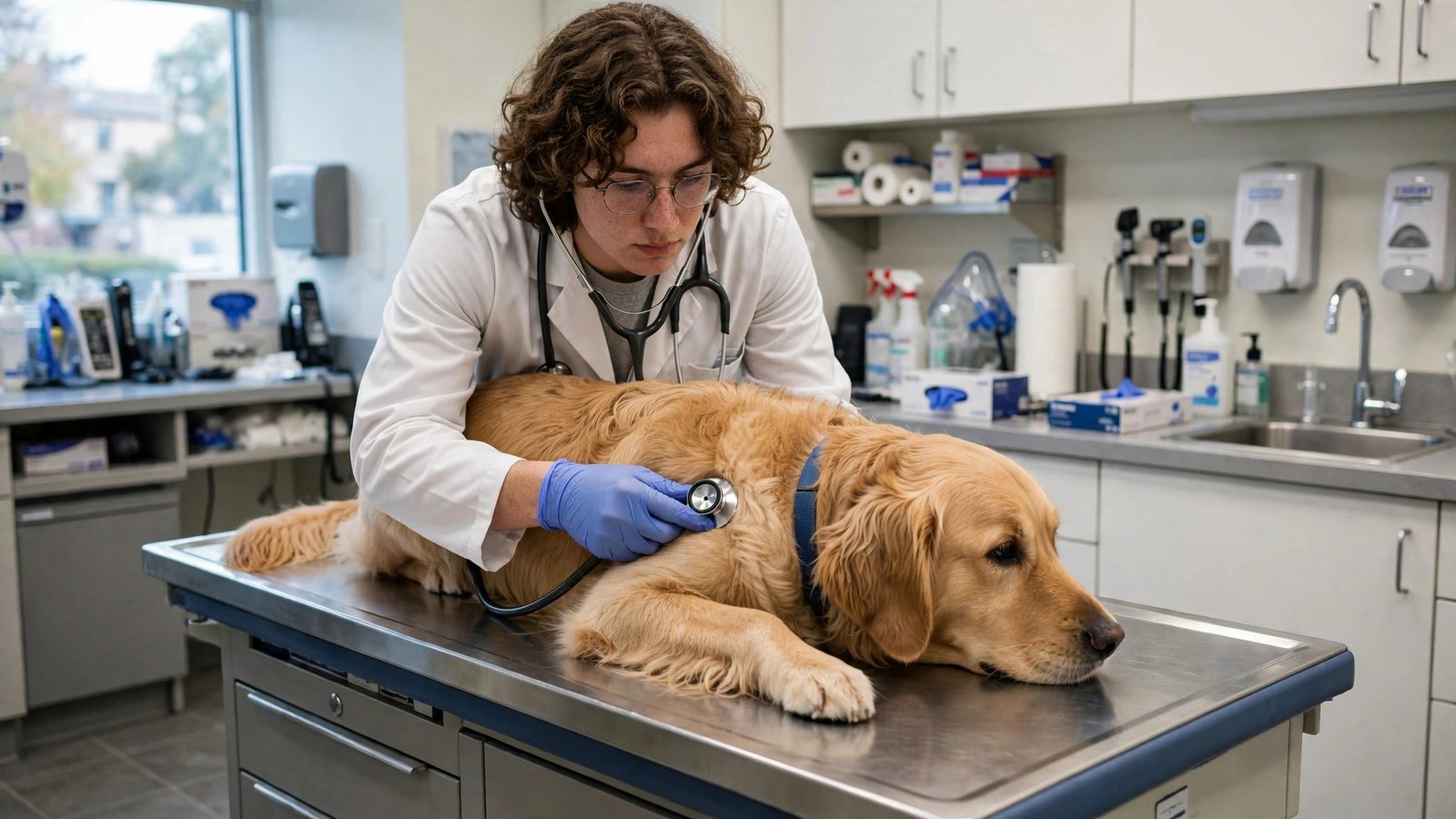
How Long is Veterinary School? Complete Answer
Here’s the direct answer: veterinary school itself is 4 years long, and it comes after a 4-year bachelor’s degree — so becoming a veterinarian takes about 8 years of college after high school. If you pursue a specialty (surgery, cardiology, dermatology), add another 1–4 years of internship and residency on top of that.
Eight years sounds like a lot, but the path is very structured, and understanding each stage helps you plan. Here’s the complete timeline from high school to licensed veterinarian, plus what each phase actually involves.
The Short Answer: 8 Years Total
The standard path breaks down like this:
- Undergraduate degree: 4 years
- Doctor of Veterinary Medicine (DVM/VMD): 4 years
- Total: ~8 years after high school
- Optional internship: +1 year
- Optional residency (specialization): +3–4 years
So a general-practice veterinarian finishes in about 8 years; a board-certified specialist finishes in 9–13 years. There are no legitimate shortcuts — every licensed vet in the US completes an accredited 4-year veterinary program.
The Full Timeline, Step by Step
Years 1–4: Undergraduate degree
You don’t need a specific “pre-vet” major, but you do need the prerequisite science courses: general biology, general and organic chemistry, physics, biochemistry, genetics, and math/statistics. Most successful applicants major in animal science, biology, or zoology simply because those programs bundle the prerequisites. During these years, you’ll also accumulate hundreds of hours of animal and veterinary experience — shadowing vets, working at clinics, volunteering at shelters — which admissions committees weigh heavily.
Years 5–8: Veterinary school (DVM/VMD)
Four years, full-time and intense. The DVM (Doctor of Veterinary Medicine) and VMD (Veterinariae Medicinae Doctoris, awarded by the University of Pennsylvania) are equivalent degrees.
Optional year 9: Internship
A one-year rotating internship in small-animal (or equine) medicine, usually required if you want to specialize. It’s a paid but grueling year — think medical residency hours at a fraction of the pay.
Optional years 9/10–12: Residency
Three to four years of specialty training (surgery, internal medicine, cardiology, oncology, dermatology, and more), ending with board certification exams. Specialists earn significantly more, but the training path is long.
What Happens During the 4 Years of Vet School?
- Years 1–2: Classroom and lab work — anatomy, physiology, pharmacology, pathology, microbiology. You’ll learn the science across multiple species (dogs, cats, horses, cattle, exotics), which is a big reason vet school is famously demanding.
- Year 3: Transition to clinical skills — physical exams, diagnostics, anesthesia, surgery labs — plus classroom work in clinical medicine.
- Year 4: Clinical rotations, much like medical school: you work in the teaching hospital’s ER, surgery, internal medicine, and specialty services, treating real patients under supervision. Many students also do externships at private practices.
After graduation, you must pass the NAVLE (North American Veterinary Licensing Examination) plus your state’s licensing requirements before you can practice.
Prerequisites and Getting In
Vet school admission is highly competitive — most schools accept fewer than 15% of applicants. Beyond the science prerequisites, you’ll need:
- A strong GPA, typically 3.5+ overall with strong science grades (average admitted GPAs at top schools run 3.6–3.8).
- Substantial veterinary experience: competitive applicants often have 500–1,000+ hours working directly with veterinarians — not just pet ownership.
- Strong letters of recommendation, ideally including at least one veterinarian.
- A compelling personal statement submitted through VMCAS, the centralized application service most US schools use.
Good news: many schools have dropped the GRE requirement in recent years, so check each school’s current policy rather than assuming you need it.
Can You Become a Vet Faster?
Not meaningfully. A few combined or early-admission programs let exceptional high school students lock in a vet school seat and shave off a year of undergrad, but the 4-year DVM itself is fixed — it’s an accredited professional curriculum with no accelerated option in the US. Anyone promising a faster route to a veterinary license is selling something you should avoid.
How Much Does Vet School Cost?
This is the sobering part: total cost of attendance (tuition plus living expenses) typically runs $200,000–$400,000 for all four years, with out-of-state tuition at the high end. Average starting salaries for new vets hover around $110,000–$120,000, which makes the debt-to-income ratio one of the toughest among professional degrees. Strategies that help: attending your in-state school (tuition can be half the out-of-state price), applying for scholarships early, and considering USDA or military programs that repay loans in exchange for service in underserved areas.
A Note for Aspiring Vets Near NYC
New York State has one excellent veterinary school: Cornell University College of Veterinary Medicine in Ithaca, consistently ranked among the best in the world and the in-state option for NY residents (which means much lower tuition than private out-of-state schools). It’s about a four-hour drive from New York City. For hands-on experience hours while applying, NYC itself is rich with opportunities — animal hospitals, the ASPCA, and rescue organizations across the five boroughs all take volunteers and vet assistants.
FAQs
Do you need a bachelor’s degree before vet school?
Technically a few schools admit students after three years of undergrad if all prerequisites are done, but in practice nearly all admitted students hold a bachelor’s degree. Plan on the full four years of undergrad.
Is vet school harder than med school?
They’re comparably intense, but vet students face a unique challenge: learning anatomy, physiology, and pharmacology across many species instead of one. Admission is also statistically more competitive — there are far fewer vet schools (30+ accredited in the US) than medical schools.
What GPA do you need for vet school?
Aim for 3.5 or higher overall, with strong grades in science prerequisites. The average admitted GPA at competitive schools is typically 3.6–3.8, but exceptional experience hours can offset a slightly lower GPA.
How long is vet school in other countries?
In the UK, veterinary degrees are typically 5–6 years entered directly after secondary school (no separate undergrad required). Similar direct-entry models exist across Europe. The 8-year US model (bachelor’s + 4-year DVM) is specific to North America.
Can you work during vet school?
During the first two classroom years, some students manage limited part-time work, but the course load makes it difficult. During clinical years (3–4), the schedule of rotations makes regular employment essentially impossible. Most students rely on loans during vet school itself.