
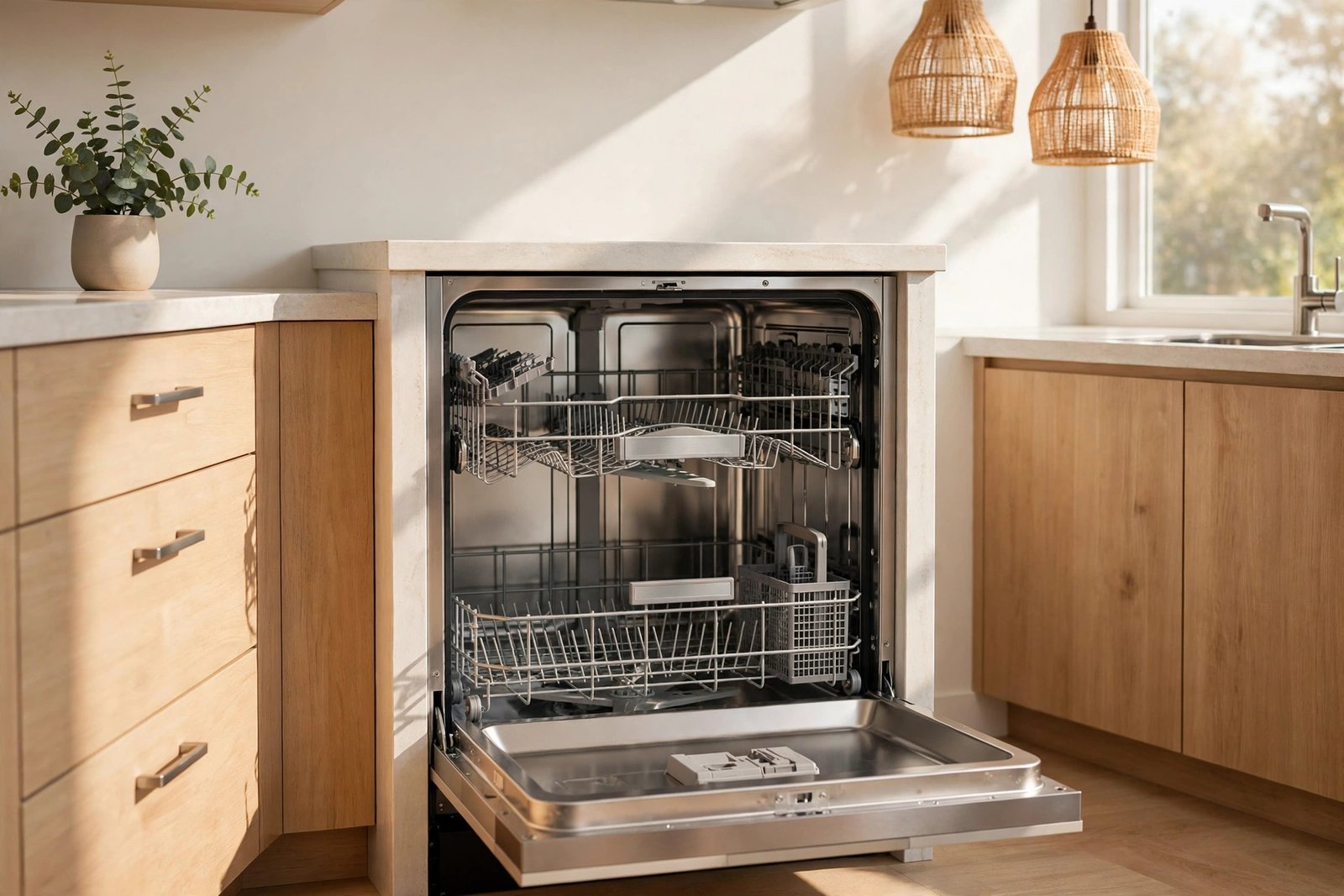
How Long does a Dishwasher Last? Complete Answer
A dishwasher lasts 9 to 13 years on average, with most models giving out around year 10 or 11. A well-maintained unit from a quality brand can push 15 years, while a budget model that never gets cleaned or serviced may fail in as little as 7 or 8. In this guide, we break down exactly what affects dishwasher lifespan, the warning signs yours is on its last legs, and how to squeeze the most years out of yours.
How Long Do Dishwashers Last on Average?
Most manufacturers and appliance repair pros land on the same range: 9 to 13 years. The U.S. Energy Information Administration and Consumer Reports surveys have consistently found that the typical dishwasher is replaced at about the 10-year mark. That number assumes normal household use — roughly one full load a day — and basic maintenance like cleaning the filter and running the occasional empty cycle.
Lifespan also varies by brand and build quality:
- Premium brands (Miele, Bosch 800 series): often last 13–15+ years. They cost more up front but tend to have better motors, stainless steel tubs, and quieter, more durable parts.
- Mid-range brands (KitchenAid, GE Profile, LG): typically 10–12 years.
- Budget brands (entry-level Whirlpool, Frigidaire, Hotpoint): usually 8–10 years.
Stainless steel interiors generally outlast plastic tubs, which can crack, stain, and absorb odors over time.
5 Factors That Affect How Long a Dishwasher Lasts
1. How often you run it
A family of five running two cycles a day will wear out a pump and seals faster than a single person running three loads a week. Heavier use does not doom your dishwasher, but it does shorten the window.
2. Water hardness
Hard water is a quiet killer. Mineral buildup clogs spray arms, coats heating elements, and forces the motor to work harder. Much of New York City actually has relatively soft water (the upstate watershed system), but many suburbs and parts of Long Island, Westchester, and New Jersey have harder water that shortens appliance life. A monthly vinegar or citric-acid cleaning cycle helps enormously.
3. Maintenance (or lack of it)
The number-one difference between a 9-year dishwasher and a 14-year one is maintenance. Clogged filters, gunked-up spray arms, and moldy gaskets strain every moving part.
4. Detergent and loading habits
Old-school powdered detergents and too much liquid soap leave residue that gunks up the works. Pre-rinsing every dish (not just scraping) also trains the sensor to use more water, which some techs say can shorten component life.
5. Build quality
Price is a rough proxy for longevity. A $350 machine has cheaper pumps, thinner racks, and less insulation than a $900 one.
7 Signs Your Dishwasher Is Dying
- Dishes come out dirty. If glasses are still cloudy and plates still greasy after a full cycle — and the spray arms are clean — the pump or heating element may be failing.
- It leaks water onto the floor. Occasional drips from a worn door gasket are fixable; recurring puddles from underneath mean trouble.
- It makes grinding or loud humming noises. A healthy dishwasher hums quietly. Loud grinding often means the motor bearings are shot.
- Rust is spreading on the racks. Once the vinyl coating cracks and racks rust through, dishes will snag and the rust can stain.
- Water does not drain. Standing water at the bottom after a cycle points to a dying drain pump.
- Cycles do not finish or the door will not latch. Control-board failures are common in older machines and often expensive to fix.
- You have called a repair tech twice this year. Repeated breakdowns are the clearest signal of all.
How to Make Your Dishwasher Last Longer
- Clean the filter monthly. Twist it out, rinse it under hot water, and scrub off food debris. A clogged filter is the single most common cause of poor cleaning.
- Run hot water at the sink first. Before starting the dishwasher, run the kitchen tap until it is hot so the first fill is hot water, not cold.
- Scrape, do not rinse. Modern detergents need a little grease to activate. Just scrape off chunks.
- Run it regularly. Letting a dishwasher sit unused for weeks dries out seals and gaskets. Run at least one cycle a week, even if it is a partial load.
- Descale every 1–2 months. Run an empty cycle on the hottest setting with two cups of white vinegar on the top rack, or use a citric-acid cleaner.
- Leave the door cracked open. Letting the tub air-dry prevents mold and mildew on the gasket.
- Do not overload it. Blocked spray arms mean dirty dishes and overworked pumps.
Repair or Replace? Use the 50% Rule
The standard appliance-industry rule: if the repair costs more than 50% of the price of a new dishwasher, replace it. A $180 pump on a 4-year-old machine? Repair it. A $400 control board on an 11-year-old machine? Buy a new one. Also factor in age: if the unit is past 10 years and needs a major repair, replacement is almost always the smarter money, especially since newer models use far less water and energy.
Frequently Asked Questions
Is it worth repairing a 10-year-old dishwasher?
Usually not for major repairs. Minor fixes like a door gasket ($20–$50 part) are fine, but anything involving the motor, pump, or control board ($200–$450) is rarely worth it on a machine that old. Put the money toward a new, more efficient model.
Which dishwasher brand lasts the longest?
Miele and high-end Bosch models consistently top longevity rankings, with many lasting 13–15 years. KitchenAid and GE Profile are solid mid-range picks at 10–12 years. Regardless of brand, maintenance matters more than the badge on the door.
Does hard water shorten a dishwasher’s lifespan?
Yes. Limescale builds up on heating elements, spray arms, and internal parts, making everything work harder and fail sooner. If you have hard water, descale monthly and consider a water softener.
How much does a new dishwasher cost in 2026?
Expect $400–$600 for a basic model, $700–$1,000 for a good mid-range machine, and $1,200–$1,800 for premium models. Professional installation in the NYC metro area typically adds $150–$350.
A dishwasher is one of the hardest-working appliances in your home, and 9 to 13 years of service is a fair return — if you treat it right. Clean the filter, descale regularly, and pay attention to the warning signs above. When repairs start costing more than half the price of a new machine, it is time to say goodbye and shop for an efficient replacement.