
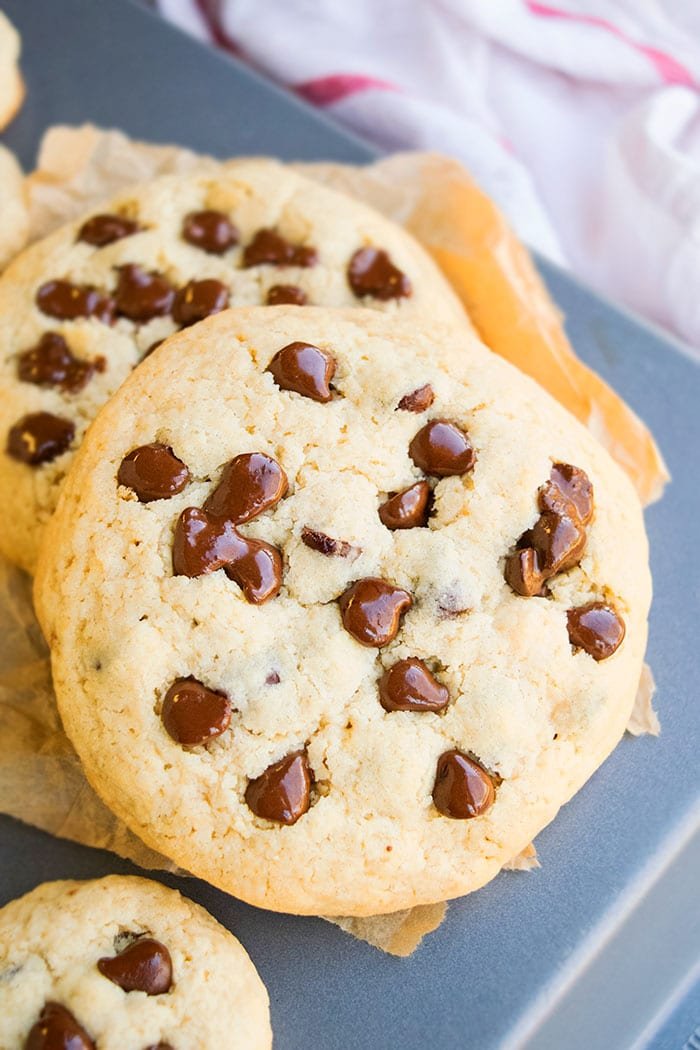
There’s a special kind of heartbreak in biting into a chocolate chip cookie that’s supposed to be soft and chewy but turns out cakey, or flat, or — worst of all — crunchy when you wanted chew. I’ve baked hundreds of batches chasing the perfect texture, and I’m going to save you the experimentation: making soft and chewy chocolate chip cookies comes down to a handful of specific ingredient and technique choices. Get them right and you’ll get cookies with crisp edges, gooey centers, and that bend-don’t-break chew that makes people close their eyes.
How to Make Soft and Chewy Chocolate Chip Cookies: The Recipe
- 2¼ cups all-purpose flour
- 1 teaspoon baking soda
- 1 teaspoon kosher salt
- 1 cup (2 sticks) unsalted butter, melted and slightly cooled
- 1 cup packed brown sugar (dark brown for more chew and molasses flavor)
- ½ cup granulated sugar
- 2 large eggs, room temperature
- 2 teaspoons vanilla extract
- 2 cups chocolate chips or chopped chocolate (chopped bar chocolate melts into superior pools)
- Flaky sea salt for sprinkling (optional but transformative)
Whisk flour, baking soda, and salt. In a large bowl, whisk melted butter with both sugars until combined, then whisk in eggs and vanilla. Fold in the dry ingredients just until no flour streaks remain, then fold in the chocolate. Chill the dough at least 1 hour (overnight is better — more on why below). Scoop 2-tablespoon balls onto parchment-lined sheets, bake at 350°F for 10–12 minutes until the edges are set but centers look slightly underdone. Cool on the pan 5 minutes. Sprinkle with flaky salt.
The Science of Chew: Why This Recipe Works
Melted butter, not creamed
Creaming butter and sugar whips in air, which makes cookies rise and turn cakey. Melted butter skips the aeration entirely, giving you dense, chewy results. It’s also faster — no softening, no mixer required. This one choice is probably 40% of the chew equation.
More brown sugar than white
Brown sugar contains molasses, which is hygroscopic — it attracts and holds moisture. More brown sugar = moister, chewier cookie that stays soft for days. The 2:1 brown-to-white ratio here is deliberate. Dark brown sugar pushes it even further.
An extra egg yolk’s worth of richness (via two whole eggs + melted butter)
Eggs provide structure and moisture. Two eggs (rather than one) keeps the cookie tender and rich without making it cakey. Room-temperature eggs emulsify better with the butter for a smoother dough.
Chilling the dough
This is the step everyone wants to skip and nobody should. Chilling does three things: it solidifies the fat (so cookies spread less and bake thicker), hydrates the flour (deeper flavor, chewier texture), and lets the sugars… well, the famous New York Times investigation found that a 24–36 hour rest produces dramatically more complex, toffee-like flavor. Even one hour helps. Overnight is transformative.
Underbake slightly
Pull them when the centers still look a touch raw. Carryover cooking finishes them on the hot pan, and that slight underdoneness is what keeps the center gooey. A cookie that looks “done” in the oven is overdone on the cooling rack.
Chocolate: Chips vs. Chopped
Chocolate chips contain stabilizers that help them hold their shape — which is exactly what you don’t want if you crave those molten pools of chocolate. Chopping a good bar (60–70% dark) gives you a mix of shards, chunks, and chocolate dust that weaves through the whole cookie. It’s a meaningful upgrade for about the same money. That said, chips are fine — use what you have.
Troubleshooting: What Went Wrong?
- Flat and greasy: Butter was too hot when mixed, or dough wasn’t chilled. Also check your baking soda isn’t dead (fizz test in vinegar).
- Cakey instead of chewy: Too much flour (scoop with a spoon into the cup, don’t pack), or you creamed the butter instead of melting it, or overbaked.
- Hard as rocks: Overbaked, full stop. Or too much white sugar relative to brown.
- Spreading into one giant cookie: Dough too warm, oven not fully preheated, or a greased pan (use parchment, not grease).
- Bland: Under-salted. Salt is what makes chocolate taste like more. Don’t skip the full teaspoon, and try the flaky salt finish.
Variations and Storage
Brown the butter before melting for nutty, toffee depth (let it cool before mixing). Add toasted walnuts or pecans for crunch contrast. Swap half the chocolate for peanut butter chips, or add espresso powder to intensify the chocolate. For storage: room temperature in an airtight container, 4–5 days — and here’s a bakery trick, tuck a slice of bread in the container; the cookies absorb its moisture and stay soft longer. Freeze baked cookies up to 3 months, or freeze dough balls and bake from frozen (add 2 minutes). My freezer guide covers the wrapping method.
These are also a perfect baking project with kids — the dough is forgiving, the steps are simple, and the taste-testing phase needs no supervision.
The Practical Takeaway
Soft, chewy chocolate chip cookies = melted butter + extra brown sugar + chilled dough + slight underbake. Four decisions, and you’ll never make a mediocre batch again.
Mix a batch tonight, chill it overnight, and bake tomorrow. Your kitchen will smell incredible, and you’ll understand exactly why the resting step has a cult following.
High-Altitude Adjustments
Baking at 3,500+ feet? The lower air pressure makes cookies spread more and dry out faster. Fix it with three tweaks: add 2 extra tablespoons of flour for structure, reduce the sugar by 2 tablespoons (sugar weakens structure and you need all the help you can get), and increase the oven temperature by 15–25°F while shaving a minute or two off the bake time — you want them set before they over-spread. Chill the dough even longer, since cold dough spreads less. These are the standard high-altitude adjustments recommended by sources like King Arthur Baking’s high-altitude guide, and they apply to most cookie recipes, not just this one. If your first high-altitude batch still spreads too much, add flour a tablespoon at a time until they hold their shape.


