
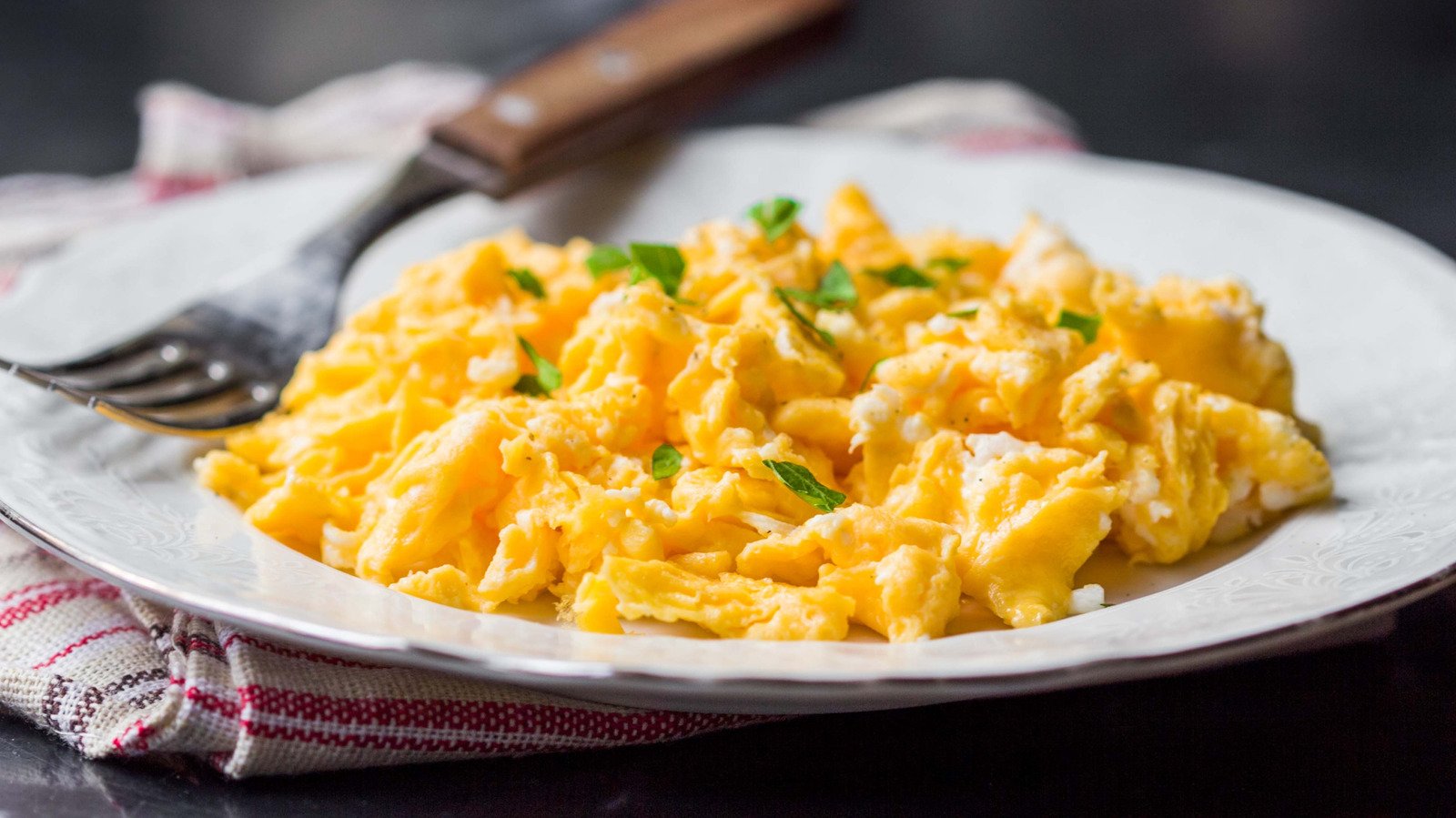
Diner scrambled eggs are a specific thing — soft, fluffy curds, rich and buttery, somehow both delicate and satisfying. And they’re nothing like the sad, rubbery, overcooked scramble most of us make at home. Learning how to make fluffy scrambled eggs like a diner is about unlearning a few bad habits (too-hot pan, walking away, cooking until dry) and adopting the low-and-slow technique that produces those pillowy curds.
The core principle: eggs are mostly protein and water, and high heat squeezes the water out of the protein — that’s what makes them rubbery. Gentle heat, constant motion, and pulling them off before they look done are the entire secret. Everything below is just implementation.
How to Make Fluffy Scrambled Eggs Like a Diner: The Method
Ingredients (per 2-egg serving)
- 3 large eggs (diners use 3 per order — generosity is part of it)
- 1 tablespoon butter, plus more for the pan
- 1–2 tablespoons milk, cream, or half-and-half (optional — see the debate below)
- Salt and freshly cracked pepper
- Optional: shredded cheddar, chives, hot sauce
The technique, step by step
1. Beat the eggs thoroughly. Whisk until completely uniform — no streaks of white. This takes longer than you think, about 30 seconds of real whisking. Uniform eggs = uniform curds. Add the dairy now if using, and whisk it in.
2. Low heat, butter foaming. Melt butter in a nonstick or well-seasoned cast iron skillet over medium-low heat. You want the butter melted and just starting to foam — not browned. If the butter sizzles aggressively when the eggs hit it, the pan is too hot. Start over; it’s 30 seconds.
3. Pour in the eggs and wait 20 seconds. Let them sit undisturbed just until the edges begin to set. This initial set is what creates distinct curds rather than a homogeneous mush.
4. Push, don’t stir. With a silicone spatula, gently push the eggs from the edges toward the center, tilting the pan so uncooked egg flows into the cleared space. Slow, deliberate folds — not frantic stirring. This is the diner technique: large, soft curds formed by folding, not tiny granules from scrambling.
5. Pull them early. This is the step that separates diner eggs from home eggs. Take them off the heat when they’re about 80% done — still slightly wet and glossy. Carryover cooking finishes them on the plate. Eggs that look perfect in the pan are overcooked by the time they reach the table. Wet-looking is correct. Trust the process.
6. Season at the end. Salt the finished eggs, not the raw mixture — salting early can break down the proteins and make eggs watery (a debated point, but late-salting is the safe play). Fresh pepper, chives, or cheese go on now.
Total time: 3–4 minutes. That’s it. The entire difference between rubbery and sublime is heat management and timing.
The Great Debates (Settled)
Milk or no milk? Diners typically add milk or cream — it makes the eggs slightly richer and more tender, and stretches 2 eggs into a fuller plate. Purists say it dilutes flavor. My take: a tablespoon of cream per 3 eggs is the sweet spot — richness without watering down. Water (a teaspoon per egg) actually makes fluffier eggs through steam, if you want maximum puff with zero dairy.
Butter vs. oil? Butter, always, for flavor. A diner’s flat-top is seasoned with years of butter — that’s part of the taste you’re chasing. Use enough; stingy butter = sticking eggs.
Nonstick vs. cast iron? Nonstick is more forgiving for beginners. A well-seasoned cast iron works beautifully once you trust your heat control. Either is fine — technique matters more than the pan.
Common Mistakes
- Heat too high: The #1 error. If your eggs are done in 60 seconds, the heat was too high. Low and slow.
- Walking away: Scrambled eggs need you present for 3 minutes. Answer the text later.
- Cooking until dry: “Done” in the pan = overdone on the plate. Pull early, every time.
- Adding cheese too early: It melts into the eggs and makes them greasy. Fold it in off the heat at the end.
- Cold eggs in a cold pan: Room-temperature eggs cook more evenly. Take them out 15 minutes before cooking if you remember.
Serving the Full Diner Plate
Scrambled eggs deserve the full treatment: crispy hash browns or home fries, toast with real butter, maybe bacon or sausage. And the ultimate pairing — my fluffy pancakes from scratch alongside. Sweet, savory, buttery, perfect. That’s a weekend breakfast worth waking up for.
For a crowd, you can scale this — but don’t try to scramble more than 6 eggs in one pan. The mass cooks unevenly. Cook in batches; the first batch stays warm under foil while the second cooks (3 minutes — nobody’s waiting long).
The Practical Takeaway
Diner-style fluffy scrambled eggs = 3 eggs whisked uniform + medium-low heat + butter foaming (not browning) + gentle folding (not stirring) + pulled at 80% done + seasoned at the end. Low heat and early removal are the whole game.
Make them tomorrow morning. Three minutes of attention for eggs that’ll ruin restaurant brunch for you — in the best way.
Level-Up Variations
Once the basic technique is muscle memory, play with it. French-style: stir constantly over very low heat for 5–6 minutes for tiny, creamy curds — more custard than scramble. Loaded diner: fold in crispy bacon, sautéed peppers and onions, and cheddar off the heat. Herbed: chives, dill, and a dollop of crème fraîche folded in at the end — brunch-party worthy. Spicy: a spoonful of chili crisp stirred through at the end (trust me on this one). Smoked salmon: ribbons of lox folded in off the heat with dill and cream cheese — the bagel-shop classic, at home. The technique never changes; only the finishing touches do. Master the fold-and-pull-early method once, and every variation is just a topping choice.
It takes about three mornings to internalize this method — the low heat patience, the gentle folding, the early pull. After that it’s muscle memory, and you’ll make diner-quality eggs on autopilot while half asleep. That’s the mark of a technique truly learned: it stops feeling like a technique and starts feeling like just how eggs are made. Your weekend breakfasts are permanently upgraded.
The American Egg Board has tested cooking guides for every egg preparation, including the low-and-slow scramble technique behind diner-style curds.


