
High blood pressure is called the silent killer for a reason that should make everyone a little uneasy: most people feel absolutely nothing. No headache, no dizziness, no warning light. You can walk around with dangerously high numbers for years and feel completely fine — until something serious happens. So how do I know if I have high blood pressure? Honestly, the only reliable answer is: you measure it.
That sounds anticlimactic, but it’s genuinely the most important thing in this article. Let’s cover what the numbers mean, how to check them properly, and the subtle signs that warrant a prompt call to your doctor.
Why You Can’t Feel It (Usually)
Here’s what surprises people: headaches, nosebleeds, and feeling flushed are not reliable signs of high blood pressure. Those symptoms get blamed on blood pressure constantly, but they show up in plenty of people with normal readings too. The dangerous misconception is the reverse — assuming that because you feel fine, your pressure must be fine.
Severely high blood pressure (think 180/120 or above) can cause real symptoms: severe headache, chest pain, difficulty breathing, vision changes, or blood in the urine. That’s a hypertensive crisis and it needs emergency care. But garden-variety hypertension — the kind that quietly damages arteries, heart, kidneys, and brain over a decade — typically announces itself with nothing at all.
This is why screening matters so much. The CDC estimates nearly half of American adults have hypertension, and a meaningful chunk don’t know it. One reading at a pharmacy kiosk or a home cuff is all it takes to find out which group you’re in.
How to Check It Right at Home
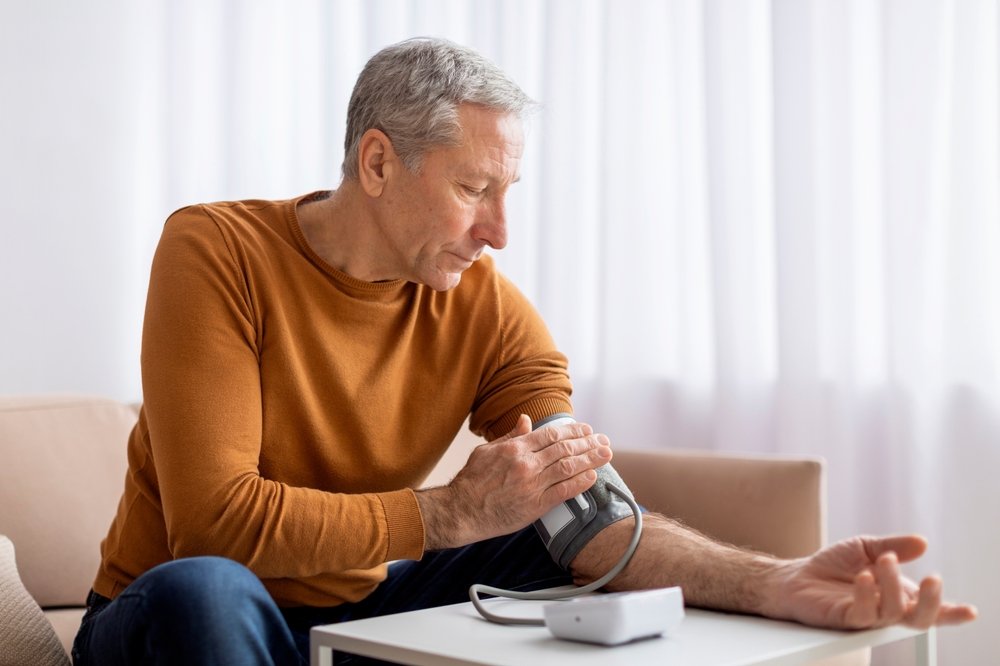
A home blood pressure monitor is one of the best $40 investments in your health. But technique matters — bad technique gives bad numbers, and bad numbers cause either false panic or false comfort.
- Pick a validated upper-arm cuff. Wrist monitors are convenient and consistently less accurate. Make sure the cuff fits your arm — too small reads high.
- Rest first. Sit quietly for five minutes before measuring. No coffee, exercise, or cigarettes in the 30 minutes prior, and empty your bladder.
- Position matters. Back supported, feet flat on the floor, arm supported at heart level. Legs crossed or arm dangling can skew the reading by 5-10 points.
- Take two readings. Measure twice, a minute apart, and average them. Do this morning and evening for a week to see your real pattern — one-off readings bounce around.
- Don’t measure right after bad news or a workout. Stress and exertion spike pressure temporarily. You’re looking for your resting baseline.
What Your Numbers Actually Mean
Blood pressure is two numbers: systolic (the top, pressure when your heart beats) over diastolic (the bottom, pressure between beats). Current guidelines break it down like this:
- Normal: below 120/80
- Elevated: 120-129 systolic with diastolic under 80
- Stage 1 hypertension: 130-139 systolic or 80-89 diastolic
- Stage 2 hypertension: 140+ systolic or 90+ diastolic
- Hypertensive crisis: above 180/120 — seek emergency care, especially with symptoms
One high reading isn’t a diagnosis. Blood pressure fluctuates through the day — it’s higher in the morning, after coffee, during stress. Diagnosis requires consistently elevated readings over time, which is exactly why a week of home measurements is so valuable to bring to your doctor.
Risk Factors That Raise Your Odds
Some things you can’t change: age, family history, and certain conditions like diabetes and kidney disease. But the modifiable list is long and encouraging — which is good news, because it means there’s a lot within your control:
- Too much sodium and too little potassium in the diet
- Physical inactivity and excess weight, especially around the waist
- Regular heavy alcohol use — if you’re unsure where you stand, read about signs you might be drinking too much
- Smoking and chronic stress
- Poor sleep, including untreated sleep apnea
Blood pressure and cholesterol tend to travel together, so if your numbers are creeping up, it’s also worth learning how to lower your cholesterol naturally — the lifestyle fixes overlap almost completely.
When to Call Your Doctor
Make an appointment if your home readings are consistently at or above 130/80, or if you have risk factors and haven’t been checked in over a year. Go to urgent care or the ER if you hit 180/120 or higher, or if high readings come with chest pain, shortness of breath, back pain, numbness, vision changes, or trouble speaking.
The reassuring part: hypertension is one of the most manageable conditions in medicine. Lifestyle changes move the needle a lot, and when medication is needed, it’s typically cheap, well-tolerated, and effective. The only truly dangerous version is the one nobody knows about.
How Do I Know If I Have High Blood Pressure? Your Questions Answered
Can anxiety about measuring raise my reading?
Yes — it’s called white coat hypertension, and it affects up to 1 in 3 people. The stress of being measured (at home or in clinic) temporarily spikes your numbers. That’s exactly why doctors diagnose from patterns, not single readings. If your first reading is high, sit quietly for five minutes and measure again — the second reading is often 5-10 points lower. Home monitoring over a week, done calmly, gives the truest picture. If home readings are consistently normal but clinic readings are high, tell your doctor — it changes the treatment decision.
Does high blood pressure always need medication?
Not always. Stage 1 hypertension (130-139/80-89) without other risk factors is often managed with lifestyle changes first: losing excess weight, cutting sodium, exercising regularly, limiting alcohol, and quitting smoking. Many people bring their numbers into range within 3-6 months of consistent changes. But higher readings, or hypertension alongside diabetes, heart disease, or kidney issues, usually need medication from the start — and that’s not failure, it’s appropriate treatment. The goal is controlled pressure by whatever means works, not avoiding pills as a point of pride.
Are home blood pressure monitors accurate?
Validated upper-arm monitors are quite accurate when used correctly — look for devices validated by the American Medical Association’s US Blood Pressure Validated Device Listing. Wrist monitors are consistently less reliable. Bring your home monitor to a checkup once a year and compare its reading against the office device; if they’re within 5 points, yours is trustworthy. Cuff size matters enormously — using a standard cuff on a large arm reads falsely high, which is one of the most common sources of measurement error.
The Bottom Line
You can’t feel high blood pressure, so stop trying to guess and start measuring. A home cuff, proper technique, and a week of readings will tell you more than a decade of wondering. And if the numbers are high, don’t panic — do something. Few health problems respond as well to consistent, boring lifestyle fixes as this one.


