
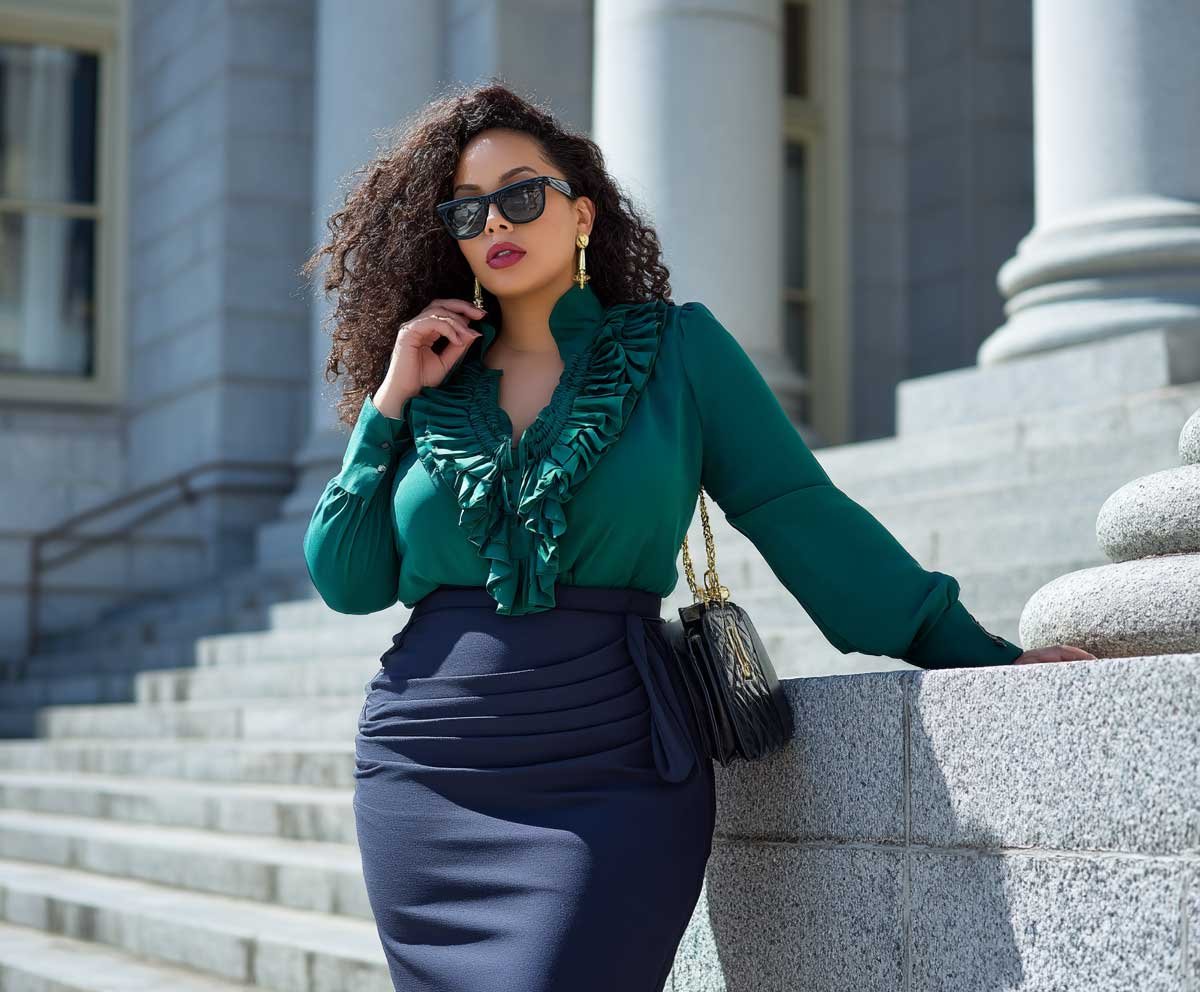
Let’s start by retiring a tired idea: that plus-size dressing is about “hiding” or “minimizing” your body. The best-dressed plus-size women aren’t disguising themselves — they’re dressing with intention, understanding proportion, and wearing what makes them feel powerful. How do I dress for my body type as a plus-size woman? With the same principles that govern all great style — fit, proportion, fabric — applied with knowledge of what works for curves.
The Foundation: Fit Is Everything (More So Here)
Fit matters for everyone, but it’s transformative for plus-size figures because ill-fitting clothes create the exact problems people want to avoid: pulling, gaping, clinging in wrong places. The two most common fit mistakes: wearing things too tight (shows every line of undergarments, restricts movement) and wearing things too loose (adds visual volume, looks shapeless).
The sweet spot is skimming — fabric that follows your body’s lines without squeezing. This often means sizing up in fast fashion (whose plus ranges run small) and always, always tailoring. A $40 dress with $25 of tailoring looks like $300. Learn how to tell if clothes fit properly — the checklist applies doubly here.
Undergarments are the invisible foundation: a well-fitted bra (most women wear the wrong size — get professionally fitted) changes how every top looks. Smooth, seamless underwear prevents lines without squeezing.
Silhouettes That Celebrate Curves
- Wrap dresses and tops. The universally flattering plus-size hero — defines the waist, skims the hips, adjustable fit. If you buy one dress, make it a wrap.
- Fit-and-flare. Fitted bodice, flared skirt — classic hourglass emphasis that works on many plus shapes.
- High-waisted bottoms. Define the waist at its narrowest point. Low-rise creates spillover; high-rise creates shape.
- Structured jackets and blazers. Shoulders and structure provide the architecture that makes everything underneath look intentional. A single-breasted blazer that actually buttons is transformative.
- V-necks and scoop necks. Elongate the neck and draw the eye vertically. Avoid high necklines if you’re busty — they can create a uniboob effect.
- Wide-leg and straight-leg pants. Balance proportions better than skinny cuts on many plus figures.
Proportion Tricks That Work
- Define one waist point. Whether it’s your natural waist with a belt or an empire seam, one clear definition point prevents the “one big rectangle” effect.
- Show some skin strategically. Three-quarter sleeves, a v-neck, an ankle-baring crop — skin breaks create breathing room and lightness.
- Monochrome elongates. One color head-to-toe (especially dark) creates an unbroken vertical line. It’s not about “slimming” — it’s about elegance.
- Scale your prints and accessories. Tiny prints can look busy on a larger frame; medium-to-large scale prints usually harmonize better. Same with jewelry — a statement necklace beats a dainty one that disappears.
- Balance volume. Voluminous top + streamlined bottom, or vice versa. Volume everywhere overwhelms; volume in one place is style.
Fabrics: The Underrated Factor
Fabric choice makes or breaks plus-size outfits. Look for: ponte and scuba (structure with stretch), quality jersey with weight (not flimsy), denim with 2-3% elastane (shape without sausage effect), and woven fabrics with a bit of body. Avoid: clingy thin knits, stiff fabrics with no give, and cheap polyester that traps heat and highlights everything. When shopping for swimwear, our guide to flattering swimsuits for curvy women applies the same fabric wisdom to the beach.
Where to Actually Shop
The plus-size market has improved dramatically. Reliable options: Universal Standard (designed plus-first, not graded up), Eloquii (trend-aware workwear and occasion), Lane Bryant (foundations and workhorses), Old Navy and Target (budget basics in extended sizes), ASOS Curve (young, trendy), and thrifting in the full-size sections (vintage structured pieces are gold). Avoid brands that just scale up straight-size patterns without adjusting proportions — the fit tells you immediately.
For denim specifically — the hardest plus-size category — our jeans for your body shape guide covers what to look for in a fitting room.
How Do I Dress for My Body Type as a Plus-Size Woman? Your Questions Answered
What are the best stores for plus-size professional clothes?
The workwear gap has narrowed significantly. Strong options: Eloquii (trend-aware, well-cut workwear), Universal Standard (elevated basics, inclusive sizing done right), Lane Bryant (reliable workhorses), Old Navy and Target (budget-friendly extended sizes), and ASOS Curve (younger aesthetic). For suiting specifically — the hardest plus-size category — look for brands that design plus-first rather than grading up straight sizes; the armholes, rise, and shoulder proportions are noticeably better. And always budget for tailoring: even the best off-the-rack workwear benefits from $20 of adjustments. Plus-size fashion’s history shows how far the industry has come — and how much further it needs to go.
Should plus-size women avoid horizontal stripes?
This “rule” is wildly overstated. The original 19th-century illusion research suggested horizontal stripes could actually make figures appear taller and slimmer in some configurations — the fashion “rule” against them was never solid science. What matters more than stripe direction: scale (medium-width stripes usually most flattering), placement, and the garment’s overall fit. A well-fitting striped top in a good scale looks great on every body. Don’t let a debunked rule shrink your options — try them and trust the mirror.
How do I dress plus-size for a formal event?
The same principles, elevated: structured fabrics (they photograph beautifully), defined waist (wrap dresses, belted gowns, tailored waists), proper support underneath (the right undergarments are half the formal battle), and a neckline you love (v-necks and off-shoulder are universally flattering). Dark colors are classic but not mandatory — jewel tones on plus figures are stunning. The biggest formal mistake is hiding: an oversized shapeless “flattering” dress reads as insecurity, while a well-fitted dress that celebrates your shape reads as confidence. Get the fit tailored — formal photos last forever.
Is shapewear necessary for plus-size dressing?
No — it’s optional, not required. Modern shapewear (when you want it) is far more comfortable than the girdles of old, and it can smooth lines under clingy fabrics. But the idea that plus-size outfits require it is outdated. Well-chosen fabrics with structure, proper fit, and good undergarments (a great bra does more than any shapewear) achieve the smooth look without compression. Wear shapewear when you want the effect for a specific outfit — not as a daily requirement for existing in clothes. Your body doesn’t need correcting; some outfits just benefit from smoothing.
The Bottom Line
Dressing well plus-size means prioritizing fit (tailor everything), choosing silhouettes that define and celebrate your shape, using proportion tricks like waist definition and monochrome, and picking fabrics with structure. But the real secret: wear what makes you feel like yourself, not what the “flattering” rules permit. Confidence is the best-fitting garment there is — and it comes in every size.


