
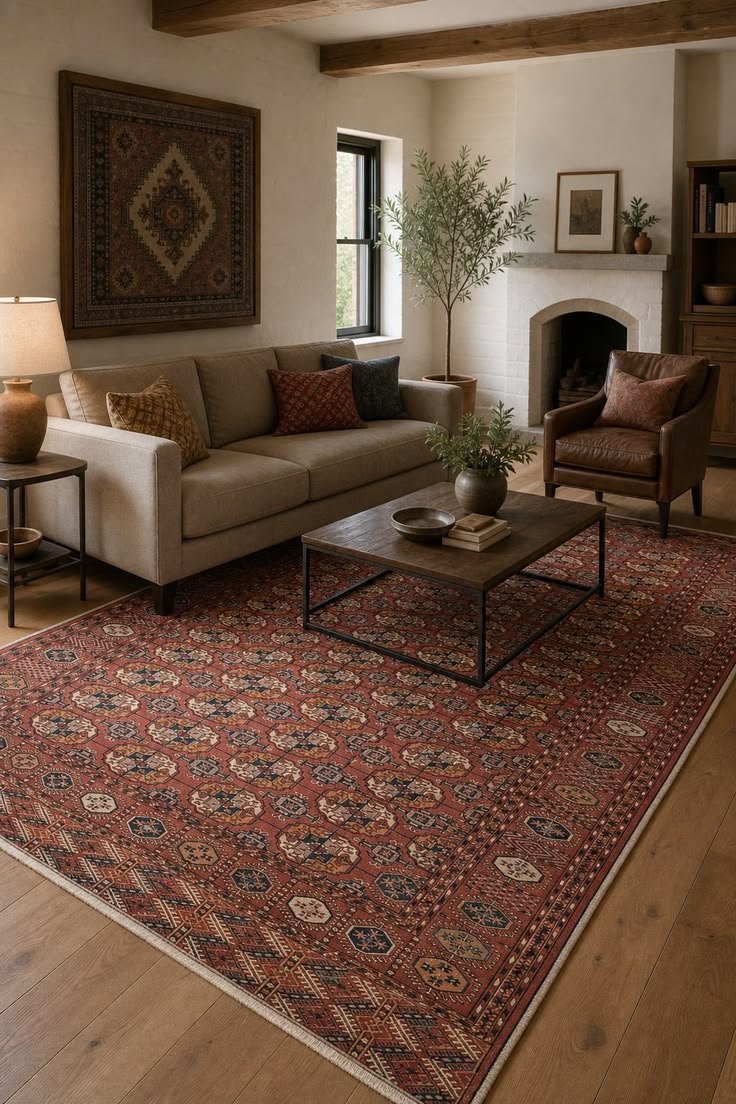
The most common rug mistake isn’t the color or pattern — it’s the size. A too-small rug makes even a nice living room look awkward and choppy, like pants that don’t reach your shoes. So how do I choose the right size rug for my living room? There’s a simple rule designers live by, standard sizes for common layouts, and a foolproof measuring trick. Get this right and the whole room clicks into place.
The Golden Rule: Bigger Than You Think
When in doubt, size up. The #1 rug error is going too small — a tiny rug floating in the middle of the floor visually shrinks the room and disconnects the furniture. A properly sized rug anchors the seating area and makes the space feel larger and more intentional. If you’re between sizes, the larger one is almost always right. Architectural Digest’s interior guides repeat this constantly because clients fight it constantly — trust the designers on this one.
How Do I Choose the Right Size Rug for My Living Room? Standard Layouts
The seating area rule
Your rug should fit all of the front legs of your seating furniture — sofa, chairs, loveseat. Ideally, all legs fully on the rug. Minimum: front legs on, back legs off. Never: rug floating entirely in front of the furniture touching nothing — that’s the “postage stamp” look.
Standard sizes by room
- Small living room / apartment: 5×8 ft. Fits a loveseat + chair arrangement with front legs on. The minimum viable living room rug.
- Average living room: 8×10 ft. The most popular size — fits a standard sofa + two chairs with room to spare. If you buy one rug size blind, make it this one.
- Large / open-plan living room: 9×12 ft. Anchors a full sectional + chairs + coffee table. In open plans, the rug defines the living “zone” — go big enough to read as a room.
- Sectional layout: measure the sectional’s footprint and add 2+ feet on the open sides. Sectionals eat rug — 8×10 minimum, 9×12 usually better.
Clearance rules
- Leave 12–18″ of bare floor between the rug edge and the wall (in small rooms, 8″ minimum). Wall-to-wall rug reads as carpet and defeats the purpose.
- In dining-adjacent living areas, the rug must extend 24″ beyond the table on all sides so chairs stay on it when pulled out.
- Keep the rug clear of door swings — measure, don’t assume.
The Painter’s Tape Trick (Do This Before Buying)
Outline the rug size you’re considering on the floor with painter’s tape. Live with it for a day. Walk around it. Look at it from the couch and the doorway. This 10-minute exercise prevents the vast majority of rug regrets — dimensions on a screen don’t translate to spatial feel. Try two sizes taped out side by side; the difference is immediately obvious in person.
Shape, Pattern, and Pile
- Shape: rectangular for most rooms; round rugs work beautifully under round coffee tables or in square seating nooks. The rug shape should echo the furniture arrangement.
- Pattern scale: big rooms handle big patterns; small rooms do better with smaller-scale or subtle patterns. A huge bold pattern on a small rug looks busy.
- Pile height: low pile for high-traffic living rooms (easier to clean, doors clear it, furniture sits stable). High pile is cozy but traps everything and shows traffic lanes.
- Material: wool is the gold standard (durable, naturally stain-resistant, lasts decades); synthetics (polypropylene) are budget-friendly and nearly indestructible — great with kids and pets. Natural fibers (jute, sisal) look great but stain permanently — avoid where spills happen.
- Pad: always use a rug pad. It prevents slipping, adds cushion, extends rug life, and protects the floor underneath. A $30–$60 pad is non-negotiable.
Common Mistakes
- The floating postage stamp. Rug too small, touching no furniture. The room looks disjointed.
- Different rugs fighting. In open plans, multiple rugs should coordinate (shared color palette), not compete.
- Rug under only the coffee table. Worse than no rug — it highlights the size error.
- Ignoring the room’s color story. The rug is usually the room’s largest pattern — pick it before (or with) the paint and upholstery, not after.
- Skipping measuring. “Eyeballing it” at the store is how 5×8 rugs end up in rooms that needed 8×10.
Rug Care: Cleaning and Making It Last
The right rug is an investment — protect it:
- Vacuum weekly, both sides occasionally. Grit trapped in the pile acts like sandpaper, wearing fibers from within. Suction-only (no beater bar) for delicate rugs; beater bar is fine for sturdy synthetics.
- Rotate 180° yearly. Evens out sun fading and traffic wear. You’ll be amazed how much one side fades versus the other.
- Blot spills immediately — never rub. Rubbing spreads the stain and damages pile. Blot with a clean cloth, work from outside in. Club soda or a 50/50 white vinegar and water solution handles most fresh spills.
- Professional cleaning every 12–18 months for wool and high-value rugs. DIY rental machines work for synthetics but can overwet natural fibers — when in doubt, hire out.
- Pet strategy: washable rugs (or a washable rug cover) in pet zones. For the main rug, enzymatic cleaner for accidents — it breaks down odor proteins that regular cleaners leave behind. See pet-friendly flooring for the full under-rug strategy.
- Sun protection. UV fades rugs fast — window film or curtains in sunny rooms preserve color dramatically. The faded half of a rotated rug tells the story.
When to replace: worn-through spots, persistent odors that survive professional cleaning, or backing that’s crumbling. A quality wool rug lasts 20+ years with care; a cheap synthetic lasts 3–5. The cost-per-year math usually favors buying better once — and a well-chosen rug in the right size, coordinated with your wall color, anchors the room for a decade or more. Treat it well and it’ll outlast the sofa.
The Practical Takeaway
Choosing the right size rug for your living room comes down to: all front furniture legs on the rug (ideally all legs), 8×10 for average rooms and 9×12 for large/open ones, 12–18″ of bare floor at the walls, and the painter’s-tape test before buying. When torn between sizes, go larger — it’s the rare decor decision where bigger is nearly always better. Add a quality pad underneath, and your rug will anchor the room beautifully for years.


