
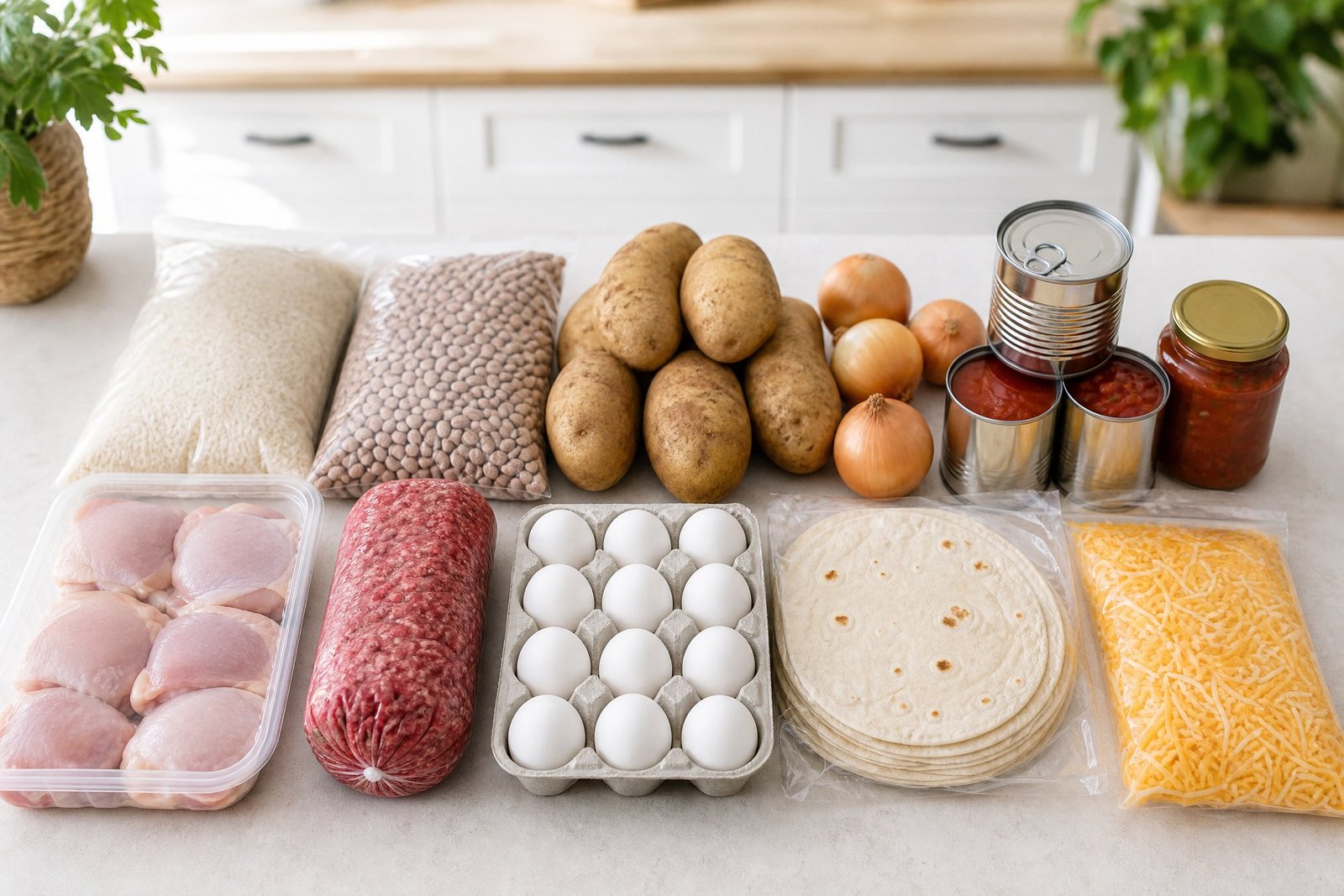
Feeding yourself (or a family) well on a tight grocery budget isn’t about suffering through ramen and sadness. It’s a skill — part planning, part cooking technique, part shopping strategy — and it’s entirely learnable. If you’re figuring out how to stretch a small grocery budget into a week of meals, here’s the complete playbook: what to buy, how to cook it, and the habits that make a small budget feel bigger than it is.
The fundamental math: the cheapest calories that are also nutritious are dried beans, lentils, rice, oats, potatoes, eggs, and seasonal vegetables. Meat is the budget-killer, so the strategy isn’t eliminating it — it’s using it as a flavoring rather than the centerpiece, and choosing the cheapest cuts.
How to Stretch a Small Grocery Budget Into a Week of Meals: The Strategy
Step 1: Plan before you shop (the highest-ROI habit)
Impulse shopping is where budgets go to die. Before you go: check what you already have, plan 5–7 dinners (not every meal — breakfasts and lunches can repeat), and write a list organized by store section. Plan meals that share ingredients: a roast chicken becomes chicken soup becomes chicken fried rice. A bag of dried beans becomes chili becomes bean burritos. This “cook once, eat thrice” overlapping is the core mechanic of budget eating.
Step 2: Build your pantry foundation
A stocked pantry makes cheap cooking possible. The essentials, bought once and lasting weeks:
- Dried beans and lentils: ~$1–2/lb, each pound makes 6+ servings of protein
- Rice (long-grain or jasmine): the backbone of a hundred meals
- Oats: breakfast for pennies — see my slow cooker oatmeal method for the laziest version
- Pasta: endlessly versatile, nearly free per serving
- Canned tomatoes: the base of sauces, soups, chilis, curries
- Onions, garlic: the flavor foundation of everything
- Basic spices: cumin, chili powder, oregano, garlic powder — buy from bulk bins or ethnic groceries where they’re a fraction of supermarket prices
- Oil, salt, sugar, flour: the non-negotiables
- Peanut butter and eggs: cheap protein that keeps
Step 3: Shop like a strategist
- Buy seasonal produce. In-season vegetables can cost a third of their off-season price. A head of cabbage in winter is one of the cheapest nutritious foods on earth.
- Hit ethnic grocery stores. Spices, rice, beans, lentils, and produce are routinely 30–50% cheaper than mainstream supermarkets.
- Embrace frozen vegetables. Nutritionally equal to fresh (often better — frozen at peak ripeness), a fraction of the cost, zero waste.
- Buy whole chickens, not parts. A whole chicken is cheaper per pound, and the carcass makes free stock.
- Check the reduced rack. Bakery items and produce nearing their date are often half price and perfectly good today or tomorrow.
- Don’t shop hungry. Old advice because it’s true — hunger adds ~20% to the bill in impulse buys.
A Sample Week: ~$50–60 of Groceries
Here’s what a real week looks like built on these principles (prices vary, but the structure holds):
- Monday: Red lentil dal with rice (lentils + onion + spices + coconut milk)
- Tuesday: Bean and cheese quesadillas with homemade guacamole
- Wednesday: Pasta with marinara and roasted vegetables
- Thursday: Fried rice with eggs and frozen veggies (use leftover rice — it’s better for frying)
- Friday: Slow cooker pulled pork sandwiches (pork shoulder is one of the cheapest meats per serving)
- Saturday: Hearty potato soup with crusty bread
- Sunday: Roast chicken with roasted root vegetables → carcass becomes next week’s soup
Breakfasts: oatmeal, eggs and toast, or yogurt. Lunches: leftovers, always — cook dinner-sized portions with lunch in mind and you’ve eliminated a whole meal category from the budget.
The Cooking Techniques That Save Money
Batch cooking is the master technique: a big pot of beans, a tray of roasted vegetables, a grain — mix and match through the week. The slow cooker transforms the cheapest cuts of meat into tender dinners while you’re at work. Proper storage prevents the most insidious budget leak — food waste. Americans throw away roughly a third of their food; my guide to freezing leftovers safely exists specifically to stop that bleed. And making stock from scraps (vegetable peels, chicken carcasses) turns trash into the base of free soup.
What NOT to Buy on a Tight Budget
Be honest about the budget-killers: pre-cut produce (you’re paying 3x for someone to chop), single-serve anything, bottled water, brand-name when generic is identical, and “health” products with premium markup. None of these make food taste better. Redirect that money to ingredients that actually feed you.
The Practical Takeaway
Stretching a small grocery budget = plan meals around overlapping ingredients, build a pantry of cheap staples (beans, rice, oats, eggs), shop seasonal/ethnic/frozen, batch cook, and waste nothing. It’s not deprivation — it’s just cooking with intention.
Start this week: plan five dinners, write the list, and cook one big batch of something on Sunday. You’ll be shocked how far the money goes when every ingredient has a job.
The Emergency Ultra-Tight Week
Sometimes the budget isn’t small — it’s nearly zero. If you’re down to the last $20–25 for the week, here’s the survival shop: a bag of rice, dried lentils, oats, a dozen eggs, peanut butter, a bag of frozen mixed vegetables, onions, and a can of tomatoes. That’s roughly a week of dal and rice, oatmeal breakfasts, egg fried rice, peanut noodles, and vegetable soup. It’s not exciting, but it’s nutritionally complete — protein, fiber, carbs, fats, and vegetables every day. And don’t overlook community resources: food banks exist for exactly these weeks, with no shame attached — they’re community infrastructure, not charity cases. Many also offer fresh produce. The Feeding America food bank finder can locate help near you in seconds. Tight weeks end; the cooking skills you’re building don’t.
Remember that budget cooking is a skill that compounds. The first planned week feels like work; by week four it’s automatic. You’ll develop an instinct for what’s a good price, which meals stretch furthest, and how to turn random leftovers into something delicious. And the money you save isn’t just savings — it’s options: the emergency fund, the occasional splurge, the breathing room. Every dollar not wasted at the grocery store is a dollar working for your future.


