
Small kitchens aren’t short on charm — they’re short on places to put things. Every cabinet is full, the counters are crowded, and you just bought a stand mixer with nowhere to live. So how can I add storage to a small kitchen without a renovation? By thinking vertically, exploiting dead space, and making every inch work twice as hard. These 13 ideas are renter-friendly, budget-conscious, and genuinely transformative.
Think Vertical: Walls Are Storage
1. Open shelving
Replace one upper cabinet (or fill an empty wall) with 2–3 floating shelves. Daily dishes, glasses, and pretty items live here — accessible, visible, and they make the kitchen feel larger than closed cabinets do. Keep it to things you use often; dusty rarely-used items don’t belong on open shelves.
2. Pegboard or rail systems
A wall-mounted rail with S-hooks (IKEA-style) holds utensils, pots, cutting boards, and mugs. A small pegboard section organizes tools beautifully. It turns a blank wall into prime storage real estate for under $30.
3. Magnetic knife strip
Frees an entire drawer or counter block. Mount it on the backsplash or a side wall — safer than a knife block (blades visible, kids can’t grab blindly) and oddly satisfying.
4. Over-the-door and wall-mounted spice racks
Spices are the ultimate space thieves — 30 tiny jars eating a whole cabinet. A tiered wall rack, magnetic tins on the fridge side, or an inside-cabinet-door rack reclaims that space instantly.
How Can I Add Storage to a Small Kitchen? Exploit Hidden Space
5. Inside cabinet doors
The most underused square footage in the kitchen. Mount slim racks inside doors for: spices, wraps and foil, cleaning supplies under the sink, pot lids, measuring cups. $10–$20 per door, five minutes to install.
6. Above the cabinets
That dusty gap between cabinet tops and ceiling? It’s storage for rarely-used items: serving platters, seasonal bakeware, the fondue set. Use attractive baskets or bins so it looks intentional, not forgotten. (Less ideal in greasy cooking zones — wipe items before use.)
7. Above the fridge
Deep, awkward, wasted. Add a pull-out shelf or just commit it to a single category (entertaining supplies, bulk paper goods) in labeled bins. A $15 stackable shelf insert doubles its usability.
8. The sides of cabinets and fridge
Magnetic shelves on the fridge side hold spices and oils. The exposed side of a base cabinet fits a narrow rolling cart or mounted paper towel holder. Even 3 inches of side clearance is usable.
9. Under-shelf baskets and risers
Wire baskets that hook onto existing shelves instantly double stacking space for mugs, cans, and bowls. Shelf risers in cabinets create two levels where there was one. $10–$15 each, transformative in deep cabinets.
Make Existing Storage Work Harder
10. Drawer dividers and organizers
A junk drawer isn’t a storage problem — it’s an organization problem. Bamboo dividers ($15–$25) turn one chaotic drawer into six tidy compartments. Do the utensil drawer, the gadget drawer, and the “everything” drawer.
11. Pull-out cabinet organizers
Deep base cabinets waste their back half. Slide-out trays ($25–$50 each) bring everything to you — no more kneeling to reach the back. The under-sink cabinet especially benefits: a two-tier pull-out tames cleaning supplies.
12. A rolling island or cart
No room for a permanent island? A narrow rolling cart ($60–$120) adds counter space and storage, tucks against a wall when not in use, and can serve as a coffee bar, prep station, or pantry overflow. The hardest-working piece of furniture in a small kitchen.
13. Declutter first (the free multiplier)
Before buying a single organizer: pull everything out, toss the broken and duplicated (three vegetable peelers? really?), donate the never-used gadgets, and relocate non-kitchen items. Most small kitchens gain 20–30% effective capacity from decluttering alone. Then organize what’s left — The Container Store’s kitchen guides are great for matching organizers to your specific chaos.
Layout Tricks
- Zone your kitchen: cooking tools near the stove, prep tools near the counter, cleaning under the sink. Everything gets a home near its use point — less wandering, less clutter.
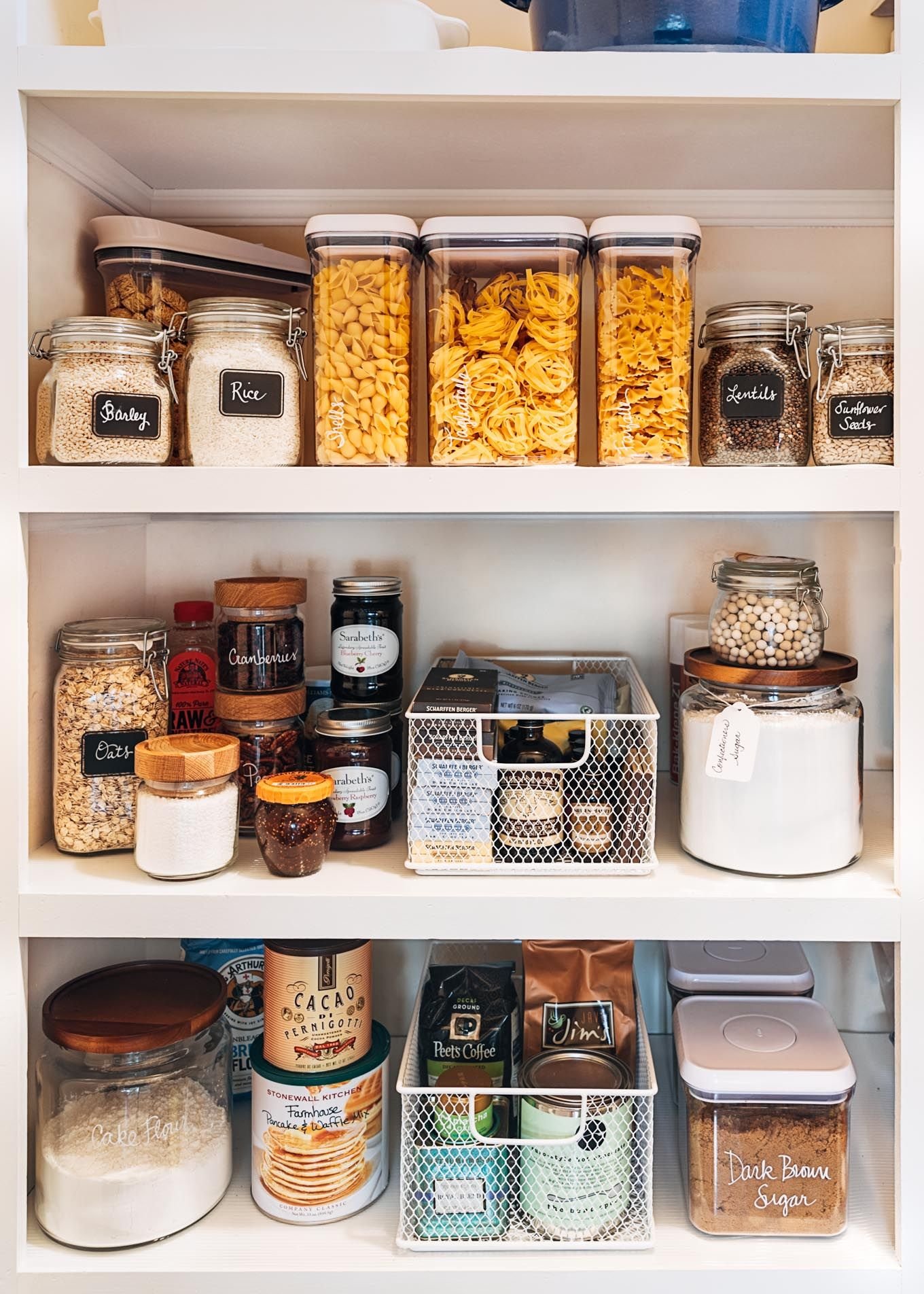
- Decant bulk goods: uniform containers (flour, sugar, rice, pasta) stack efficiently and look calm. Square containers waste less space than round.
- Hang what you can: pots on a ceiling rack (if sturdy joists allow), pans on wall hooks, mugs under shelves. Counter space is sacred — protect it.
- Use the vertical update mindset: when you refresh surfaces, choose options that add function — a deeper windowsill becomes a herb shelf, a new backsplash hosts a rail system.
The Small Kitchen Audit: Finding Hidden Storage
Before buying organizers, audit your kitchen with fresh eyes. Walk through with a notepad and check these commonly wasted spots:
- The backsplash zone. The 6 inches of wall between counter and upper cabinets fits a rail system for utensils, knives (magnetic strip), and spice racks — prime real estate most kitchens leave bare.
- Cabinet door interiors. Every door is a potential rack: lids, wraps, spices, cleaning supplies. Measure depth first — most doors fit 2–3 inch deep organizers.
- The toe-kick. That recessed 4-inch space under base cabinets? Toe-kick drawers ($30–$60 each, DIY-installable) hide baking sheets, placemats, and other flat items in space you didn’t know you had.
- Above the cabinets. Dusty but usable for rarely-touched items in closed bins. Not for everyday — for the turkey roaster and the fondue set.
- The fridge sides. Magnetic shelves and paper-towel holders exploit steel most kitchens waste.
- Dead corners. Blind corner cabinets swallow items whole. A lazy Susan or blind-corner pull-out ($40–$80) reclaims them.
- Under the sink. Usually chaos. A tension rod across the top holds spray bottles by their triggers; a small pull-out caddy organizes the rest.
The one-in-one-out rule for kitchens: small kitchens can’t absorb new gadgets without shedding old ones. New air fryer? The bread machine you used twice goes to donation. Enforce it ruthlessly and the kitchen stays at equilibrium instead of slowly filling.
And remember that storage upgrades pair naturally with cosmetic ones — if your cabinets themselves look tired, updating old cabinets without replacing them (paint, hardware, interior organizers) transforms both looks and function in one project. The best small kitchen isn’t the one with the most organizers — it’s the one where everything has an obvious home and the counters stay clear.
The Practical Takeaway
Adding storage to a small kitchen is about using the third dimension: open shelves and rails on walls, organizers inside cabinet doors, baskets above cabinets, pull-outs in deep cabinets, and a rolling cart for flexible capacity. Declutter first (free, biggest gain), then spend $100–$200 on targeted organizers — not random bins, but solutions for your specific pain points. The goal isn’t more stuff; it’s every item having an obvious home. A small kitchen where everything has a place feels twice its size.


