Gary Barlow — The Songwriter’s Ledger: Net Worth, Family and Four Decades of Hits, Counted in New York
Written by admin
Published November 24, 2026
Reading time 10 minutes
The Numbers Born first, net worth second — the full record sits in the “By the Numbers” table after the career section.
Gary Barlow — The Songwriter’s Ledger: Net Worth, Family and Four Decades of Hits, Counted in New York
The Songwriter’s Ledger: Four Decades of Hits
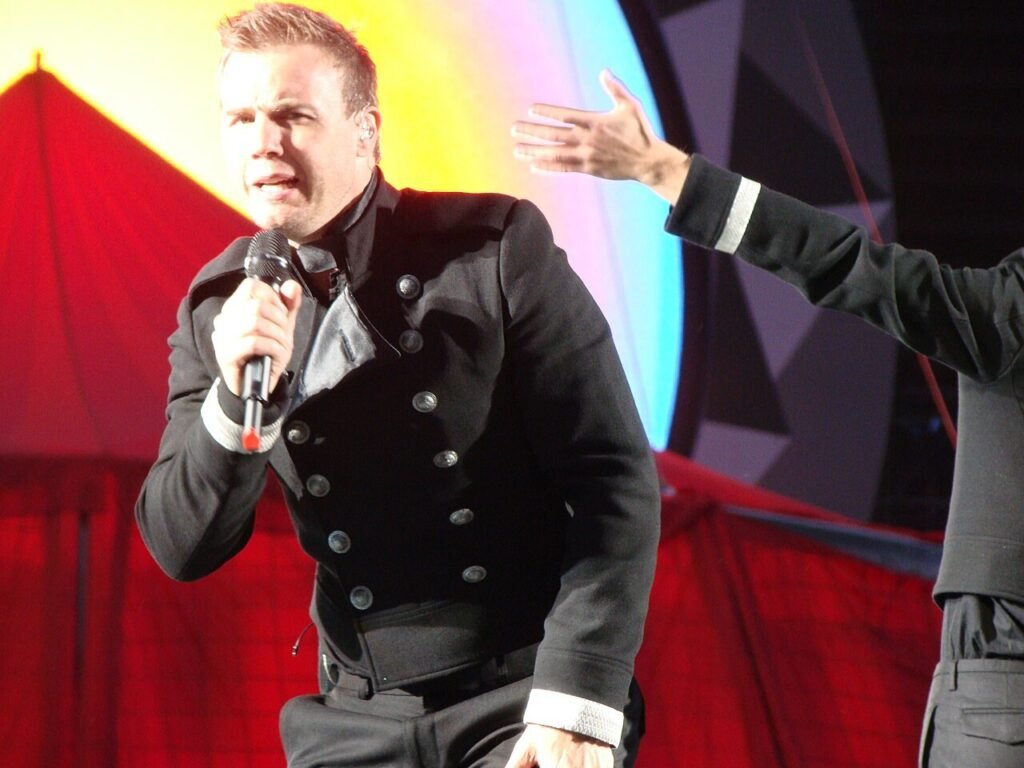
Gary Barlow is the songwriter at the center of Take That, one of the biggest-selling pop groups of the modern era, and a solo artist whose career has run, with one famous interruption, for more than three decades. He writes the songs, plays the piano on stage, and has spent the years since Take That’s reunion building a second act as a composer, producer and live performer.
He is 55, married to Dawn Barlow for more than a quarter of a century, and still active at the top of the business: in February 2026 he signed an exclusive global publishing agreement with BMG, and Take That’s touring activity was being reported as recently as September 2026. This profile sets out the record in full — the roots, the career file, the family and, in the money section, the fortune as the published sources count it.
Take That, the Solo Stall and the Reunion
1990–1996: Take That and the first fortune in songs
Take That formed in 1990, and after a slow start the group’s run of singles — Pray, Relight My Fire, Back for Good among them — made them the defining pop act of their years. Barlow wrote much of the material, including Back for Good, the 1995 single that topped charts around the world and remains the song most closely attached to his name. The albums of the period, including Everything Changes and Nobody Else, sold in the millions, and the group’s farewell in 1996 closed a first chapter that had made its songwriter the earner at the center of the enterprise, because the writing royalties flowed to him.
1997–2004: the solo stall and the wilderness years
Barlow’s solo career began with Open Road in 1997, which reached number one, and the single Forever Love. The follow-up, Twelve Months, Eleven Days, in 1999 performed far less well, and his record deal ended. The years that followed were the difficult ones he has since described candidly: work as a producer and writer for other artists, a retreat from the spotlight, and a long period in which the group’s other famous voice drew the attention. Those years matter to the money story, because the songwriting catalogue kept earning while the performing career paused.
2005–2014: the reunion and the second peak
Take That’s reunion, first for a documentary and tour and then in the studio, produced Beautiful World in 2006 and The Circus in 2008, both enormous sellers, and stadium tours that ranked among the biggest live draws of their time. Progress, in 2010, briefly restored the five-man line-up. Barlow’s own profile rose with the group’s: he organized charity records, performed at public celebrations, and in 2013 released Since I Saw You Last, his first solo album in fourteen years, which reached number two. The song Let Me Go became a solo hit in its own right.
2020–2026: the catalogue years
Music Played by Humans, released in 2020, showed the songwriter working with an orchestra and a roster of guest singers, and reached the top of the album chart. Take That, by then a trio, continued to record and tour, and Barlow’s solo shows — built around the piano and the catalogue — became a fixture of the calendar. The February 2026 BMG publishing agreement, covering his songwriting worldwide, underlined where the durable value of his career sits: in the songs themselves, which keep earning from performances, licenses and streams long after each tour ends. His Instagram account, @officialgarybarlow, documents the touring and studio work for his followers.
The honors and the writing room
The honors record matches the catalogue’s standing. Barlow received the OBE in 2012 for services to the entertainment industry and charity, and his Ivor Novello Awards — the songwriters’ own honors — recognize the craft at the center of the career. He organized the Children in Need Rocks concert in 2009 and the Diamond Jubilee concert at Buckingham Palace in 2012, co-writing the Jubilee song Sing, and served as a judge on The X Factor for three series, taking the songwriter’s chair on the show that had reshaped pop television.
The writing room is where the second career has quietly run: songs for other artists across two decades, work in musical theatre including the score for Finding Neverland on stage, and collaborations that keep the publishing catalogue — the asset the BMG deal now administers — growing beyond his own performances. It is the least visible part of the record and, on the money evidence, the most valuable.
Frodsham, Cheshire: Where the Writer Began
Colin Barlow and Marjorie Barlow, née Cowan, welcomed their son Gary on 20 January 1971 in Frodsham, Cheshire. His father died on 15 October 2009, a loss Barlow has spoken about in interviews and marked in his writing. The family background was ordinary and musical in the way of many northern homes of the time: the piano became the boy’s instrument early, and by his teens he was playing in local clubs and entering songwriting competitions.
The early education that mattered most was practical. Barlow learned to perform in front of small, unforgiving audiences, to write to order, and to accompany other singers — skills that would later make him the musical engine of a manufactured pop group rather than simply its frontman. When the call came to audition for a new boy band then taking shape in Manchester at the turn of the 1990s, he arrived with a portfolio of his own songs already written, which set him apart from the start.
The Frodsham beginning had one more ingredient the record notes: the working men’s clubs and cabaret rooms of the North West, where a teenage pianist learned to hold a room that had not come to see him. Barlow has credited those rooms throughout his career with teaching him the performer’s fundamentals — pacing, reading an audience, recovering from a dying song — and the discipline shows in the format of his solo shows decades later, which are built like club sets scaled to arenas: the piano, the catalogue, and a running conversation with the crowd.
$125 Million or £90 Million: Two Sources Disagree
The fortune, counted properly, begins with a disagreement between the two published sources that track it, and this profile prints both rather than choosing quietly. Celebrity Net Worth puts Gary Barlow’s net worth at $125 million, on its page as crawled in November 2026. The Sunday Times Rich List figure carried for him is £90 million, as reported by multiple outlets that publish the Rich List’s numbers. The two totals differ in source, method, date and currency, and no conversion of one into the other confirms anything; readers should treat them as two separate published estimates of the same career.
The build-up behind either figure is not mysterious. Its foundation is songwriting: Barlow wrote or co-wrote the bulk of Take That’s catalogue, and publishing royalties from songs such as Back for Good, Pray and Rule the World have flowed from sales, radio play, licensing and streaming for thirty years. The February 2026 BMG deal — an exclusive global publishing agreement — is the clearest recent marker of that catalogue’s standing value, and it sits naturally alongside the profile of Robbie Williams, his former Take That bandmate, whose solo career ran in parallel for so many of the same years.
Performing income forms the second layer. Take That’s reunion tours were stadium-scale productions, and the trio’s later tours and Barlow’s solo theatre and arena shows have kept that income running into 2026. Recorded income — the solo albums from Open Road to Music Played by Humans, and the group’s albums from Beautiful World onward — forms a third, smaller layer in the streaming era. No individual Forbes net-worth figure exists for Barlow, and tour grosses and publishing advances quoted in coverage are income and transaction values, not wealth; this profile does not add them to the total.
One further point belongs to the count, because readers ask it of every songwriter in this series: a hit written at twenty-one pays differently from a hit performed at fifty. Performance income stops when the touring stops; publishing income follows the song into every cover version, advertisement, film placement and stream, in every territory, for the life of the copyright. Barlow wrote most of his catalogue before the streaming era repriced music, and its survival into that era — dozens of artists have recorded Back for Good alone — stands as the single largest reason the published estimates sit where they do. Neither figure in the disagreement above is a valuation of the catalogue alone, and this profile does not construct one; the point is structural, and it explains the durability both sources are measuring.
The Cheshire Songwriter, Counted in Two Currencies
| The Cheshire Songwriter, Counted in Two Currencies | The Record |
|---|---|
| Born | 20 January 1971, Frodsham, Cheshire |
| Net Worth | $125 million (Celebrity Net Worth); £90 million (Sunday Times Rich List) — the two published figures disagree, and the money section sets out both |
| Age | 55 |
| Height | 5 ft 9 in (1.75 m); published listings vary between 5 ft 7 in and 5 ft 9 in |
| Weight | No reliable published figure exists |
| Wife | Dawn Barlow (née Andrews), married 12 January 2000 |
| Children | Three — Daniel (b. 2000), Emily (b. 2002) and Daisy (b. 2009) |
| Parents | Colin Barlow (d. 2009) and Marjorie Barlow, née Cowan |
| @officialgarybarlow |
Dawn Andrews, a Dancer from the 1995 Tour, Married Since 2000
Barlow married Dawn Andrews on 12 January 2000. She had been a dancer on Take That’s 1995 Nobody Else tour, and the marriage has remained in place through every phase of his career since — the solo stall, the reunion and the catalogue years. The couple have three children: Daniel, born in 2000; Emily, born in 2002; and Daisy, born in 2009.
The family’s private history includes a loss the couple spoke about publicly at the time: a fourth child, Poppy, was stillborn in August 2012, days before Barlow performed at the closing ceremony of the London Olympics. She is part of the family’s record, and the couple have allowed charitable work to carry her name since; the three children counted in the table are Daniel, Emily and Daisy.
His parents complete the picture the record supports. Colin Barlow died in October 2009, the year of The Circus tour’s stadium run, and Marjorie Barlow, née Cowan, is the parent who watched the career begin in Frodsham. Beyond that, Barlow keeps the wider family out of his public life, and this profile follows the record as published.
Away from the cameras, the family’s public footprint is deliberately small. Dawn Barlow appears at the industry’s set pieces beside her husband and otherwise keeps out of the frame; the children grew up largely unphotographed by choice, a boundary the couple set early and the press, unusually, has mostly honored. What the record shows instead is the work-adjacent family life of a touring songwriter — the school-run normality he has described in interviews as the point of the whole enterprise, and the Cheshire base that keeps the Frodsham roots inside the story rather than behind it.
The Writer Whose Songs Outlast Pop Fashion
Where the story stands, Barlow occupies the position his talent always pointed to: the writer whose songs outlast the cycles of pop fashion. Take That continue as a trio, he has placed his publishing with BMG on a new global deal, and the catalogue earns whether or not he is on a stage in a given month.
The published estimates of the fortune — $125 million on one count, £90 million on another — will shift as the sources update them. What is not in dispute is the structure underneath: a body of songs written before he was twenty-five that is still paying its author more than three decades later.
A final measure of the position is the audience’s age span. Take That’s catalogue now plays to three generations at once — the original fans of the 1990s, the reunion generation, and the streaming listeners who found Back for Good without any of the history attached. Songwriters call that the catalogue’s second life, and it is the condition in which publishing becomes close to permanent income. Barlow, who wrote his biggest songs before he could legally drink in the countries where they charted, stands to collect on them for longer than almost any of his contemporaries — which is why both published counts of his fortune, for all their disagreement, describe a figure still in its earning years rather than its aftermath.