Frank Sinatra, 1915–1998: The Voice, the Estate and the $200 Million Question
Written by admin
Published November 24, 2026
Reading time 10 minutes
The Numbers Born first, net worth second — the full record sits in the “By the Numbers” table after the career section.
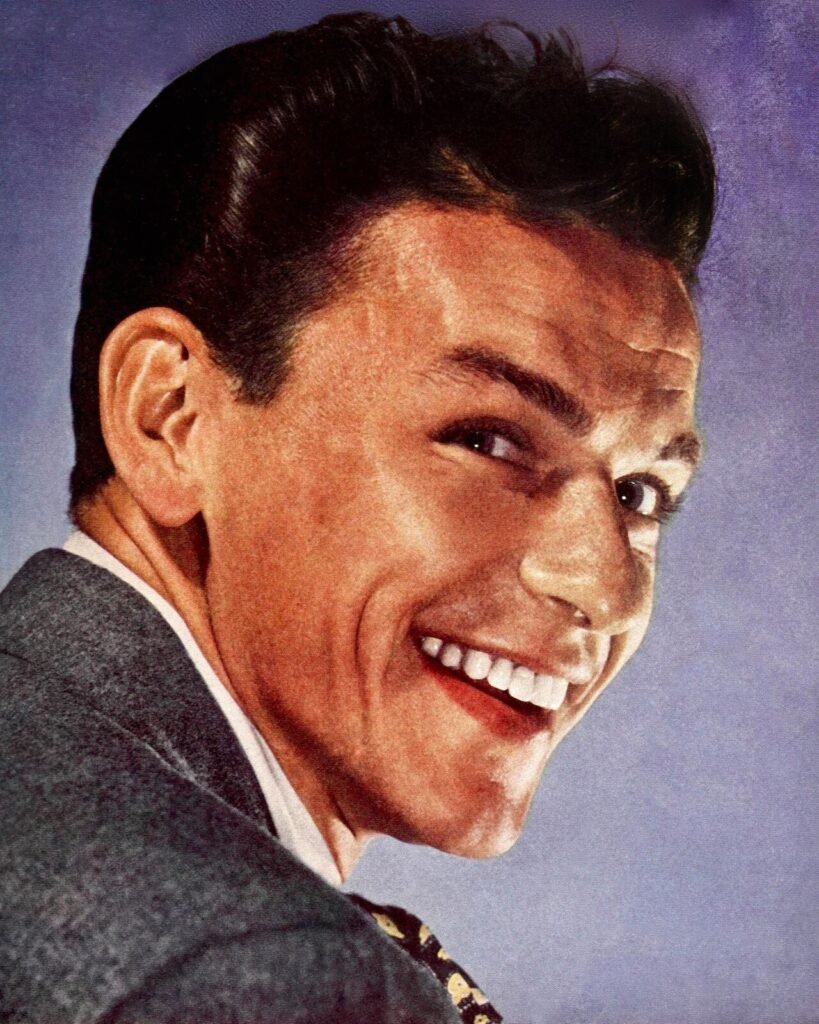
Frank Sinatra, 1915–1998: The Voice, the Estate and the $200 Million Question
The Voice, the Estate and the $200 Million Question
Frank Sinatra died on 14 May 1998 at Cedars-Sinai Medical Center in Los Angeles, after a heart attack, at the age of 82, with his wife Barbara at his side — the facts as the BBC, The New York Times and Britannica recorded them in their obituaries. He had been the most famous singer in the world for the better part of five decades, and the estate he left has never been exactly counted: the estimates published at his death ran from $200 million to $600 million, a range this profile prints in full rather than narrowing.
This profile runs in the past tense throughout. It covers the Hoboken beginnings, the songs and albums in order, his four marriages and three children, the houses that form part of his keyword set, and an estate whose headline figure — $200 million at his death, by Celebrity Net Worth — sits inside the widest disagreement in this batch. He has no presence on any platform of the modern kind, and this profile discusses none.
Hoboken, 1915: an Only Child
Francis Albert Sinatra’s life began in Hoboken, New Jersey, on 12 December 1915, and his birthday was in mid-December. He was an only child — this profile states the family position in that form, as the record holds it. His father, Anthony Martin Sinatra, was a Hoboken fire captain who died in 1969; his mother, Natalina “Dolly” Sinatra, was a midwife and a local political figure, killed in a light aircraft accident in January 1977. He grew up in Hoboken, in a household of some local standing — his mother was a power in the city’s Democratic organisation — and he left high school without graduating, having decided, after hearing Bing Crosby, on the only career he ever seriously pursued.
The Hoboken formation is the record’s foundation: a small, dense city across the river from New York, an ambitious mother, a quiet father in a uniformed service, and a son whose talent was evident early and whose drive was evident earlier. He sang in local groups, worked as a singing waiter and master of ceremonies, and won a radio talent contest in 1935 with a vocal group — the first public step of a career he would conduct, for the next sixty years, almost entirely in public.
Hoboken in 1915 was a port city of saloons, churches and Democratic ward politics, and Dolly Sinatra operated in all three — the midwife who delivered much of the neighbourhood, the political fixer who could open doors at city hall, and, by every account including her son’s, the dominant force in the household. Anthony Martin Sinatra, the fire captain, was the quieter presence; the son inherited the mother’s drive entire. He sang with local groups, worked the engagements available to a Hoboken teenager with a voice — resort hotels in the Catskills, roadhouses in New Jersey — and the Harry James signing in 1939, when the bandleader heard him at one of those roadhouses, was the break the drive had been manufacturing for five years.
The Hoboken Voice, Counted at His Death
| The Hoboken Voice, Counted at His Death | The Record |
|---|---|
| Born | 12 December 1915, Hoboken, New Jersey; died 14 May 1998, Los Angeles, aged 82 |
| Net Worth | $200 million at death (Celebrity Net Worth); contemporary estate estimates ranged from $200 million to $600 million — see the money section |
| Age | 82 at death (died 14 May 1998) |
| Height | 5 ft 8 in (1.73 m) |
| Weight | No reliable published figure exists |
| Wife | Barbara Marx (married July 1976 until his death in 1998) |
| Children | Nancy (b. 1940), Frank Jr. (b. 1944, d. 2016) and Tina (b. 1948) |
| Parents | Anthony Martin Sinatra (d. 1969) and Natalina “Dolly” Sinatra (d. 1977) |
| House | Twin Palms, Palm Springs, and the Rancho Mirage compound — see the money section |
Harry James, the Capitol Years and My Way
1939–1942 — Harry James and Tommy Dorsey
His professional break came in 1939 with the bandleader Harry James, who signed him from a New Jersey engagement; the first recordings date from that year. In 1940 he joined Tommy Dorsey’s orchestra, the leading dance band of the era, and with Dorsey he became a star: “I’ll Never Smile Again”, recorded with the band and its vocal group, was the first great hit, and the phrasing he developed in those years — breath control learned, by his account, from watching Dorsey’s trombone — became the foundation of the style. He left Dorsey in 1942, in a departure negotiated at a price that followed him in legend, to begin the solo career.
1943–1952 — The Columbia Years and the Fall
The solo years at Columbia made him the first modern pop idol: the bobby-soxer phenomenon of 1943 and 1944, the riots at the Paramount, and a run of ballad recordings — “All or Nothing at All” among them, a 1939 recording reissued into a hit — that defined popular singing for the decade. The fall, when it came at the end of the 1940s, was total by the standards of the time: the voice faltered, the label dropped him, the agency dropped him, and by 1952 the career that had defined an era appeared to be over at thirty-six. The comeback that followed is the most famous in entertainment history, and its musical half is the relevant section of this file.
1953–1962 — The Capitol Years
The Capitol years produced the albums on which his reputation as the greatest popular singer of the century rests. Songs for Young Lovers in 1954 opened the sequence; In the Wee Small Hours in 1955 invented, in effect, the concept album — a sustained mood of late-night loss, arranged by Nelson Riddle; Songs for Swingin’ Lovers! in 1956 was its joyful opposite; Come Fly with Me in 1958 and Only the Lonely the same year extended the two registers. Around the recordings stood the Rat Pack years in Las Vegas and, in 1960, Ocean’s 11, the production that fixed the era’s image of him among his peers. He founded his own label, Reprise, in 1960 — the ownership instinct arriving, in his case, at the height of the second fame.
1965–1998 — Reprise, My Way and the Long Farewell
September of My Years in 1965, carrying “It Was a Very Good Year”, was the autumnal masterpiece; “Strangers in the Night” in 1966 gave him a late number one; “My Way” in 1969 became the signature recording, the one the century closed to. “New York, New York”, recorded in 1980, gave the city its anthem and him a final standard. He retired and unretired repeatedly, toured into his late seventies, and closed the recording career with Duets in 1993, a best-seller made with the stars of later generations. His songs and albums, in full, are the central document of twentieth-century popular singing, and the file needs no larger claim than that.
The phrasing deserves its own paragraph in any honest career file, because it is the technical fact under the legend. He treated a lyric as speech set to music — breathing where a speaker breathes, leaning on the consonants, letting the sense of a line dictate its rhythm against the band’s — and the Capitol recordings are the masterclass: listen to the way he tells a song’s story, not merely sings it, across In the Wee Small Hours or Only the Lonely. Arrangers of the calibre of Nelson Riddle, Gordon Jenkins and Billy May built their finest work around that voice, and the albums above are collaborations in the full sense: the singer and the arranger thinking together, at a level neither the pop field before nor since has sustained across a whole decade.
Four Marriages and the Family That Outlived Him
Sinatra married four times, and this profile gives the record in full. He married Nancy Barbato on 4 February 1939; that marriage ended in divorce in 1951. He married Ava Gardner in November 1951; it ended in divorce in 1957. He married Mia Farrow in July 1966; it ended in divorce in 1968. He married Barbara Marx in July 1976, and she was his wife until his death in 1998; she died in 2017. The table records Barbara in those terms — his wife until his death — and this profile presents no marriage as current.
All three of his children came from his first marriage, to Nancy Barbato: Nancy, born in 1940, who became a singer in her own right; Frank Jr., born in 1944 and died in 2016, a singer and conductor who worked with his father’s orchestra — and whom kidnappers took in December 1963, held for a $240,000 ransom and released unharmed, an episode that belongs to the family’s public record; and Tina, born in 1948, who became a producer and the family’s principal historian. His parents close the record: the fire captain who died in 1969, at the height of the Reprise years, and Dolly, whose death in an aircraft accident in January 1977 was the great private blow of his later life.
The four marriages span the whole public life — 1939 to 1998 — and their sequence is the biography’s emotional graph: the Hoboken sweetheart of the first fame, the great tempestuous love of the comeback years, the brief union of the 1960s with a partner a generation younger, and the long final marriage that lasted twenty-two years and closed at his side in the hospital. Barbara Marx Sinatra’s own death in 2017 ended the generation. The children — Nancy, who sang her own hits in the 1960s; Frank Jr., who conducted his father’s orchestra and carried the name into a second career; Tina, who became the keeper of the record — are the family’s continuing line, and the estate’s administration has been, in the main, their work.
$200 Million at Death, with the Disagreement Printed
Celebrity Net Worth puts Sinatra’s net worth at $200 million at the time of his death, and that is the headline figure here. This profile prints the disagreement in full, in the form the source itself prints it: contemporary estimates of the estate ran from $200 million to $600 million, and nobody ever publicly established the exact amount, because much of the wealth sat in a living trust outside probate. Two period documents frame the range. A statement filed for a Nevada gaming licence in 1981 put his worth at just over $14 million — a document of its time and purpose, recorded as such. And in 2007 Warner Music Group paid $50 million for 50 per cent of Frank Sinatra Enterprises — a posthumous estate transaction, nine years after his death, and expressly not part of the at-death figure.
The fortune’s components, on the record, were the recordings — owned in increasing proportion as his career proceeded, through Reprise and the masters arrangements of his later contracts — the Las Vegas decades, the publishing, and the property described in this profile. The professional centre of the legend was the Rat Pack, and its other pillar was Dean Martin, his partner in that enterprise and his co-star in Ocean’s 11; Dean Martin’s net worth profile counts the fortune on the other side of the partnership, and the two profiles together are the financial record of the Rat Pack era. His weight had no reliable published figure, and the table states the absence — a modern formula applied, for consistency, to a subject who died before such tables existed.
Twin Palms and the Desert Houses
The desert properties that defined his private geography answer the house pattern in his keyword set. Twin Palms in Palm Springs, commissioned in 1947 and reported to have cost $150,000, was the first great house — the scene of the 1950s at their most glamorous. The Rancho Mirage compound followed, a walled estate that served as his desert base for the rest of his life, alongside houses in Beverly Hills and Malibu at various periods. His will’s property provisions for Barbara were part of the estate record. This profile prints the properties here as the record holds them: commissions, purchases and provisions, with the one reported period price labelled as reported.
The Reprise decision of 1960 is the fortune’s hinge and deserves emphasis in the counting. By founding his own label at the height of the Capitol years, he converted the second half of his recording career from a salary into an ownership — the masters of the Reprise catalogue, and eventually a share of the whole enterprise, sat inside the estate whose dimensions the probate-free trust kept private. The 2007 transaction, in which Warner Music Group paid $50 million for half of Frank Sinatra Enterprises a decade after his death, is the market’s own valuation of a piece of that structure, and it suggests — without establishing — that the estate’s true figure stood toward the upper part of the range the contemporary estimates printed. The profile records the suggestion as exactly that, and counts nothing by it.
A Legacy That Needs No Inflation
Where the story stands is a question of legacy. He died in 1998 with the recordings already canonical, the estate unsettled in its exact dimensions, and the family — Barbara until 2017, the children, and Frank Jr. until 2016 — administering a catalogue that has never stopped earning. The voice remains, by the broadest critical consensus there is, the standard that measures all popular singing.
The fortune, counted as honestly as the surviving record allows, is $200 million at death by Celebrity Net Worth, inside a contemporary estate range of $200 million to $600 million that nobody ever publicly resolved. This profile prints both numbers above, attributed, and the range — not a forced point estimate — is the accurate summary of what he left.