
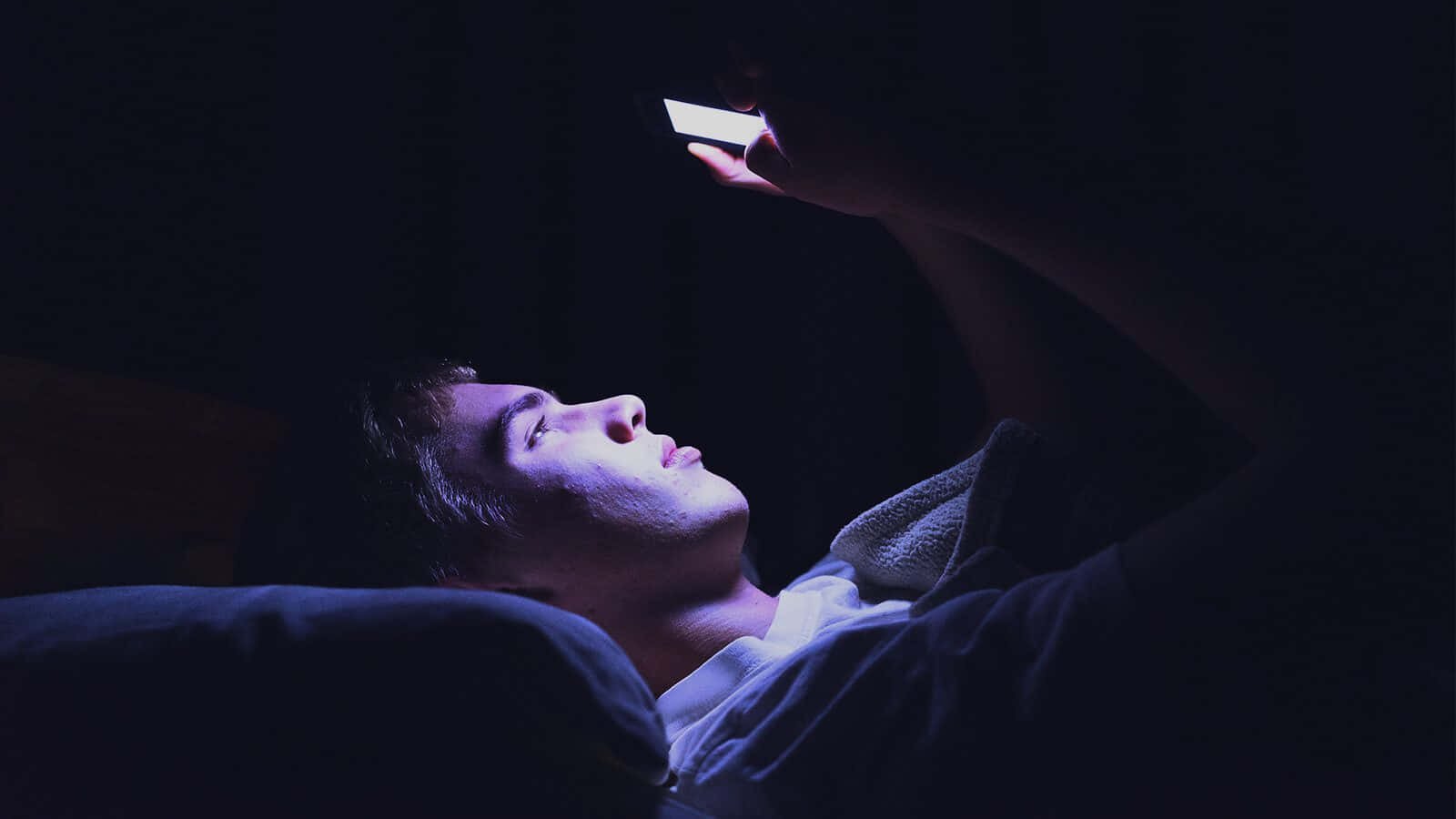
You already suspect the answer. That nightly scroll — one more video, one more thread, one more episode — and suddenly it’s 1 AM and you’re wired but exhausted. Can too much screen time affect my sleep? Yes, through multiple mechanisms, and the research is stronger than the “just turn on night mode” crowd wants to admit. Let’s look at what’s actually happening and what realistically helps.
Three Ways Screens Steal Your Sleep
1. Blue light suppresses melatonin. This is the mechanism everyone knows, and it’s real. The short-wavelength light from screens signals your brain’s clock that it’s daytime, suppressing the melatonin that should be rising in the evening. Studies show evening screen use can delay melatonin onset by over an hour. Night mode and blue-light glasses help marginally — they reduce but don’t eliminate the effect, and they do nothing about the other two mechanisms.
2. Content keeps your brain aroused. This is the bigger factor for most people, and the one filters can’t fix. An argument in the comments, a stressful news story, a cliffhanger episode — all spike cortisol and adrenaline, the exact opposite of the wind-down your brain needs. Your nervous system can’t tell the difference between a Twitter fight and a real threat. Doomscrolling is, physiologically, a threat simulation.
3. Screens displace sleep time. The simplest mechanism: every minute scrolling is a minute not sleeping. But it’s sneakier than that — screens also fragment the wind-down routine. Instead of the gradual deceleration humans did for millennia (dimming light, quieting activity), we go from full stimulation to lights-out in seconds and wonder why sleep doesn’t come.
What the Research Shows
The associations are consistent across age groups: more evening screen time correlates with longer time to fall asleep, shorter total sleep, and poorer sleep quality. Teenagers are hit hardest — their eyes are more sensitive to light and their self-regulation is still developing — but adults show the same patterns. One striking finding: using a phone in bed is associated with worse outcomes than the same screen time earlier in the evening. The bed-phone combination seems uniquely disruptive, probably because it pairs the brightest light exposure with the most engaging content at the exact moment your brain should be powering down.
If falling asleep is your main struggle, our guide to falling asleep faster at night covers the full toolkit. And if you’re already using sleep aids, read whether nightly melatonin is safe — screens may be the reason you feel you need it.
A Realistic Fix (Not “Throw Away Your Phone”)
Abstinence-only screen advice fails like abstinence-only everything else. Here’s a graduated plan that actually sticks:
- Charge your phone outside the bedroom. This single change is the highest-impact move. Buy a $10 alarm clock. The first three nights feel strange; by night seven you won’t go back.
- Set a screen curfew — start with 30 minutes. Don’t aim for the idealized “no screens after 8 PM” immediately. Start with 30 screen-free minutes before bed and expand once it’s easy.
- Make the last hour boring by design. The goal isn’t virtue — it’s lowered arousal. A paper book, stretching, tidying up, a podcast (audio only, phone face-down). Boring is the point.
- If you must use screens, change what, not just the brightness. A calm documentary beats a heated debate. Reading an ebook beats social media. Content matters more than color temperature.
- Use grayscale mode in the evening. On both iPhone and Android, you can set the screen to black-and-white. It makes the phone dramatically less compelling — which is exactly the point.
- Morning light anchors the whole cycle. 10-15 minutes of outdoor light within an hour of waking strengthens your circadian rhythm, making evening wind-down easier. Screens are less disruptive to a well-anchored clock.
The Daytime Screen Factor
Evening gets the attention, but total daily screen time matters too — especially for remote workers who go from laptop to TV to phone without a break. All-day screen exposure is linked to eye strain, headaches, and the kind of wired-tired feeling that masquerades as insomnia. Regular breaks (the 20-20-20 rule: every 20 minutes, look at something 20 feet away for 20 seconds), outdoor time, and physical activity all buffer the effects. Our guide to reducing screen time in the evening has lifestyle-level strategies.
The Sleep Foundation maintains excellent, research-backed guidance on screens and sleep hygiene if you want the deeper evidence.
Can Too Much Screen Time Affect My Sleep? Your Questions Answered
Do blue-light glasses actually work?
Partially. Quality blue-light glasses do filter short-wavelength light, and some studies show modest improvements in sleep onset. But they’re solving maybe 20% of the problem — the light part — while ignoring the bigger issues: stimulating content and time displacement. Someone wearing blue-light glasses while arguing on social media until 1 AM won’t sleep well, glasses or not. They’re a reasonable supplement to better habits, not a substitute. If you buy them, get ones with verified filtering (cheap ones are often just yellow-tinted plastic) — but fix the content and timing first.
Is TV before bed as bad as phone scrolling?
Generally less bad, for three reasons: the screen is farther away (less light intensity at your eyes), the content is usually more passive (you’re watching, not interacting), and it doesn’t involve the intermittent-reward dopamine loop of social media feeds. A calm show on TV from the couch is meaningfully different from an hour of TikTok in bed. That said, binge-watching intense thrillers until 2 AM still wrecks sleep through arousal and time displacement. The hierarchy: phone in bed (worst) → phone on couch → TV → book/audio (best).
What about e-readers — do they count as screen time?
E-ink readers (Kindle Paperwhite and similar) are much closer to paper books than to phones — no backlight shining into your eyes (the light illuminates the page surface), no notifications, no infinite scroll. Backlit tablets and phones used as e-readers are a different story. If you read on a phone or tablet, use the darkest comfortable brightness, enable night mode, and — most importantly — read actual books, not social media. The device matters less than what you’re doing on it.
The Bottom Line
Too much screen time affects sleep through blue light, mental arousal, and sheer time displacement — and the bed-scrolling habit is the worst version of all three. You don’t need digital asceticism; you need the phone out of the bedroom, a boring last 30-60 minutes, and morning sunlight. Try it for two weeks. Most people are shocked how much of their “insomnia” was just a glowing rectangle.


