Ashton Kutcher — The $500 Million Question: Acting Money, Venture Money and the Gap Between Them
Written by admin
Published November 24, 2026
Reading time 9 minutes
The Numbers Born first, net worth second — the full record sits in the “By the Numbers” table after the career section.
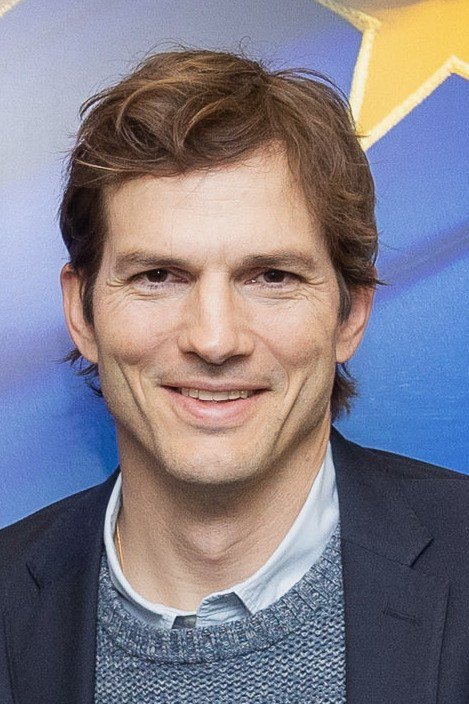
Ashton Kutcher — The $500 Million Question: Acting Money, Venture Money and the Gap Between Them
The Ashton File at a Glance: Cedar Rapids, That ’70s Show and Staying Power
Ashton Kutcher is the Iowa-born model-turned-actor who became, first, a sitcom star of two separate television eras, and then — in the second career that now dominates his public identity — one of the most successful celebrity technology investors in the world, an early backer of companies that defined the consumer internet. In May 2026 he took a senior advisory role at his firm Sound Ventures and set about building a new deep-technology venture, with Bloomberg and Reuters covering the fund’s positions in November 2026 as financial news, not celebrity news.
This profile sets out both careers, the family, and the fortune — which carries the widest published disagreement in this batch, printed in full in the part of this profile about the money, with the tracker’s own allocation of the total examined line by line.
The Story So Far Ends Here for Ashton: Sound Ventures in 2026
Kutcher at forty-eight is the test case of the celebrity-to-capital transition: the sitcom fortune was the stake, the early internet positions were the play, and the AI-era funds are the position he now holds in public, covered by the financial press on the merits. The May 2026 advisory role and the reported deep-technology firm suggest consolidation rather than expansion of the empire — the founder’s phase.
Counted plainly: $500 million on the named tracker’s current, live-confirmed estimate; $200–300 million across the rest of the published field; acting earnings documented to the $100 million order; and a venture share that nobody outside the funds can count. This profile prints all of it, flagged, and resolves none of it — because the sources don’t.
Reading the Record for Ashton: $500 million Beside Birth, Family and Work
| Reading the Record for Ashton: $500 million Beside Birth, Family and Work | The Record |
|---|---|
| Born | 7 February 1978, Cedar Rapids, Iowa |
| Net Worth | $500 million — Celebrity Net Worth, live-confirmed 22 November 2026 (see the part of this profile about the money) |
| Age | 48 |
| Height | 6 ft 2 in (1.88 m) |
| Weight | No reliable published figure exists |
| Wife | Mila Kunis (married 4 July 2015) |
| Children | Two: Wyatt Isabelle (born 1 October 2014) and Dimitri Portwood (born 30 November 2016) |
| Parents | Larry M. Kutcher and Diane Kutcher, née Finnegan |
| @aplusk |
What Came After That ’70s Show: The Career, Step by Step
1998 — That ’70s Show
His first acting role was the lead one: Michael Kelso on That ’70s Show, which ran from 1998 and made him, at twenty, a network television star. The show’s ensemble included Mila Kunis, cast as his character’s girlfriend — a fact of no biographical consequence at the time, since both were teenagers in a cast, and of considerable consequence seventeen years later, as the part of this profile about the family records.
2000–2003 — The Film Comedies and Punk’d
The film career ran on the television fame: a 2000 comedy opposite Seann William Scott among the early vehicles, then the romantic comedies that made him a film lead. In 2003 he created and hosted Punk’d, the hidden-camera prank series that made him a producer as well as a performer — the first exercise of the ownership instinct that the venture career would later express at scale.
2011 — Two and a Half Men
His return to sitcoms in 2011, replacing Charlie Sheen on Two and a Half Men, was the richest casting story of its year: a reported peak fee in the region of $700,000 to $800,000 an episode — earnings, labelled here as earnings — made him American television’s highest-paid actor for a period, and Forbes counted about $24 million for him in the year to June 2013, again as earnings. The sitcom fortune, on its own, would be a complete financial biography.
The Venture Career
The investing began with personal stakes in the consumer internet’s founding generation — early positions in companies including Skype, Airbnb and Uber, taken when such stakes were available to a famous chequebook with genuine conviction — and professionalised into A-Grade Investments and then Sound Ventures, the firm he co-founded with Guy Oseary. The firm’s positions in artificial intelligence companies became, in the 2020s, the centre of the financial story, and the part of this profile about the money below examines them, where the distinction between a fund’s assets and a founder’s wealth does the important work.
2026 — Sound Ventures and the Deep-Technology Firm
In May 2026 Kutcher took a senior advisory role at Sound Ventures and began forming a new deep-technology firm; Bloomberg and Reuters coverage in November 2026 treated the fund positions as market news. The acting continues alongside — The Ranch had closed the sitcom chapter in 2020, and Vengeance (2022) marked the recent film work — but the centre of gravity of the public career is now the portfolio.
The producing instinct that connects the two careers deserves its paragraph, because it appeared before the money did. Punk’d in 2003 was not a hosting job: Kutcher created the format, produced it through his own company and owned a position in a series that ran for years and sold internationally — the entertainment version of the equity habit, practised at twenty-five. The same pattern ran through his production company’s television output across the following decade. When the technology investing began, the chequebook was new but the behaviour was not: take positions, not fees; build the vehicle, not just the appearance. The venture firms are that behaviour at institutional scale, and the acting fortune was simply the first pool of capital it had to work with.
Ashton Grows Up in Cedar Rapids: The Formative Years
Christopher Ashton Kutcher was born on 7 February 1978 in Cedar Rapids, Iowa. His father, Larry M. Kutcher, was a factory worker; his mother, Diane Kutcher, née Finnegan, worked for Procter & Gamble. The upbringing was a working one in eastern Iowa, and the biography’s early chapters are standard Midwestern material — school sports, a plan to study biochemical engineering at the University of Iowa, and a childhood marked by serious illness within his immediate family, which he has discussed publicly as the origin of his later interest in children’s health causes. This profile carries that episode in his own general terms, as he states it, and no further.
The route out was improbable and documented: scouted in an Iowa bar by a modelling agency in 1997, he won a modelling competition, went to New York, and within a year had converted a Calvin Klein runway season into a Los Angeles acting audition — for the role that made him. He abandoned the engineering plan for the standard reason: the improbable thing worked first.
The table records his parents. The part of this profile about the family sets out the family record beyond the household he has made with his wife; the roots close with the observation his own telling always makes, that a household where factory and office wages, not inheritance, formed the venture career’s appetite for risk.
A Household of Their Own: Ashton, Mila and Family
Kutcher’s wife is Mila Kunis, whom he married on 4 July 2015; the marriage is current in 2026. The two had met as teenagers on That ’70s Show in 1998, where she played his character’s girlfriend, and reconnected as adults after separate marriages and careers — the most documented co-star-to-spouse arc in their generation of television, and one both have discussed publicly with evident amusement at its improbability. The connection is also this profile’s cross-link, taken up in the part of this profile about the money below.
They have two children: Wyatt Isabelle, born 1 October 2014, and Dimitri Portwood, born 30 November 2016. A stated parental policy raises the children out of the public apparatus — no social media presence of their own, faces kept from the parents’ channels — and this profile records their names and dates, as the public record gives them, and nothing more.
His first marriage, to Demi Moore, began in September 2005; the couple separated in 2011 and finalised the divorce in 2013. It belongs to the record as history, and to the biography as the period in which the investing career began. His parents, Larry and Diane Kutcher, stand at the head of the family record as set out in this profile. His Instagram account, @aplusk — a handle from the medium’s early days, when he was its first user to a million followers — now carries the venture work and the causes more than the acting.
The Celebrity Net Worth Estimate and the Career That Supports It
The Beverly Hills Farmhouse Howard Backen Built
His principal recorded property is the Beverly Hills sustainable farmhouse built with the architect Howard Backen — a much-published piece of eco-architecture that functions as the family’s main residence — together with a beach property at Carpinteria. This profile records the properties as holdings; nobody publishes an inventory total, and this profile constructs none.
Celebrity Net Worth puts Ashton Kutcher’s net worth at $500 million, live-confirmed on 22 November 2026 against the tracker’s own page, which updated its model on 16 November 2026. This profile prints the disagreement around this figure — the largest in the batch — in full: the same tracker cited $200 million for years; many 2026 round-ups still carry $200–300 million; Forbes publishes no net-worth total for him at all. The $500 million is the tracker’s current position, attributed as such, and the tracker’s own allocation explains the jump — about $100 million to acting, about $100 million to other venture holdings, and about $300 million to a prospective share of Sound Ventures.
That allocation is where readers need care, and this profile applies it. The fund stakes the tracker points to — reported positions of roughly 0.15 per cent of OpenAI and 0.5 per cent of Anthropic — belong to the funds and their investors, not to Kutcher personally. A fund founder’s personal economics run through management fees and carried interest, and he has disclosed no carried-interest share. The honest statement of the position is therefore double: the acting fortune is real and documented at the $100 million order by the earnings record — Forbes’s $24 million year, the $700,000-plus episode fees — and the venture fortune is real but unmeasurable from outside, resting on stakes whose value the tracker models at a scale the public record cannot confirm. This profile prints the $500 million as the named source’s current estimate and the $200 million floor of the disagreement beside it; readers learn, as the sources leave it, that the truth depends on numbers only the funds possess.
The partnership at the centre of both the life and the early career is with his wife: Mila Kunis’s net worth profile counts her separate fortune, and the two files together — the Kelso and Jackie of 1998, the spouses of 2015 — describe the most valuable on-screen pairing either of them ever made.
The early positions repay a summary, stated at the level the public record supports. The personal investments of the 2009–2013 period — early stakes in companies of the consumer internet’s founding generation, Airbnb and Uber among the names the record attaches to him — he took them when the market treated celebrity technology investing as a novelty, and they returned at venture multiples that turned a sitcom fortune into investment capital of a different order. The professionalisation into A-Grade and then Sound Ventures converted the personal record into an institution with outside investors, which is precisely where the public accounting stops: a firm’s assets under management are its investors’ money, its positions are the funds’, and its founder’s wealth is the undisclosed residue of fees and carried interest. This profile’s money section held that line, and it is the line any honest account of the $500 million has to hold.