
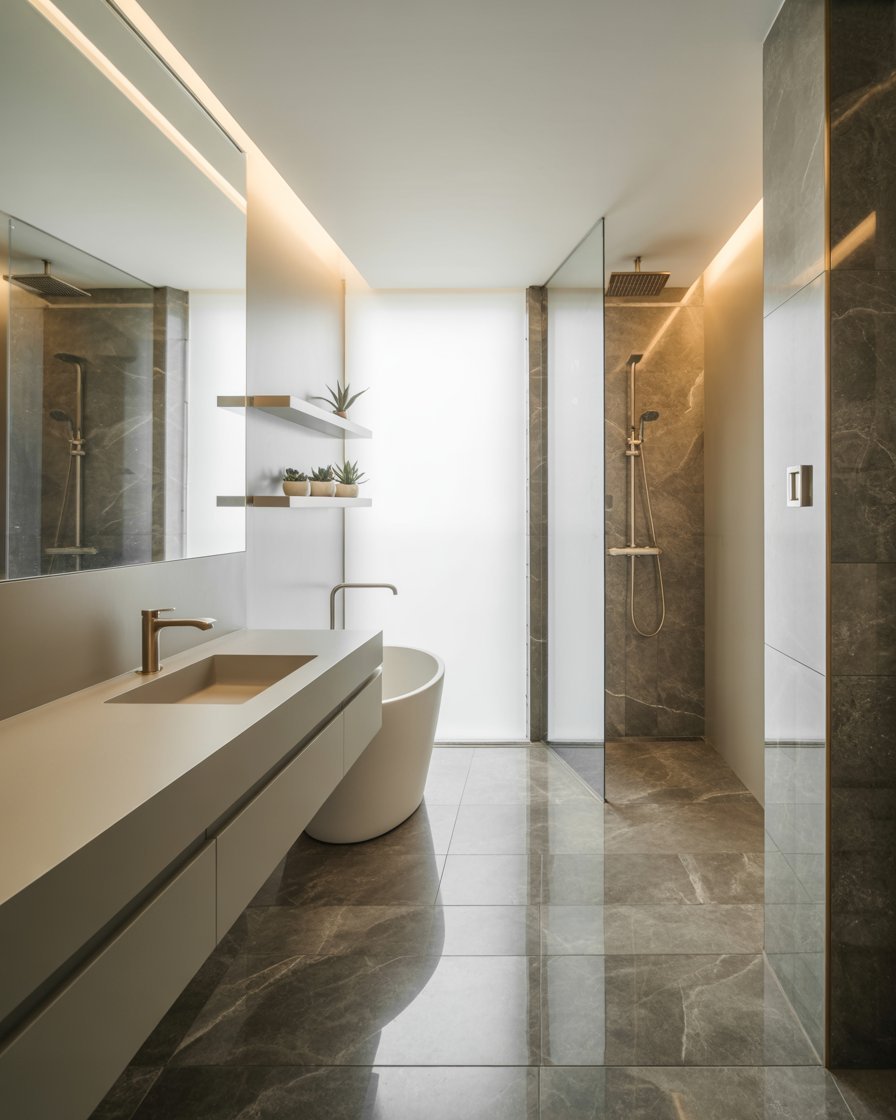
The bathroom: smallest room, biggest cost per square foot. Whether yours has avocado tile from 1972 or just looks tired, you’re probably wondering what the damage will be. So how much does a bathroom remodel cost on average in 2026? The national average hovers around $12,000–$15,000 for a full remodel, but the real range is enormous: $3,000 for a cosmetic refresh to $30,000+ for a luxury gut renovation. Here’s what drives the number and how to control it.
How Much Does a Bathroom Remodel Cost on Average? By Scope
- Cosmetic refresh ($3,000–$8,000): Paint, new fixtures, mirror, lighting, hardware, reglazed tub. No plumbing moves, no tile demo. The best value in remodeling — looks new, costs little.
- Mid-range remodel ($12,000–$20,000): New tile, vanity, toilet, tub/shower, flooring. Plumbing stays roughly where it is. This is the typical “rip out the 90s and start over” project and the national average lives here.
- Upscale remodel ($25,000–$40,000+): Layout changes, moving plumbing, custom tile work, frameless glass shower, heated floors, high-end fixtures. Costs escalate fast once walls open and pipes move.
- Powder room / half bath: $5,000–$12,000 — smaller scope, but per-square-foot costs run higher.
- Adding a new bathroom: $15,000–$35,000+ depending on plumbing access. The most expensive bathroom project because you’re building infrastructure from scratch.
Where the Money Goes
Typical cost breakdown for a mid-range remodel:
- Labor: 40–50% of the total. Bathrooms are labor-intensive — plumbers, electricians, tile setters in a tiny space. This is why DIY saves so much here (and why it’s miserable to DIY).
- Tile and shower: 15–25%. Tile labor is the expensive part; the tile itself ranges from $2/sq ft (basic ceramic) to $20+/sq ft (natural stone, handmade).
- Fixtures (toilet, vanity, faucets): 10–15%. Huge range — a $150 toilet vs. a $800 one; both flush.
- Plumbing and electrical: 10–15%, doubling if you move fixtures. Keeping the toilet, sink, and shower in place is the single biggest cost saver.
- Vanity and countertop: 8–12%.
- The “while we’re in there” tax: 10–20% contingency for what you find behind walls — rot, mold, bad wiring. In older homes, budget this; you’ll need it.
How to Keep Costs Under Control
- Don’t move plumbing. Worth repeating: every moved drain or supply line adds $500–$2,000. Design around existing locations.
- Keep the footprint. Expanding into adjacent space means framing, flooring transitions, and permits — keep the same square footage.
- Choose tile wisely. Classic white subway tile ($2–$5/sq ft) looks timeless and installers lay it fast. Save the handmade zellige for an accent wall, not the whole shower.
- Refinish instead of replace. Tub and tile reglazing ($400–$800) makes old fixtures look new at a fraction of replacement cost. Not forever (5–10 years), but excellent value.
- Buy fixtures yourself. Contractors mark up materials 10–30%. Source your own toilet, vanity, and faucets during sales.
- DIY the demo and painting. Safe, satisfying, and saves $500–$1,500. Leave plumbing, electrical, and tile to pros unless you’re experienced.
- Get 3+ quotes. Bathroom quotes vary wildly — 50%+ spreads are common. Compare line items, not just totals.
For current cost data, HomeAdvisor’s bathroom remodel cost guide aggregates thousands of real project reports and is worth checking for your zip code.
What Adds Resale Value (and What Doesn’t)
Bathroom remodels recoup roughly 60–70% of cost at resale — solid, not spectacular. What buyers pay for: a second bathroom (adding one has the best ROI in the category), modern neutral finishes, good lighting, and a bathroom that feels bigger than it is. What doesn’t pay: ultra-luxury fixtures in a mid-range home, over-customized design (your bold taste isn’t the buyer’s), and moving walls for marginal gains. Remodel for your enjoyment first; treat resale recovery as a bonus, not the justification.
Timeline Reality
A cosmetic refresh: 1–2 weeks. A mid-range remodel: 3–5 weeks. Upscale with layout changes: 6–10 weeks. Add 2–4 weeks for planning, ordering (tile and vanities have lead times — order before demo day), and contractor scheduling. You’ll be without that bathroom the whole time — plan accordingly if it’s your only one. (Remodeling your only bathroom is a special kind of adventure; budget for the gym shower or a sympathetic friend.)
Hiring a Bathroom Contractor: Vetting Checklist
The contractor makes or breaks a bathroom remodel more than any material choice. Vet carefully:
- Get 3+ itemized quotes. Not lump sums — line items for demo, plumbing, electrical, tile, fixtures, and finishes. Itemization reveals who’s thorough and who’s guessing, and it gives you a basis for comparing honestly.
- Check license and insurance. Verify the license with your state board (don’t take their word), confirm general liability + workers’ comp insurance, and get certificates directly from their insurer. Uninsured contractors are your financial liability if someone gets hurt.
- Call references — and visit a past job. Ask past clients: Did they stay on schedule? How did they handle surprises? Was the final price close to the quote? Would you hire them again? The last question tells you everything.
- Ask about moisture management specifically. Bathrooms fail from water, not aesthetics. Ask: How do you waterproof the shower? What backer board do you use? How do you vent the fan? Vague answers here are disqualifying — and knowing how bathroom mold starts helps you evaluate whether their moisture plan is serious.
- Get the schedule in writing. Start date, milestones, completion date, and penalties for delays. Bathroom contractors juggling multiple jobs is the #1 cause of 3-week projects becoming 8-week ones.
- Payment schedule tied to milestones. 10–30% deposit, payments as phases complete, final 10%+ on satisfactory completion. Never pay in full upfront. Never.
- Ask who does the tile. Many GCs subcontract tile — ask to see the tile setter’s work specifically. Bad tile ruins good bathrooms; the grout lines you’ll stare at for a decade are only as good as the setter.
Red flags: no written contract, demands large cash deposit, can’t provide references, significantly underbids everyone (they’ll make it up in change orders), or wants to start tomorrow (good contractors are booked out). The right contractor costs more than the cheapest bid and less than fixing the cheapest contractor’s work.
The Practical Takeaway
A bathroom remodel averages $12,000–$20,000 for a mid-range job, but the smart money is on scope control: keep plumbing where it is, choose classic affordable tile, refinish rather than replace where possible, and DIY the demo and paint. Get multiple itemized quotes, keep a 15–20% contingency for surprises behind the walls, and order materials before demolition starts. The cheapest bathroom remodel is the cosmetic refresh at $3,000–$8,000 — and honestly, for many bathrooms, it’s all they need.


