
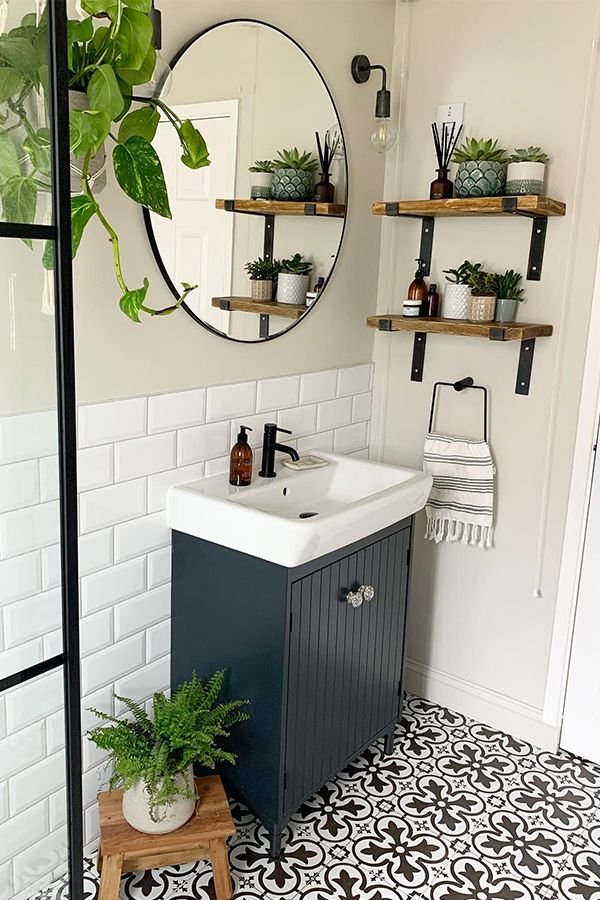
Small bathrooms are a fact of life — especially in older homes and city apartments. But “small” doesn’t have to feel cramped. So how can I make my bathroom look bigger with simple changes? No demolition, no moving plumbing, no $15,000 remodel. Just smart visual tricks that designers use to make tiny bathrooms feel twice their size. Most of these are weekend projects under $200.
Color and Light: The Foundation
- Go light and bright. White, soft gray, pale blue, warm beige — light colors reflect light and push walls visually outward. This is the highest-impact change you can make. A dark small bathroom feels like a cave; a light one feels airy.
- Paint the ceiling too. A white ceiling is standard, but painting it the same color as the walls (or a shade lighter) removes the visual “stop” line and makes the ceiling feel higher.
- Maximize natural light. If you have a window, don’t cover it with heavy curtains — use frosted film or a light-filtering shade for privacy without blocking light. No window? Upgrade the lighting: bright, layered light (overhead + vanity) eliminates the shadows that make small rooms feel smaller. Daylight-temperature bulbs (5000K) in a windowless bath mimic sunlight.
- Add a mirror — then add another. A large mirror over the vanity is obvious; a second mirror on an adjacent wall (or a mirrored cabinet) doubles the effect. Mirrors are the oldest small-space trick because they work: they bounce light and create the illusion of depth. Go as big as the wall allows.
How Can I Make My Bathroom Look Bigger With Simple Changes? Fixtures and Layout Tricks
- Choose a pedestal or wall-mounted sink. A bulky vanity cabinet eats visual space. A pedestal sink or floating vanity reveals floor underneath, which tricks the eye into reading the room as larger. If you need storage, a floating vanity gives you both.
- Clear glass shower doors. A shower curtain (or frosted glass) chops the room in half visually. Clear glass lets the eye travel the full depth of the room — one of the most dramatic single changes you can make. Keep the glass clean (squeegee after showers) or the effect reverses.
- Raise the shower curtain rod. If you’re keeping a curtain, mount the rod near the ceiling and use an extra-long curtain. It draws the eye up and makes ceilings feel taller. A curved rod adds elbow room inside too.
- Use large-format tile. Counterintuitive, but big tiles (12×24 or larger) with minimal grout lines make floors look more expansive than small mosaic tile with its busy grid. Fewer grout lines = calmer, larger-feeling surface. Keep grout lines thin and color-matched to the tile.
- Run floor tile wall-to-wall. Extending the same tile from floor up one wall (or into the shower) erases visual boundaries between zones.
Declutter: The Free Renovation
Nothing shrinks a bathroom faster than clutter. Be ruthless:
- Clear the counters completely, then add back only daily essentials — ideally in a tray or organizer so it looks intentional.
- Move bulk storage elsewhere: extra toilet paper, cleaning supplies, and rarely-used products don’t need to live in a 40-square-foot room.
- Use vertical space: floating shelves, over-toilet storage, or a tall narrow cabinet draw the eye up and keep the floor clear.
- Matching containers and dispensers (soap, cotton balls, etc.) look infinitely tidier than a collection of original packaging.
- One statement piece — a plant, a piece of art, a nice bath mat — gives the room personality without chaos. Plants that love humidity (pothos, ferns) thrive in bathrooms.
Browse Houzz’s small bathroom ideas for visual inspiration — seeing real examples helps more than any description.
Small Upgrades With Big Visual Payoff
- Update the lighting fixture. A modern vanity light bar ($40–$100) instantly updates the room’s style and improves the light quality.
- Swap the faucet and hardware. Like in kitchens, new finishes (matte black, brushed nickel) modernize everything around them for under $150.
- New showerhead. A rainfall showerhead ($30–$80) makes a small shower feel luxurious — the experience of the room matters as much as the look.
- Refresh caulk and grout. Dingy grout ages a bathroom instantly. Clean it thoroughly (see how to clean grout between tiles) or re-grout — the room will look years newer.
- Hang the towels right. A heated towel rail or simple hooks instead of a bulky towel bar keeps things streamlined. Fluffy white towels read as “spa”; mismatched old ones read as “dorm.”
What to Avoid
Dark colors on all surfaces, busy patterned tile everywhere (one patterned accent is fine; four is chaos), oversized fixtures that crowd the room, and too many small decor items — in a tiny bathroom, three thoughtful pieces beat twelve knickknacks. Also: don’t block the door swing with storage, and don’t hang art so low it crowds the sightline.
Small Bathroom Layout Mistakes That Waste Space
Beyond color and mirrors, the actual layout of a small bathroom often works against it. These are the space-wasters designers see constantly:
- Door swing eating the room. A door that swings into a tiny bathroom consumes ~10 sq ft of usable space. Fix: reverse the swing (if it can open outward into a hallway), install a pocket door (bigger project, huge payoff), or at minimum ensure the swing doesn’t block the vanity or toilet.
- Oversized vanity. That 48-inch vanity in a 5×8 bathroom is a space hog. A 24–30 inch vanity or pedestal sink frees shocking amounts of floor. You lose some storage — gain it back with a medicine cabinet and over-toilet shelving.
- Tub when a shower would do. A standard tub eats 13+ sq ft. If nobody bathes, a walk-in shower in the same footprint feels twice as big and looks modern. (Resale note: keep at least one tub in the house for families with small kids.)
- Poor lighting placement. A single overhead light casts shadows that shrink the room visually. Vanity lighting at face height (sconces flanking the mirror, not a bar above) illuminates evenly and flatters — the rare upgrade that’s both functional and beautifying.
- Visual clutter at eye level. Open shelving packed with products, 15 bottles around the tub, stuff on the toilet tank — every item at sightline fragments the space. Corral ruthlessly: one tray, one dispenser set, done.
- Ignoring the back of the door. An over-door organizer or hooks add storage in zero floor space. The most underused square footage in small bathrooms.
If layout changes appeal but the budget doesn’t stretch to a full renovation, focus on the free wins first: declutter sightlines, optimize the door situation, and fix the lighting. Those three alone transform how the room feels. And when you’re ready for more, understanding real bathroom remodel costs helps you plan the right scope — while keeping mold and moisture in check ensures the pretty renovation stays healthy underneath.
The Practical Takeaway
Making a bathroom look bigger comes down to light colors, big mirrors, clear sightlines (glass shower doors, floating fixtures), large-format tile, and ruthless decluttering. None of these require a contractor; most are weekend projects under $200 total. The underlying principle is simple: anything that lets light travel and eyes move uninterrupted makes a space feel larger. Do the free stuff first (declutter, clean grout, rearrange) — you might be surprised how much bigger the room feels before you spend a dime.


