
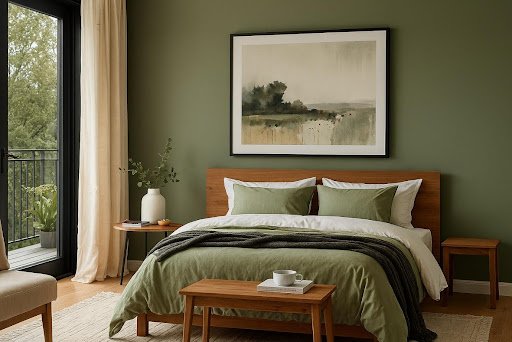
Fresh paint is the cheapest transformation in home improvement — a tired bedroom can feel brand new for a few hundred bucks. But should you hire it out or DIY? So how much does it cost to paint a bedroom professionally in 2026? The short answer: most homeowners pay $300 to $800 for a standard bedroom, with the national average hovering around $500. But that number swings a lot based on room size, ceiling height, paint quality, and where you live. Let’s break down what you’re actually paying for.
How Much Does It Cost to Paint a Bedroom Professionally? The Numbers
Professional painters typically charge in one of three ways: per square foot of wall space ($2–$6), per room (flat rate), or hourly ($25–$75 per painter). For a standard 12×12 bedroom with 8-foot ceilings, here’s what that looks like:
- Budget range: $300–$450 — one coat of contractor-grade paint, minimal prep, smaller markets
- Average range: $450–$650 — two coats of quality paint (Sherwin-Williams, Benjamin Moore), standard prep, most US markets
- Premium range: $650–$1,000+ — high-end paint, extensive prep (patching, sanding, priming), trim and ceiling included, high-cost cities
Those figures usually cover walls only. Add-ons stack up: ceiling ($150–$300), trim and baseboards ($200–$400), closet interior ($75–$150), accent wall ($100–$200). A “paint the whole bedroom including everything” job often lands at $800–$1,200.
What Drives the Price Up (or Down)
- Room size and ceiling height. A 10×10 bedroom with 8-foot ceilings has roughly 320 sq ft of wall space. Vaulted or 10-foot ceilings can nearly double the paintable area — and require more ladder work, which painters charge for.
- Condition of the walls. Smooth walls in good shape are quick. Walls needing patching, sanding, or primer over dark colors add labor hours fast. This is the biggest variable most quotes hinge on.
- Paint quality. Contractor-grade paint runs $25–$35/gallon; premium lines run $50–$80/gallon. A bedroom needs 2–3 gallons. Better paint covers in fewer coats and lasts longer — most pros recommend the mid-tier at minimum.
- Your market. Painting costs 30–50% more in coastal metros than in the Midwest or South. Get local quotes; national averages are just a starting point.
- Furniture. An empty room is fastest. A furnished room means moving and masking everything — expect a surcharge, or move what you can yourself.
How to Get an Accurate Quote
Get at least three quotes, and make sure they’re quoting the same scope: number of coats, paint brand and line, what’s included (ceiling? trim? closet?), and prep work. A quote that’s 40% cheaper than the others usually means fewer coats or skipped prep — not a bargain. Ask each painter: How do you protect floors and furniture? What’s your prep process? Do you caulk trim gaps? The answers tell you more than the price does.
Timing matters too. Painters’ slow season (late fall through winter, excluding holidays) often brings 10–15% discounts. If your timeline is flexible, ask. And check reviews on HomeAdvisor or Google — painting is one trade where the difference between a careful pro and a sloppy one is visible for years.
DIY vs. Hiring Out: The Honest Math
DIY-ing a bedroom costs $100–$200 in materials (paint, rollers, tape, drop cloths, brushes). So you’re saving $300–$600 in labor. Sounds great — but factor in your time (a first-timer needs a full weekend for a decent job), the learning curve on cutting in clean lines, and the very real chance the result looks… DIY. My take: paint it yourself if the walls are in good shape, you’re going one light color over another light color, and you actually enjoy the work. Hire out if there are repairs needed, you’re making a dramatic color change, the ceilings are high, or your weekends are worth more than the savings.
There’s also a middle path: do the prep yourself (patching, sanding, taping) and hire a painter for the application. Some painters will discount for this; all of them will appreciate it.
Choosing Paint: What Pros Recommend
- Finish: Eggshell or satin for bedroom walls — durable enough to wipe, soft enough to look calm. Flat hides imperfections but marks easily.
- Color: Lighter colors make bedrooms feel bigger and calmer; test with large swatches on the wall and observe them at different times of day. If you’re working with a small living room, the same principles apply — light, warm neutrals open up tight spaces.
- Coats: Two coats is the professional standard. One-coat promises are how disappointing paint jobs happen.
- Primer: Needed over dark colors, bare drywall patches, or stains. Skip it on previously painted walls in good condition with a similar color.
Negotiating With Painters (Without Being That Customer)
Painting quotes have more flex than most homeowners realize — but there’s a right way to negotiate that gets you a better price without getting worse work:
- Get the scope identical first. You can’t compare quotes meaningfully until all three cover the same work: same coats, same paint line, same prep, same inclusions. Ask each painter to itemize — the itemization itself often reveals who’s cutting corners.
- Ask “what would bring this down?” rather than demanding a lower number. Painters will tell you: doing your own prep, moving furniture yourself, flexible scheduling, or dropping the closet from the scope. These are legitimate savings, not squeezed margins.
- Bundle rooms. A painter already set up in your house can do a second bedroom for little marginal cost — the per-room price drops 20–30% on multi-room jobs. If you’ve been considering the hallway too, now’s the time.
- Be flexible on timing. “Can you fit me in during a slow week?” is magic words. Painters discount off-peak work because an idle crew costs them money.
- Don’t haggle the good ones down to the bad one’s price. If the best painter quotes $700 and the sketchy one quotes $400, offering the good one $450 insults them and gets you declined. Meet in the middle via scope adjustments, not demands.
- Get it in writing. Whatever you agree — price, scope, paint brand, timeline, payment schedule (never pay 100% upfront; 30–50% deposit is standard) — in a written contract. Verbal agreements evaporate the moment there’s a dispute.
Red flags that should end the negotiation: no insurance, cash-only demands, pressure to decide today, or a quote dramatically below the others (it means skipped prep, cheap paint, or a painter who won’t be reachable when problems appear). The cheapest painter is rarely the least expensive outcome — a bad paint job costs twice: once to do, once to fix.
The Practical Takeaway
Expect to pay $300–$800 to paint a bedroom professionally, averaging around $500 for walls in a standard room with quality paint. Get three itemized quotes, compare scope (not just price), and consider the winter off-season for discounts. DIY saves $300–$600 but costs a weekend and risks amateur edges — worth it for simple repaints, less so for repairs or dramatic changes. Either way, invest in decent paint and two coats; it’s the difference between a room that looks fresh for three years and one that looks fresh for ten.


