
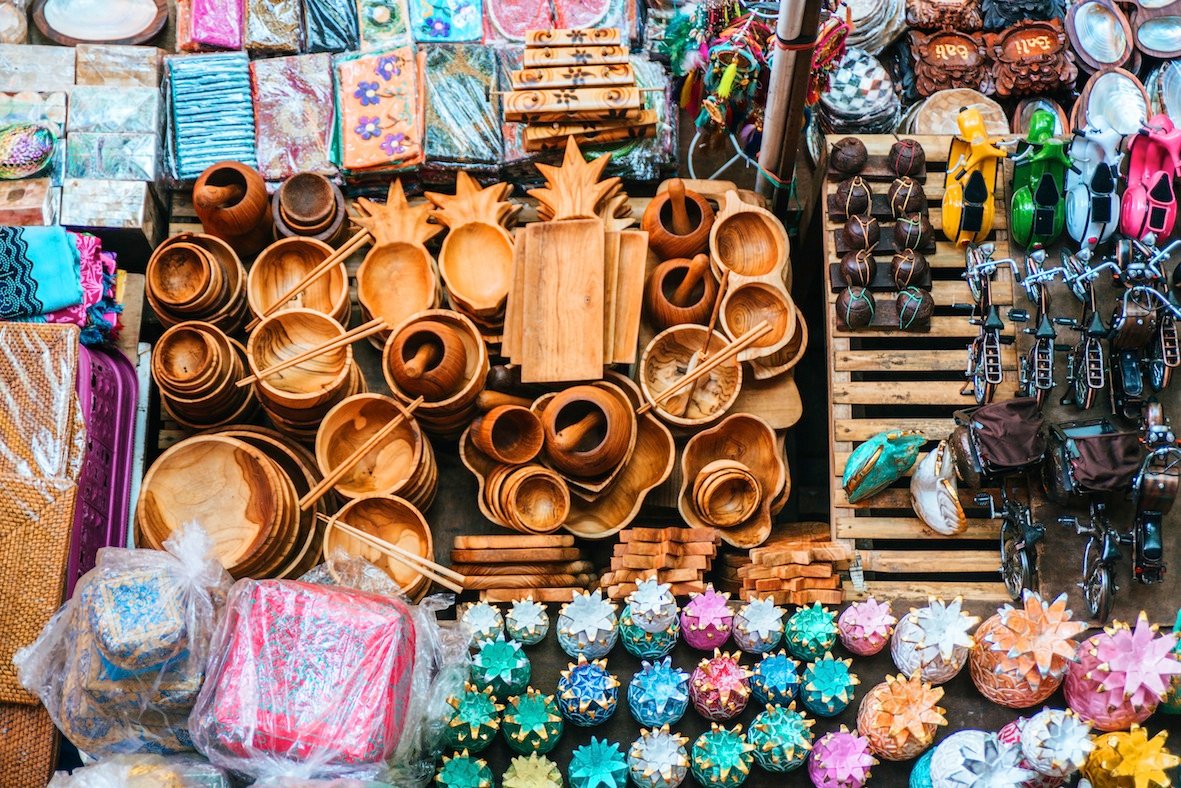
We’ve all bought the sad airport snow globe. You know the one — it seemed charming at the time, and now it lives in a drawer, unloved. So what are good souvenirs to buy that aren’t tacky? The kind people actually keep, use, or display? After years of travel and a strict personal rule (if I wouldn’t want it in my own home, I don’t buy it as a gift), I’ve figured out what separates a meaningful keepsake from clutter with a price tag.
The Golden Rule of Good Souvenirs
A good souvenir does one of three things: it’s useful, it’s edible/drinkable, or it’s genuinely connected to the place. The tacky stuff fails all three — a mass-produced “I ❤ NY” mug could have been made anywhere, by anyone, for any city. The test I use: could this only come from here? If yes, it’s probably a good buy. If you could find the same thing at any airport in the world, walk away.
What Are Good Souvenirs to Buy That Aren’t Tacky? 25 Ideas
Edible and drinkable (the safest bets)
- Local specialty foods. Olive oil from Tuscany, maple syrup from Vermont, spices from a Moroccan souk. Consumable = zero clutter guilt.
- Regional alcohol. A bottle of local wine, craft spirits, or sake from the prefecture you visited. Check customs limits before you stock up.
- Coffee or tea. Every region has its own — Hawaiian Kona, Turkish coffee, Japanese matcha. Daily-use items that trigger memories every morning.
- Chocolate and sweets. Belgian chocolate, Swiss chocolate, Japanese Kit Kats in weird flavors. Universally appreciated, never clutter.
- Hot sauce or condiments. Small, packable, and a fun way to remember a food culture. Just pack them in checked luggage.
Useful everyday items
- Textiles. A Turkish towel, a Scottish wool scarf, an alpaca throw from Peru. Beautiful, functional, and they last for years.
- Pottery and ceramics. A handmade mug or bowl from a local artisan gets used daily — the opposite of shelf clutter. Wrap carefully or ship it.
- Kitchen tools. A Japanese knife, an Italian olive oil cruet, a molcajete from Mexico. Cooks love these.
- Stationery. Japanese stationery shops are legendary; Italian paper goods are gorgeous. Light, packable, useful.
- A quality tote or market bag. From a museum or local market — practical and a subtle flex.
Art and craft with a real connection
- Prints from local artists. Street markets and gallery shops often sell affordable prints. A $30 print from a local artist you discovered beats a $10 mass-produced poster every time.
- Handmade jewelry. Silver in Taxco, amber in the Baltic states, turquoise in Santa Fe. Buy from artisans, not the shops with “authentic” in the window.
- Small-batch anything. Soap, candles, perfume from a local maker. The story (“made by a woman in Grasse”) is half the gift.
- Traditional crafts. Portuguese tiles, Mexican Talavera, Moroccan rugs (for the committed). Buy the real thing from the source region and it’s an heirloom.
- Books by local authors. A novel set in the city you’re visiting, bought at an independent bookstore there. My favorite souvenir category, honestly.
Experiences disguised as objects
- Records from local shops. Vinyl from a record store in the city — music you discovered on the trip.
- A piece of the place. Sand in a bottle is cliché; a small stone from a meaningful hike is personal. (Check local rules — some places prohibit removing natural materials.)
- Museum exhibition catalogs. Better than the gift shop trinkets, and they actually teach you something.
- Recipe ingredients + the recipe. Buy the spice blend and learn the dish. Then cook it for the person when you’re home.
- Something personalized. A leather journal embossed with initials in Florence, a name painted by a street artist. A personal touch improves just about anything.
Where to Shop (and Where Not To)
The venue matters as much as the item. Local markets and artisan workshops are the best sources — you meet the maker, prices are fair, and the story is built in. Museum shops are reliably good (curated, quality-controlled). The shops clustered around major attractions are where tacky goes to multiply — the further you walk from the famous landmark, the better the shops get. And airport shops are last-resort territory: overpriced, generic, and the opposite of thoughtful.
A word on bargaining: in cultures where it’s expected (much of the Middle East, parts of Asia, Latin America), bargain respectfully and with a smile. In cultures where it’s not (Japan, most of Europe), don’t. When in doubt, watch what locals do. And always remember that the souvenir trade has a long history — buying directly from artisans rather than middlemen keeps the tradition meaningful.
What to Avoid
- Anything with the city name in giant letters that you wouldn’t wear or display at home.
- “Authentic” items that are clearly mass-produced (if 50 shops sell the identical “handmade” item, it isn’t).
- Fragile things you can’t pack safely — broken souvenirs are just trash with shipping costs.
- Anything that might be made from endangered species, ivory, or protected materials. When in doubt, don’t.
- Buying for obligation. No one needs a gift from your trip; a good souvenir is a joy, not a duty.
Souvenirs for People Who Are Hard to Shop For
Some people are easy — they collect magnets and love them. Others make you break out in a cold sweat in the gift shop. For the hard cases:
- The minimalist: consumables only. Great coffee, local chocolate, a small bottle of regional olive oil. It gets used, not displayed, which is exactly what they want.
- The person who has everything: an experience, not an object. Cook them the dish you learned on the trip. Frame one great photo you took of the place. The souvenir is the story.
- Kids: something they can use or do — a simple instrument, a kite, art supplies from the region. Avoid fragile and noisy (for everyone’s sake).
- Coworkers: shareable food. A box of local sweets for the break room beats fifteen individual trinkets and costs less.
- The traveler themselves: sometimes the best souvenir is for you — the cookbook from the region whose food you loved, the print that’ll hang in your hallway for decades.
And a final rule: set a souvenir budget before the trip, not in the shop. Decide the total, divide by the people on your list, and stick to it. Souvenir spending spirals fast in vacation mode — a number agreed with yourself in advance is the only thing standing between you and a $200 bag of airport regrets. The travelers who bring home the best souvenirs aren’t the biggest spenders; they’re the most intentional shoppers, buying one right thing instead of ten almost-right things.
The Practical Takeaway
Good souvenirs that aren’t tacky share one trait: they couldn’t come from anywhere else. Buy edible things, useful things, and real craft from real makers — and buy them away from the tourist center. Spend the same $30 you’d waste on three airport trinkets on one good thing from a local artisan, and it’ll be kept for years instead of landing in a drawer. The best souvenir, in the end, is proof you were actually there — not just at the airport gift shop. If you’re taking travel photos of markets and workshops, you’ll have the story to go with the object, which is what makes it a keepsake instead of clutter.


