
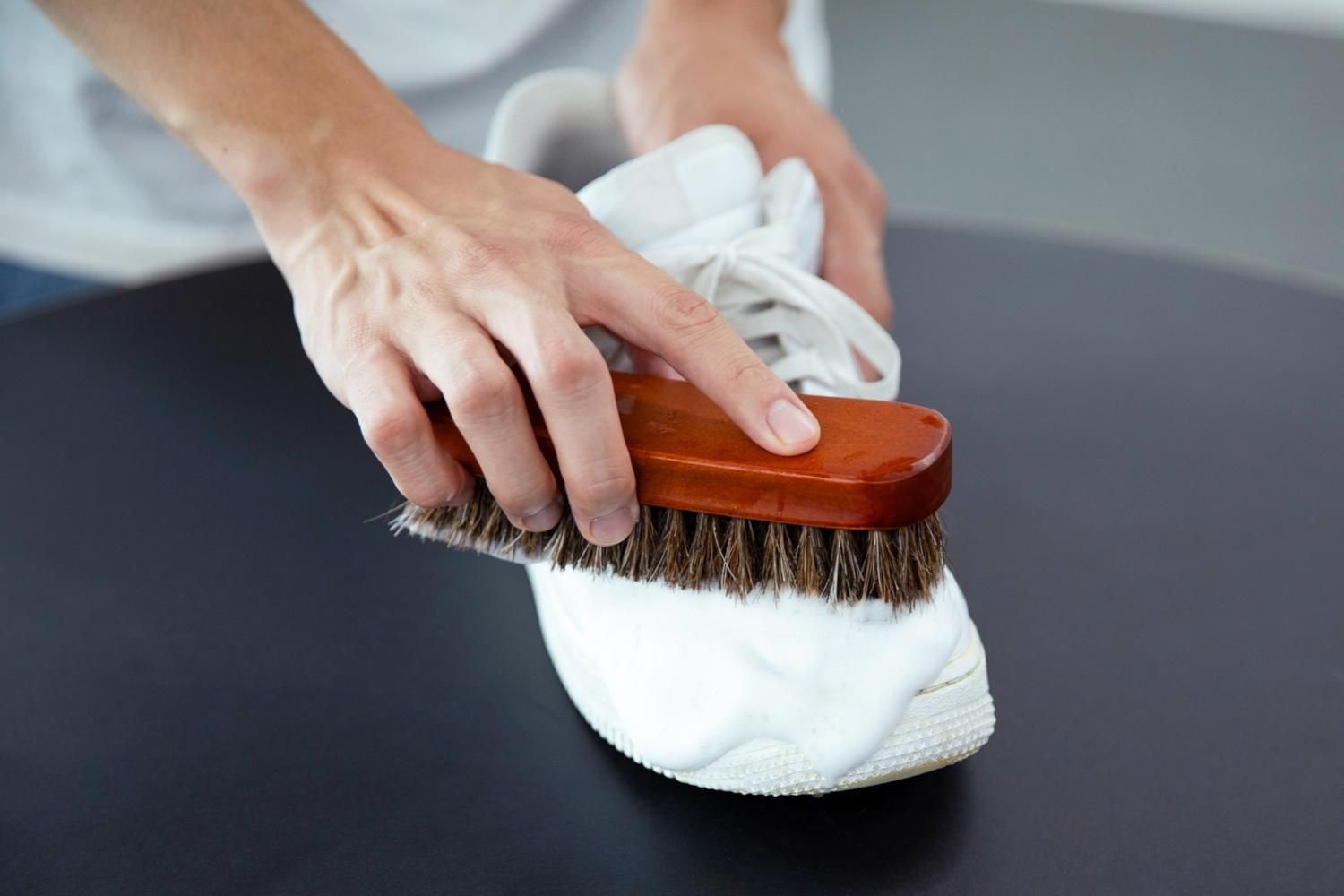
White sneakers are the perfect shoe — until they’re not. Three wears in, they’re gray. A month later, they’re embarrassing. But pristine white sneakers aren’t about buying new pairs constantly; they’re about prevention, quick maintenance, and knowing the right deep-clean for each material. How can I keep my white sneakers looking clean? With habits that take seconds and methods matched to leather, canvas, mesh, and knit.
Prevention: The 80% Solution
- Protectant spray before first wear. Water and stain repellent (Crep Protect, Jason Markk Repel) creates an invisible barrier. Reapply monthly. This single step prevents most staining.
- Wipe after wearing. A quick pass with a damp cloth or sneaker wipe after each wear removes the surface dirt that becomes permanent grime. 30 seconds, enormous payoff.
- Rotate pairs. Daily wear accelerates dirt buildup and material breakdown. Alternating pairs keeps each fresher longer.
- Mind the elements. Rain, mud, and dusty paths are white-sneaker enemies. Check the weather; choose accordingly. It’s okay to own “beater” pairs for bad conditions.
- Store properly. Dust bags or boxes, away from sunlight (which yellows). Stuff with paper to hold shape.
Deep Cleaning by Material
- Leather: remove laces and insoles. Wipe with damp cloth + mild soap (or dedicated sneaker cleaner). For scuffs, a magic eraser works carefully. Condition lightly after cleaning to prevent cracking. White shoe polish or leather paint for stubborn marks — our leather care guide covers the full routine.
- Canvas: baking soda + white vinegar paste, scrubbed with an old toothbrush, works remarkably well. For machine-washable canvas: remove laces/insoles, place in a laundry bag, wash cold gentle with a little detergent + baking soda, air dry stuffed with paper (never machine dry — heat warps and yellows).
- Mesh/knit: the trickiest — dirt embeds in the weave. Soft brush + sneaker cleaner + gentle circular motions. Don’t scrub aggressively; you’ll fray the knit. Toothbrush for detailed areas.
- Rubber soles and midsoles: magic erasers are miraculous on white rubber. For yellowed soles, a paste of baking soda + hydrogen peroxide left in sunlight (the UV activates whitening) can reverse yellowing significantly.
- Laces: remove and soak in warm water + oxygen bleach, or just replace — new laces ($5) make old sneakers look 50% newer instantly.
The Emergency Kit
Keep on hand: sneaker cleaner or mild dish soap, soft brush and old toothbrush, magic erasers, white cloths, protectant spray, and spare white laces. Total investment under $30, and it maintains every white shoe you own. For stain-specific emergencies, our stain removal guide has the chemistry.
What NOT to Do
- Don’t use chlorine bleach. It yellows white fabrics and weakens materials. Oxygen bleach only.
- Don’t machine-dry. Heat warps shapes, melts glue, and sets stains. Always air dry.
- Don’t ignore the insoles. Remove, air out, replace when worn — odor and bacteria live here.
- Don’t wait. A stain cleaned today is a non-event; the same stain in a week is permanent. Immediacy beats technique.
When to Let Go
Honest assessment: when the midsole is permanently yellowed, the structure is collapsing, or cleaning no longer makes a visible difference, it’s time. White sneakers have a lifespan — typically 1-2 years of regular wear with good care. Retire them to “beater” status for gardening and bad weather rather than trashing them.
How Can I Keep My White Sneakers Looking Clean? Your Questions Answered
Can I put white sneakers in the washing machine?
Canvas sneakers: yes, with precautions — remove laces and insoles, place in a laundry bag, wash cold on gentle with mild detergent plus baking soda, then air dry stuffed with paper (never machine dry). Leather sneakers: no — machine washing damages leather, dissolves adhesives, and warps shape; clean by hand. Knit/mesh: risky — the agitation can distort the knit; hand washing is safer. The rule: machine washing is a canvas-only shortcut, and even then, hand washing is gentler and more effective. When in doubt, hand wash — it takes 10 minutes and works for everything.
How do I clean the inside of sneakers (odor)?
Odor lives in the insoles and lining — surface cleaning won’t touch it. The protocol: remove insoles and wash or replace them (replacement insoles are cheap and transformative), sprinkle baking soda inside overnight and shake out (absorbs odor), and for persistent cases, use a sneaker-specific deodorizing spray. Prevention matters more: rotate shoes (never wear the same pair two days running), wear moisture-wicking socks, let shoes air out fully between wears (don’t seal them in a gym bag), and consider cedar shoe inserts. The cleaning experts at Good Housekeeping recommend this inside-out approach — clean shoes that smell bad aren’t actually clean.
Why do white soles turn yellow and can I fix it?
Yellowing (oxidation) happens from UV exposure, heat, and age — it’s the rubber and foam breaking down, and it’s the hardest sneaker problem to reverse. The best fix: a paste of baking soda and hydrogen peroxide applied to the soles, then left in direct sunlight for several hours (UV activates the whitening). Multiple treatments help severe cases. Dedicated sole-whitening products (often peroxide-based gels) work similarly. But be realistic: advanced oxidation is permanent — whitening treatments help mild to moderate yellowing, not decade-old decay. Prevention (store away from sunlight and heat, wear in rotation) beats restoration.
What’s the best protectant spray for white sneakers?
The reputable options (Crep Protect, Jason Markk Repel, Reshoevn8r) all work on the same principle: a hydrophobic barrier that causes liquids to bead rather than absorb. Apply to clean, dry shoes before first wear, let cure for the recommended time, and reapply monthly with regular use. No spray makes shoes stain-proof — they buy you time to wipe off spills before they set, which is the actual mechanism. Think of protectant as extending your reaction window from seconds to minutes. It’s the single highest-ROI sneaker care purchase, and it works on all materials.
How long should white sneakers last?
With regular wear and good care: 1-2 years before they look tired despite cleaning. The limiting factors are midsole compression (cushioning dies), structural breakdown, and accumulated staining that no longer lifts. Rotation extends life significantly — two pairs alternating last longer than two pairs worn sequentially, because materials recover between wears. When cleaning stops making a visible difference, demote them to beater status (gym, gardening, bad weather) rather than trashing — they’ve earned a dignified retirement. And track what killed them: if the uppers died first, buy more durable construction next time; if the soles, prioritize sole quality.
The Bottom Line
Keep white sneakers clean with protectant spray from day one, 30-second wipe-downs after wearing, material-matched deep cleaning (magic erasers for soles, baking soda paste for canvas, gentle brushing for knits), and fresh laces when needed. Prevention beats restoration every time — but even neglected pairs often come back with the right method.


