
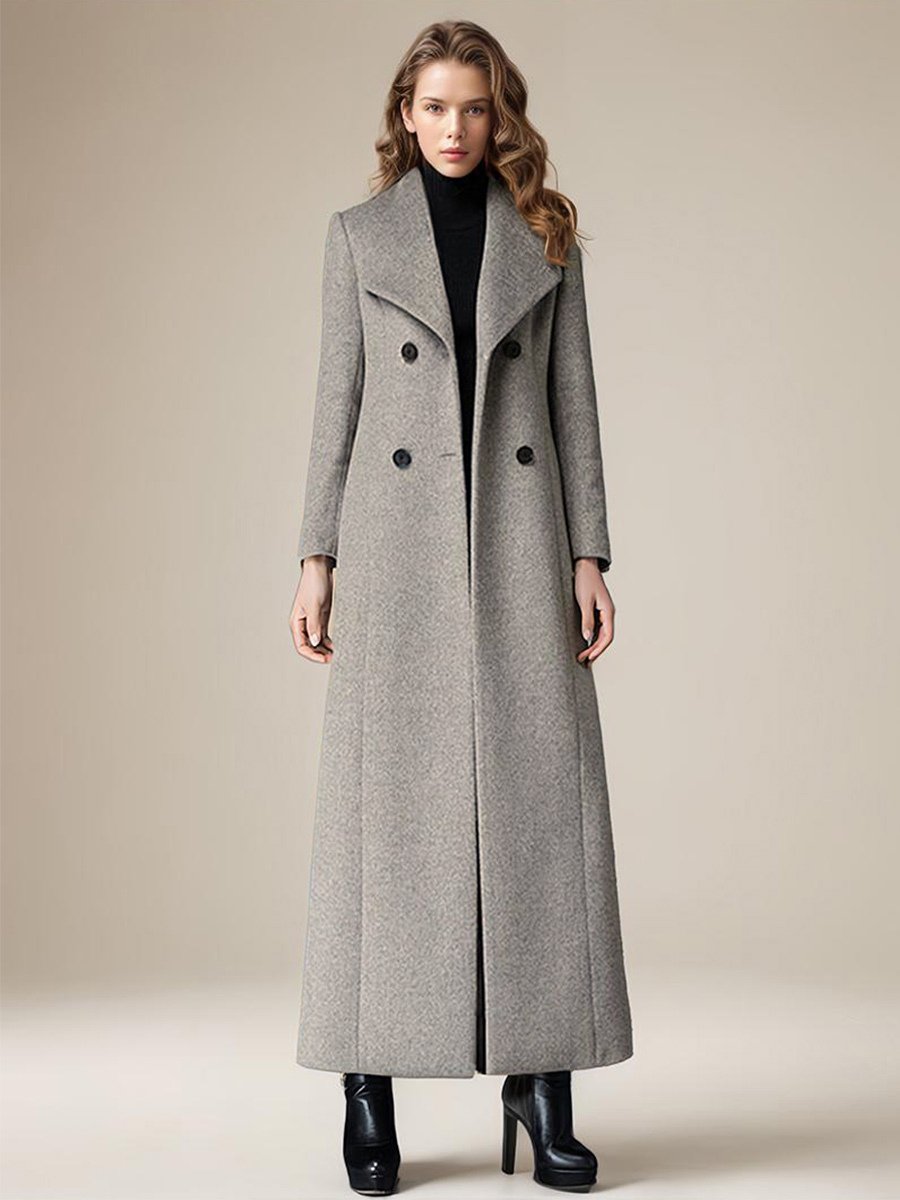
A winter coat is the most visible, most worn, most cost-per-wear-sensitive purchase in your wardrobe — you’ll wear it daily for months, and everyone sees it. Buy well once, and it’s a decade of great winters. Buy poorly, and you’re replacing it every other year. How do I choose a winter coat that will last for years? By prioritizing material, construction, fit, and timeless design over trends and price tags.
Material: The Foundation of Longevity
- Wool (70%+ wool content): the longevity champion for dress coats. Look for high wool content — “wool blend” can mean 20% wool and 80% disappointment. Cashmere blends add luxury; pure cashmere is warm but less durable for daily wear.
- Down (550+ fill power): for puffer coats — higher fill power means better insulation with less bulk, and quality down lasts years if cared for. Check for responsibly sourced down.
- Technical synthetics (Gore-Tex and equivalents): for performance parkas — durable, weatherproof, repairable. Quality shells last a decade with DWR reapplication.
- Leather: ages beautifully and lasts decades with conditioning — but isn’t the warmest option alone; best for milder winters or layered.
- Avoid: 100% polyester “wool-look” coats (pill fast, look cheap within a season), bonded/faux leather (peels within 2-3 years), and ultra-fast-fashion puffers (lose loft quickly).
Construction Details That Signal Quality
- Seams: straight, even stitching with no loose threads. Turn the coat inside out — the interior finishing reveals the truth.
- Lining: quality lining (cupro, viscose, or quilted) that doesn’t bunch or tear. Fully lined coats last longer and wear better.
- Buttons and hardware: sewn through (not glued), spare buttons included, zippers from reputable makers (YKK is the baseline) that glide smoothly.
- Interfacing and structure: the coat should hold its shape on the hanger. Collars stand, lapels lie flat, shoulders have structure.
- Sealed seams (technical coats): for waterproofing that actually lasts.
Fit: Buy for Layers
Try the coat on wearing what you’ll actually wear underneath — sweater, blazer, the works. You should: close it comfortably over layers, move your arms freely (hug yourself test), have room without swimming (excess fabric wears faster and looks sloppy). Sleeves hit the wrist bone; the hem hits where you want (knee-length is the most versatile). Shoulder seams sit at your shoulders — the one thing tailoring can’t easily fix on coats.
Consider tailoring: sleeve shortening and waist suppression are routine coat alterations ($30-60) that transform fit. Budget for them on any significant purchase.
Style: Timeless Over Trendy
A coat that lasts 10 years must look good for 10 years. The safe bets: single-breasted wool overcoat (camel, navy, black, gray), classic parka with clean lines, tailored puffer in black or navy, timeless trench with winter lining. Avoid: extreme oversized proportions (dating fast), trendy colors (that “it” shade of 2024), excessive hardware or branding, and silhouette extremes. Our timeless pieces list covers the full philosophy.
The Cost-Per-Wear Math
A $600 coat worn 100 days a year for 8 years = $0.75 per wear. A $150 coat replaced every 2 years over the same period ($600 total) = same money, worse experience, more waste. The expensive coat is often the cheaper coat — provided you chose well. This is the purchase where stretching the budget pays literal dividends.
Care Extends Life Enormously
Brush wool coats after wearing (removes surface dirt before it embeds). Dry clean sparingly — once per season is plenty; overwashing wears wool faster. Treat stains promptly. And store properly in summer — our coat storage guide prevents the off-season damage that kills good coats. With basic care, a quality wool coat serves 10-15 years; a quality parka 8-12.
How Do I Choose a Winter Coat That Will Last for Years? Your Questions Answered
How much should I spend on a winter coat?
The value optimum for most people is $250-500: genuine quality materials (high wool content, good down, solid construction) without luxury markup. Below $150, you’re mostly buying disposable coats (thin fabrics, poor insulation, 2-3 year lifespans). Above $700, you’re paying for brand prestige more than proportional quality gains — though the craftsmanship at the top is real. The cost-per-wear math: a $400 coat worn 100 days/year for 8 years costs $0.50 per wear. That’s cheaper than the $120 coat replaced every two years ($0.60/wear) — and the experience is incomparably better. Stretch the budget on this one purchase; it’s the highest-ROI clothing spend.
Wool vs. down: which is better for a winter coat?
Different tools for different jobs. Wool overcoats: elegant, durable, wind-resistant, great for professional and city settings, but heavy and less warm per ounce in extreme cold. Down parkas: unmatched warmth-to-weight, best for serious cold, but casual in appearance and vulnerable to moisture (wet down doesn’t insulate). The ideal winter wardrobe has one of each if your climate demands it — wool for the city, down for the deep freeze. If you can only have one: match to your coldest regular conditions and your daily context. A commuter in Chicago needs down; a commuter in DC does fine with wool.
What coat length is most versatile?
Knee-length (or just above/below the knee) — it covers suits and dresses, works with boots and shoes, suits most heights, and reads appropriate from office to evening. Shorter (hip-length) is more casual and better for driving-heavy lifestyles; longer (mid-calf) is warmer and more dramatic but can overwhelm petite frames and complicate stairs and cars. For a single coat that does everything, knee-length in a neutral color is the consensus choice across stylists. It’s the coat equivalent of the navy blazer — the versatile default.
How do I know if a coat is good quality in the store?
The 60-second quality check: feel the fabric weight (quality has heft), check the inside (clean finishing, quality lining, no loose threads), test the zippers and buttons (smooth, secure, spares included), look at the seams (straight, even), and check the label (high wool/down content, not mystery blends). Then the wear test: put it on over a sweater, move your arms, sit down — quality coats move with you; cheap ones fight you. Good Housekeeping’s coat testing applies lab rigor to these checks, but your hands and eyes catch 90% of it in the store. Trust the feel — quality is tangible.
The Bottom Line
A winter coat that lasts for years needs high wool content or quality down/synthetics, solid construction (check the inside), fit that accommodates layers, and a timeless silhouette in a neutral color. Do the cost-per-wear math, tailor the fit, care for it properly, and store it right in summer. Buy once, wear for a decade.


