
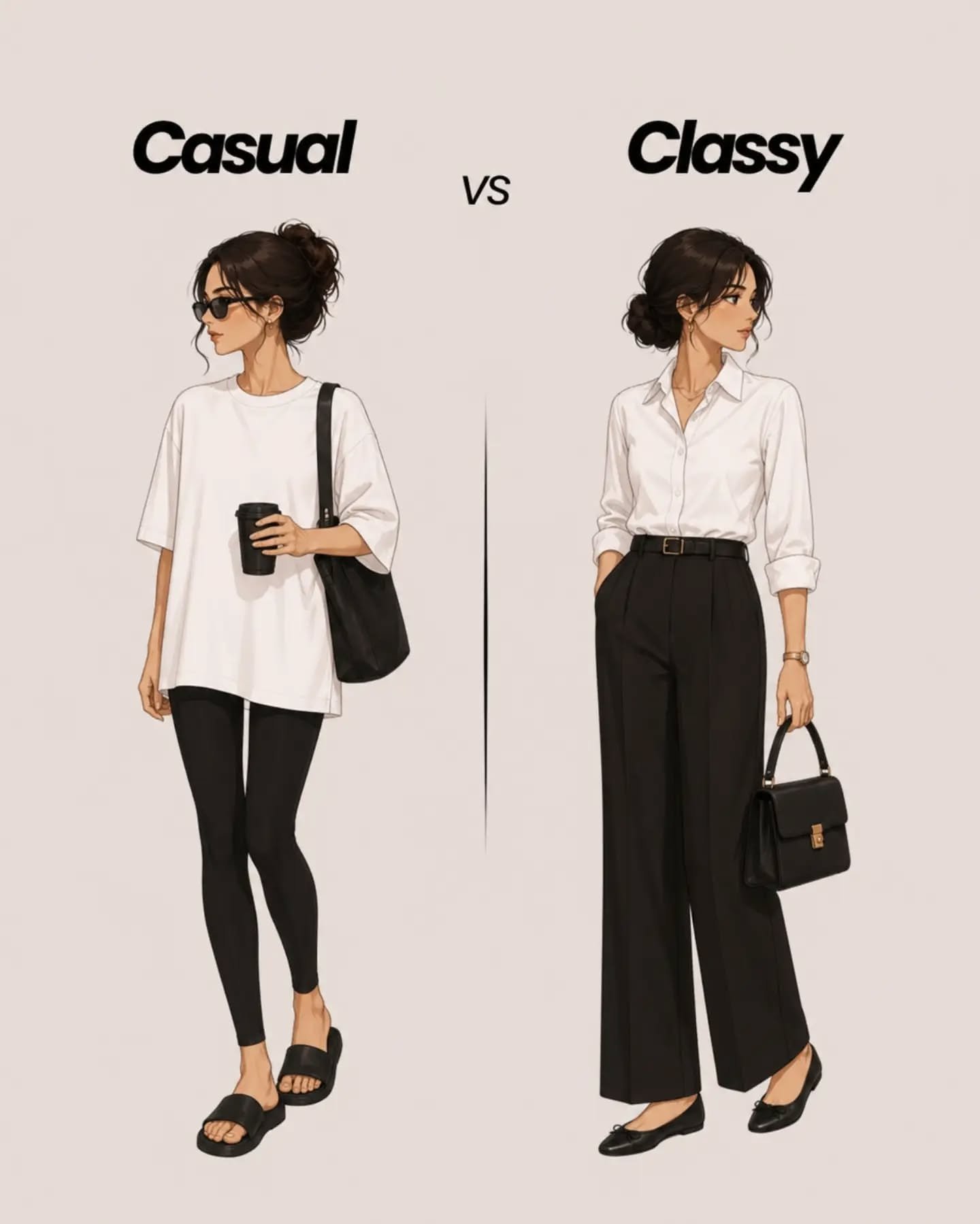
Every season brings the same pressure: the trend reports declare what’s “in,” your feed fills with it, and suddenly your perfectly good wardrobe feels outdated. Should I follow fashion trends or stick to classics? The fashion industry’s answer is always “both” (conveniently requiring constant purchases). Here’s a more honest framework — one that keeps you current without making you a trend victim.
The Case for Classics (The Foundation)
Classics win on every practical metric: cost per wear (a navy blazer worn 200 times vs. a trendy top worn 5), decision fatigue (they always work), and longevity (they never look dated in photos). About 70-80% of your wardrobe should be classics — the timeless pieces that never go out of style form this core. This isn’t about being boring; it’s about building a foundation that makes everything else possible.
The underrated benefit: classics free you from the trend cycle’s anxiety. When your wardrobe’s foundation is trend-proof, you can engage with trends from curiosity rather than insecurity.
The Case for Trends (The Seasoning)
But head-to-toe classic can read… safe. Trends add the freshness, personality, and contemporary relevance that keep style interesting. A classic outfit with one current element — this season’s shoe shape, a trending color, a modern silhouette — looks intentional and current rather than stuck in time.
Trends also let you experiment cheaply with who you are stylistically. That trend you tried on a whim might reveal a color or silhouette you love permanently. Think of trends as low-cost style research.
The Framework: How to Decide Each Time
Run every trend through these five questions:
- 1. Does it suit my actual life? The trend might be gorgeous and completely wrong for your job, climate, or daily activities. Lifestyle fit is the first filter.
- 2. Does it suit my body and style words? Trends are designed for sample sizes and specific aesthetics. If it fights your proportions or your personal style, skip it guilt-free.
- 3. Will I wear it 30+ times? The cost-per-wear test. A $40 trendy piece worn 30 times ($1.33/wear) beats a $200 classic worn twice. But most trend pieces fail this test honestly applied.
- 4. Can I try it cheaply? Thrift it, borrow it, or buy the budget version first. Never pay full designer price for your first experiment with a trend.
- 5. Is it a trend or a shift? Some “trends” are actually permanent evolutions (athleisure, relaxed tailoring, wide-leg pants). These deserve real investment. True fads (micro-bags you can’t fit a phone in) deserve pocket change at most.
How to Wear Trends Without Looking Trendy
The sophisticated approach: one trend per outfit, anchored in classics. Trendy shoes with a classic outfit. A trendy color in a classic silhouette. A current accessory with timeless clothes. This reads as “fashion-aware” rather than “fashion-victim” — you’re referencing the moment, not cosplaying it.
Also: adapt trends to your style rather than adopting them wholesale. Love the oversized trend but you’re petite? Try slightly relaxed rather than full oversized — our oversized styling guide shows how to scale trends to your frame.
The Trends Worth Ignoring (Usually)
- Micro-trends with a 3-month lifespan (TikTok-driven fads)
- Trends requiring a completely different body than yours to work
- “Ugly” trends worn ironically — irony expires fast
- Anything you need to be convinced to like (“it’s growing on me” = you don’t like it)
- Trends that contradict your lifestyle (stilettos for a bike commuter)
Should I Follow Fashion Trends or Stick to Classics? Your Questions Answered
How long do fashion trends typically last?
It varies by tier: micro-trends (TikTok-driven) burn out in 3-6 months; seasonal trends last 1-2 years; macro-trends (the big directional shifts) run 5-10 years; and true paradigm shifts (athleisure, casualization of workwear) become permanent. The practical implication: never pay full price for micro-trends (thrift them or skip them), be selective with seasonal trends (one piece to test), and invest thoughtfully in macro-trends that suit you (they’ll earn their cost-per-wear). The trend’s lifespan should match your spending — ephemeral trends get pocket change, enduring shifts get real budgets.
Is it bad to ignore trends completely?
Not bad, but there’s a subtle cost: head-to-toe timeless can read as dated rather than classic if nothing acknowledges the current moment. The difference between “timeless” and “stuck in 2015” is often one or two contemporary elements — a current shoe shape, a modern proportion, this season’s color in an accessory. You don’t need to follow trends; you need to reference the present. Think of it as an accent, not a commitment. The most stylish “classic” dressers all do this instinctively — their foundation is timeless, but something in the outfit is unmistakably now.
How do I know which trends suit me?
Three filters: body (does the silhouette work with your proportions? — try it on, the mirror is honest), lifestyle (will you actually wear it where you go?), and style words (does it match 2+ of your defined adjectives?). A trend passing all three is worth trying — cheaply first. A trend failing any one should be skipped without guilt. Also notice why you’re drawn to a trend: genuine attraction (“I love this”) versus social pressure (“everyone’s wearing it”). The first leads to satisfying purchases; the second leads to closet orphans. Vogue’s trend reports are useful for awareness — the filter for adoption should be yours, not theirs.
What’s the difference between a trend and a fad?
Duration and depth. Trends reflect genuine cultural shifts and last long enough to earn investment (the rise of wide-leg pants, the acceptance of sneakers in fashion contexts). Fads are novelty spikes with no cultural root — they burn bright for months and vanish (extreme micro-bag sizes, hyper-specific TikTok aesthetics). The test: can you imagine this looking normal in 3 years? If yes, trend. If the question makes you laugh, fad. Fads aren’t evil — they’re just expensive if you pay full price. Thrift the fad, invest in the trend, build on the classic.
The Bottom Line
Stick to classics for 70-80% of your wardrobe — they’re cheaper per wear, always appropriate, and never dated. Follow trends selectively: one per outfit, tried cheaply, filtered through your lifestyle and style words. Trends are the seasoning, classics are the meal. A wardrobe built this way looks current every year without requiring a rebuild every season.


