
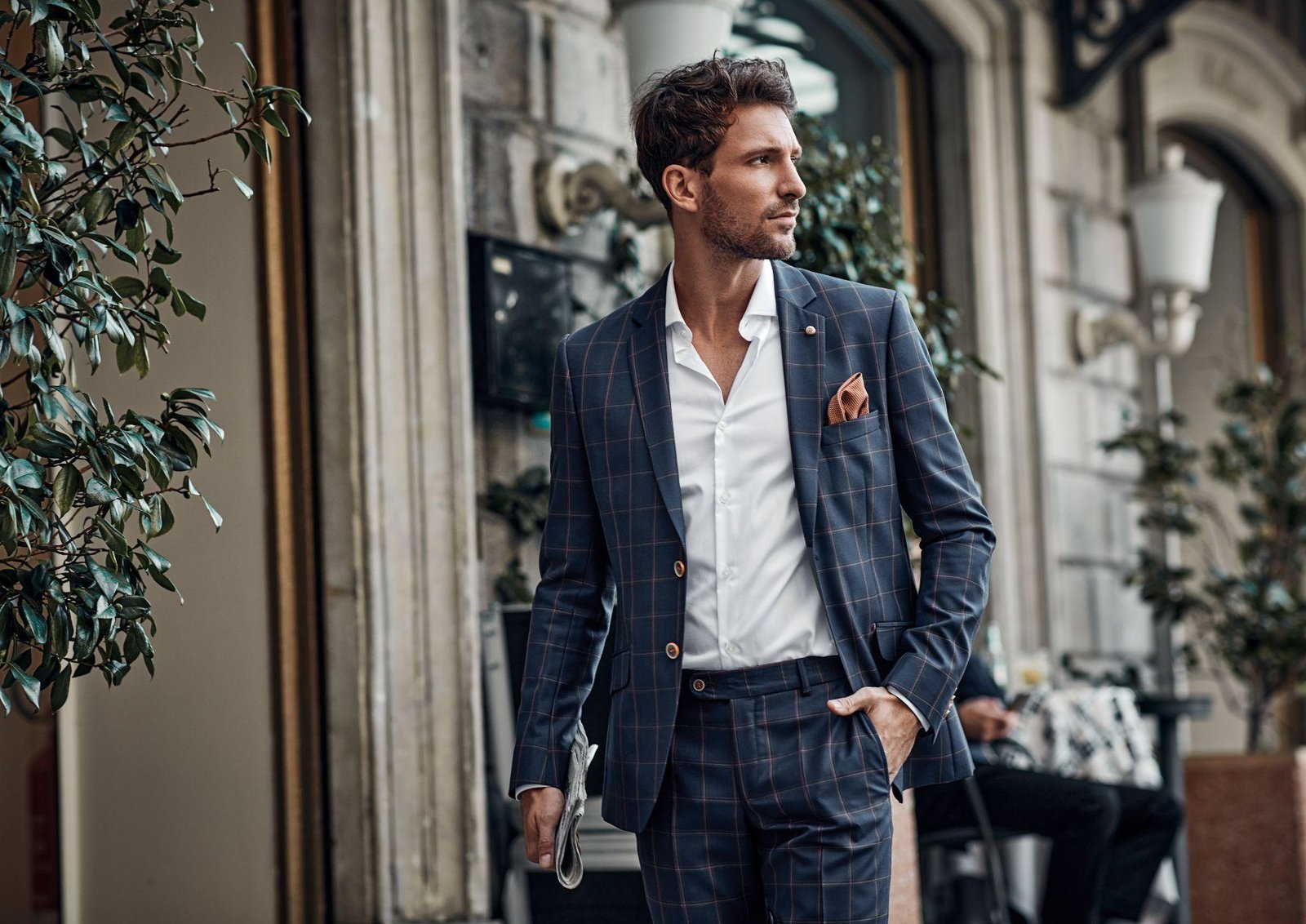
Here’s a secret the fashion industry doesn’t advertise: the best-dressed men you know probably aren’t the biggest spenders. They’re the ones who understand fit, buy strategically, and take care of what they own. How can men dress well without spending a lot of money? It’s a system, not a shopping spree — and it works at any budget.
Rule #1: Fit Beats Price, Every Time
A $40 shirt that fits perfectly looks better than a $200 shirt that doesn’t. This is the entire game. Most men wear clothes that are slightly too big — sleeves too long, shoulders too wide, pants pooling at the shoes. Learning your actual measurements and buying accordingly transforms everything.
Practical fit rules: shirt shoulders should end at your shoulders, not past them. Sleeves should show half an inch of cuff (or hit the wrist bone for casual). Pants should have minimal break at the shoe. Jackets should button without pulling. When in doubt between sizes, buy the one that fits your shoulders/chest and tailor the rest — basic alterations cost $10-20 and make cheap clothes look custom. Our guide to knowing if clothes fit properly is essential reading here.
The Budget Wardrobe Foundation
Build around versatile basics before buying anything interesting:
- Dark jeans (no distressing) — dress up or down endlessly
- Chinos in navy, khaki, olive — the casual trouser that always works
- White and light-blue Oxford shirts — the backbone of smart dressing
- Plain tees in white, black, gray, navy — fitted, not boxy
- A navy blazer — the single highest-impact menswear purchase; thrift one and tailor it
- White sneakers (minimal, clean) and brown leather shoes — two pairs cover 95% of life
- A quality watch — our guide to affordable watches for men proves this doesn’t require luxury money
- Dark crewneck sweater — layers over everything in cooler months
Notice the color palette: navy, white, gray, brown, olive. Everything matches everything. That’s not boring — that’s strategic.
12 Money-Saving Strategies
- 1. Thrift for structured pieces. Blazers, coats, dress shirts, and quality denim are thrift-store gold. Check natural fibers (wool, cotton) over synthetics.
- 2. Buy basics at budget retailers. Tees, socks, underwear, and casual shirts don’t need premium prices. Save the money for fit-critical pieces.
- 3. Shop end-of-season sales. Coats in March, shorts in September — 50-70% off for planning ahead.
- 4. Tailor, don’t replace. $15 in alterations makes a $20 thrift blazer look like $200.
- 5. Learn basic maintenance. Shoe trees, cedar blocks, proper washing — clothes last 3x longer with care. See caring for leather shoes to start.
- 6. Buy fewer, better shoes. Two quality pairs beat six cheap ones that fall apart and look it.
- 7. Avoid logos and trends. Trendy pieces date fast; classics don’t. A plain navy sweater from 2015 still looks right. A 2015 graphic tee doesn’t.
- 8. Build slowly. One good piece a month beats a chaotic haul. Your style sharpens as your eye develops.
- 9. Know your measurements. Chest, neck, sleeve, waist, inseam — write them in your phone. Online sale shopping becomes precise instead of gambling.
- 10. Grooming is free style. A good haircut, trimmed nails, and maintained shoes make everything you wear look sharper. This is the highest-ROI “fashion” spend.
- 11. Iron or steam. Wrinkled clothes look cheap regardless of price. Five minutes with a steamer transforms a $30 shirt.
- 12. One in, one out. Prevents closet chaos and forces intentional purchases.
Where Budget Men Go Wrong
The classic mistakes: buying the cheapest version of everything (falls apart, looks it), chasing trends instead of building foundations, ignoring shoes (people notice), and skipping tailoring on the belief it’s “only for expensive clothes.” Flip each of these and you’re already better dressed than most men spending twice as much. For brand-specific guidance, our affordable clothing brands for quality basics roundup names the best value in each category.
How Can Men Dress Well Without Spending a Lot of Money? Your Questions Answered
What’s the one purchase that upgrades a man’s wardrobe most?
A tailored navy blazer — thrifted if needed. It transforms jeans and a tee into a real outfit, dresses up chinos for dinners, works over sweaters in winter, and signals intention everywhere. No other single item has the same range. Second place: properly fitting dark jeans (the foundation everything builds on). Third: shoes that aren’t sneakers or falling apart. Those three purchases — often achievable for under $150 total via thrift and sales — take a man from “doesn’t think about clothes” to “noticeably well-dressed.” Everything after that is refinement.
How do I know my sizes for online shopping?
Measure once, shop forever: chest (around the fullest part), neck (around the base), sleeve (shoulder to wrist), waist (where you wear pants), inseam (crotch to ankle). Write them in your phone. Then check each brand’s size chart — vanity sizing means a “medium” varies wildly, but inches don’t lie. Read reviews for fit notes (“runs small,” “slim fit”). And know each retailer’s return policy before ordering — free returns make online shopping risk-free; restocking fees make it gambling. GQ’s fit guides are a solid reference for translating measurements into purchases.
Is it worth buying designer on sale vs. affordable at full price?
Usually the affordable-at-full-price wins for basics, designer-on-sale wins for statement pieces. A $200 designer shirt at 70% off ($60) is often worse value than a $40 quality basic — you’re paying for a label on a wardrobe workhorse. But a $800 designer coat at 60% off ($320) can be genuine value if it’s a timeless piece you’ll wear for a decade. The rule: never pay premium for basics (tees, socks, underwear, simple shirts), consider premium on sale for high-impact long-life pieces (coats, blazers, shoes, watches). And always compare the sale designer price against the regular quality-affordable price — that’s the honest comparison.
How often should men get haircuts to look sharp?
Every 3-5 weeks for short styles, 6-8 for longer ones — but the real answer is “before it looks grown out,” which varies by hair type and style. The budget play: find a good barber (not the cheapest chain — a skilled $30 cut beats a bad $15 one), learn what to ask for (bring photos, learn the terminology for your cut), and maintain between cuts (neckline cleanup, proper product). Hair is the frame for your face — it’s visible in every interaction, unlike clothes which change daily. Consistent grooming does more for perceived style than most wardrobe spending.
The Bottom Line
Men’s style on a budget comes down to fit first, a foundation of versatile basics in a coordinated palette, strategic thrifting and sales, tailoring, and maintenance. Groom well, press your shirts, wear shoes with intention. Nobody can tell what you paid — they can only tell that you look like you meant it.


