
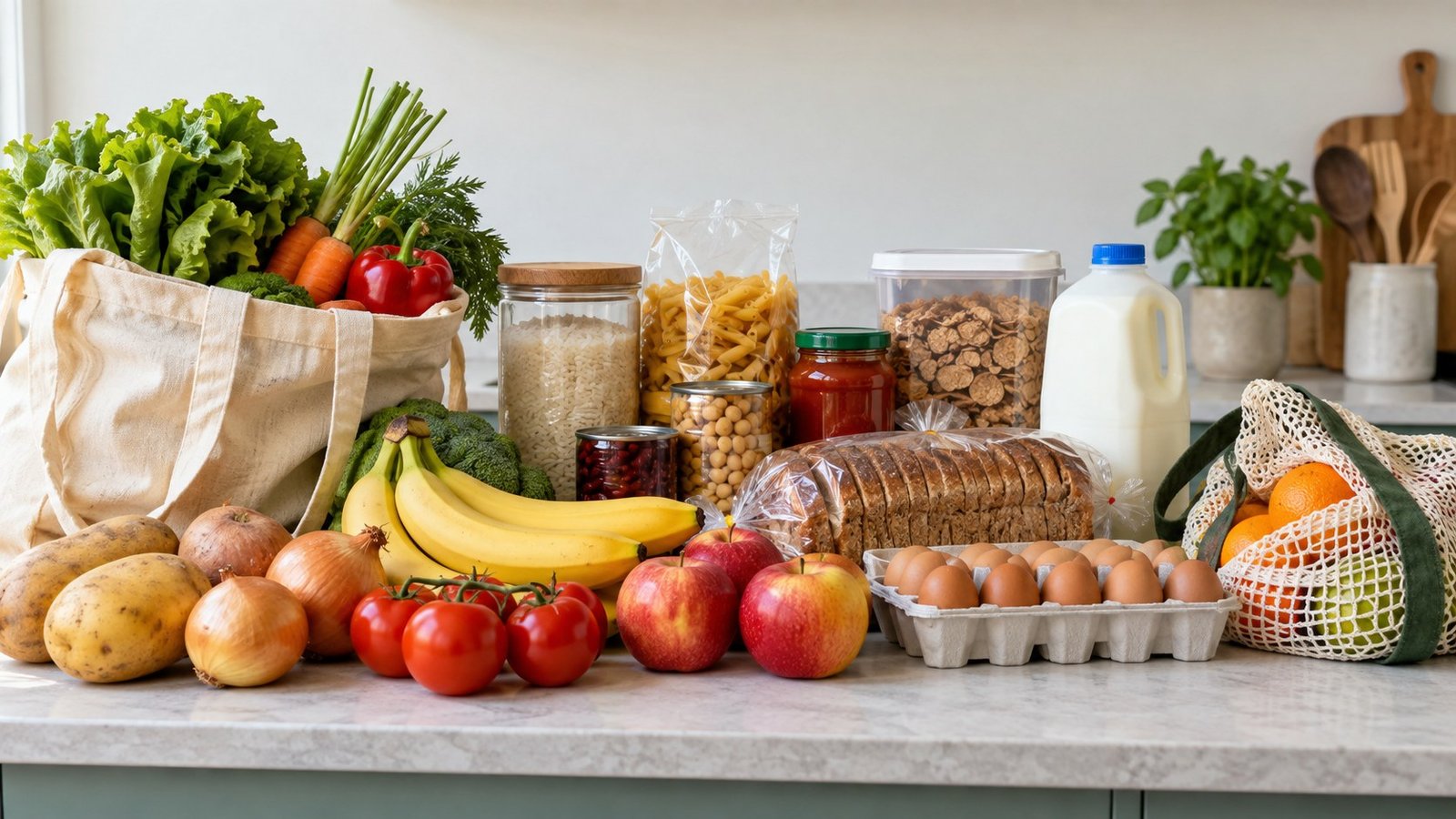
“Eat healthy” and “save money” are treated like opposing goals — as if nutrition were a luxury good. It’s one of the most damaging myths in food culture, because it convinces people that their budget dooms them to poor health. The truth? Some of the most nutritious foods on earth are also the cheapest. How can I make healthy eating affordable on a budget? With smart staples, smarter shopping, and a little planning. Here’s the complete playbook.
The Cheapest Healthy Foods (Your Foundation)
Build your diet around these and nutrition takes care of itself:
- Dried beans and lentils — pennies per serving, loaded with protein and fiber. The single best value in the grocery store.
- Oats — breakfast for weeks for a few dollars. More fiber than most cereals costing 5x more.
- Brown rice — the base of a thousand cheap, healthy meals.
- Eggs — complete protein at ~20 cents each. See whether daily eggs are healthy (spoiler: yes).
- Frozen vegetables — picked ripe and flash-frozen, often more nutritious than “fresh” produce that’s been trucked for a week. Peas, broccoli, spinach, mixed veg.
- Bananas, apples, oranges, carrots, cabbage — the cheapest fresh produce, consistently, year-round.
- Canned tuna, sardines, and salmon — omega-3s and protein for a dollar or two.
- Peanut butter — calorie-dense, protein-rich, endlessly versatile. Check the label for minimal added sugar.
- Plain yogurt (large tubs) — probiotics and protein at half the price of single-serve cups.
- Seasonal produce — whatever’s in season is cheaper and tastes better. Learn your region’s seasons.
15 Budget Strategies That Compound
Shopping:
- 1. Shop with a list and a full stomach. Impulse buys are budget killers; hunger makes everything look essential.
- 2. Compare unit prices, not sticker prices. The shelf tag’s per-ounce price reveals the real deal. Bigger isn’t always cheaper — check.
- 3. Buy store brands. Often made in the same facilities as name brands. The exceptions are few; test and see.
- 4. Hit discount grocers and ethnic markets. Aldi, Lidl, and local ethnic markets routinely beat big chains on produce and staples by 20-40%.
- 5. Buy frozen and canned strategically. Frozen berries for smoothies, canned beans and tomatoes — same nutrition, fraction of the price, zero waste.
Cooking:
- 6. Meal prep once a week. A big pot of chili, soup, or grain bowls on Sunday covers lunches all week. Our guide to meal-prepping healthy lunches has the templates.
- 7. Cook once, eat twice. Double every dinner recipe; tomorrow’s lunch is done. The highest-ROI cooking habit there is.
- 8. Embrace the “clean out” meal. Stir-fries, soups, and frittatas absorb whatever’s wilting in the fridge. Waste nothing.
- 9. Learn five cheap base meals. Bean chili, lentil soup, egg fried rice, oatmeal variations, pasta with vegetables. Master these and you’ll never be stuck.
- 10. Use cheaper protein cuts. Chicken thighs over breasts, canned fish, and plant proteins slash the meat budget without sacrificing nutrition. Our guide to stretching a grocery budget into a week of meals has full meal math.
Mindset:
- 11. Stop paying for packaging. Pre-cut vegetables, single-serve anything, and “snack packs” charge 2-3x for convenience. Ten minutes of prep saves real money weekly.
- 12. Drink water. Beverages are a stealth budget drain — a daily $3 drink is $1,000 a year. Tap water is nearly free.
- 13. Reduce meat portions, don’t eliminate. Use meat as a flavoring (stir-fries, tacos) rather than the centerpiece. Your wallet and your heart both benefit — see foods to avoid for heart health.
- 14. Grow something. Even a windowsill herb pot saves $4 weekly on fresh herbs. Scallions regrow from scraps in water — genuinely free food.
- 15. Track waste for one week. Most households throw away 20-30% of food bought. Seeing your own waste number is the fastest behavior change there is.
What a Budget Healthy Day Looks Like
Breakfast: oatmeal with banana and peanut butter (~$0.75). Lunch: lentil soup with bread (~$1.50). Snack: apple and yogurt (~$1.00). Dinner: bean chili with rice and frozen veg (~$2.00). Total: under $6 for a day of genuinely nutritious eating. The USDA MyPlate resources include budget-specific meal planning tools worth bookmarking.
How Can I Make Healthy Eating Affordable on a Budget? Your Questions Answered
Is organic worth the extra cost on a budget?
For most budgets, no — conventional produce beats no produce every time. The nutritional differences between organic and conventional are small, and the price premium (often 30-100%) buys far less health than simply eating more fruits and vegetables of any kind. If you want to prioritize, the “Clean Fifteen / Dirty Dozen” lists identify which produce carries the most pesticide residue — but even the “dirty” conventional produce is vastly healthier than skipping produce to afford organic. On a tight budget, buy conventional, wash it well, and eat plenty. That’s the evidence-based answer.
How do I meal prep without getting bored?
The trick is prepping components, not meals. Cook a grain, a protein, roasted vegetables, and a sauce — then combine differently through the week (bowl Monday, wrap Tuesday, salad Wednesday). Same ingredients, different meals, no boredom. Also: prep only 3-4 days out, not the full week — food fatigue peaks around day 4. And keep a “wild card” meal each week (something spontaneous, even takeout) so the plan doesn’t feel like a prison. Boredom is the #1 meal-prep killer; variety within structure is the fix.
Are frozen meals unhealthy?
It depends entirely on which ones. Plain frozen vegetables, fruits, and proteins are nutritionally excellent — often fresher than “fresh” produce. Frozen prepared meals vary wildly: some are balanced and reasonable, others are sodium bombs with a day’s saturated fat. Read labels like you would any food: check sodium (aim under 600mg per meal), fiber (higher is better), and ingredient lists you mostly recognize. Frozen meals aren’t inherently unhealthy — they’re just food, and food quality varies. They’re also a legitimate budget tool when they prevent $15 takeout orders.
The Bottom Line
Healthy eating on a budget isn’t about deprivation — it’s about building meals around beans, oats, eggs, frozen vegetables, and seasonal produce, then shopping and cooking strategically. The healthiest diet isn’t the most expensive one; it’s the consistent one. Start with the staples list, prep one batch meal this Sunday, and watch both your grocery bill and your energy improve.


