
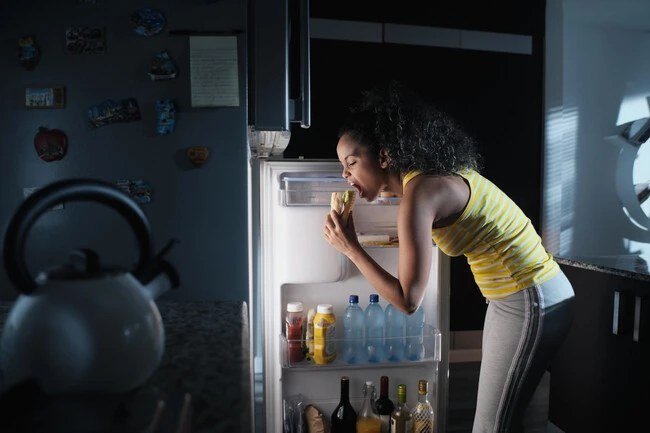
It’s 10:47 PM. You’re not hungry — you had dinner three hours ago. But somehow you’re standing in front of the fridge, lit by that harsh little light, eating cereal straight from the box. If this scene feels familiar, you’re dealing with one of the most common eating struggles there is. How can I stop snacking late at night? The good news: it’s rarely a willpower problem. It’s usually a design problem — and design problems have fixes.
Why Nighttime Snacking Happens
Understanding the mechanism makes it much easier to beat. Late-night snacking is driven by a perfect storm:
- Decision fatigue. You’ve made hundreds of decisions all day. By evening, the part of your brain that says “maybe not” is exhausted, and the part that says “chips sound great” is running the show.
- Undereating earlier. This is the big one people miss. Skimp on breakfast, grab a sad desk salad for lunch, and your body spends the evening demanding payback. Night hunger is often just delayed hunger.
- Habit loops. Couch + TV + snacks becomes a wired-together routine. After a few weeks, sitting down to stream triggers cravings whether you’re hungry or not.
- Emotions. Stress, boredom, and loneliness all peak in the quiet evening hours, and food is the fastest comfort available.
- Real physiology. Sleep deprivation raises ghrelin (the hunger hormone) and lowers leptin (the fullness hormone). If you’re short on sleep, your body genuinely signals for more food — especially quick carbs.
Notice that only one of these is “lack of discipline.” The rest are systems you can redesign.
Fix the Day to Fix the Night
The most effective late-night snacking strategy starts at breakfast. People who eat adequate protein early in the day (think 25-30 grams at breakfast) consistently report fewer evening cravings in studies. Your body isn’t stupid — if it got what it needed during the day, it doesn’t go hunting at night.
Practical daytime fixes:
- Eat three real meals with protein, fiber, and some fat. A 300-calorie lunch is a 10 PM snack attack waiting to happen.
- Don’t skip meals to “save calories” — borrowed calories always get repaid with interest after dark.
- Keep good snacks for weight loss around for the afternoon slump so you arrive at dinner satisfied, not ravenous.
- Stay hydrated. Thirst disguises itself as hunger surprisingly often — and falling asleep faster at night gets easier when you’re not digesting a second dinner.
Redesign Your Evenings
Once the daytime fuel is handled, reshape the environment where the snacking happens:
- Brush your teeth after dinner. It sounds silly. It works remarkably well — minty mouth is a surprisingly strong “kitchen’s closed” signal.
- Make snacks inconvenient. Don’t keep trigger foods in the house, or at least move them somewhere annoying to reach. Willpower is unreliable; friction is forever.
- Break the TV-snack pairing. Eat dinner at the table, then watch without food for a week. The craving is attached to the routine, not to hunger, and routines can be rewired.
- Set a kitchen closing time. Pick a time — say 8:30 PM — after which the kitchen is closed except for water or herbal tea. Treat it like a store closing, not a diet rule.
- Have a planned evening snack. This isn’t cheating; it’s strategy. A small, deliberate snack with protein — Greek yogurt, a handful of nuts, an apple with peanut butter — prevents the out-of-control raid later.
- Address the boredom directly. If you’re eating because there’s nothing else to do, the fix isn’t food rules — it’s an evening worth living. A walk, a book, a hobby, a call with a friend.
When It’s Emotional Eating
Sometimes the late-night kitchen trip is really about stress or loneliness wearing a snack costume. If you notice the cravings spike on hard days, that’s useful information, not a character flaw. A few things that help: journaling for five minutes about the day, a short wind-down routine, or simply naming it — “I’m stressed, not hungry” — which research on affect labeling suggests genuinely reduces the urge.
If nighttime eating feels compulsive, happens most nights, or involves large amounts of food with a sense of lost control, that’s worth discussing with a doctor or therapist. Night eating syndrome and binge eating disorder are real, treatable conditions — not willpower failures. The NIDDK has clear, non-judgmental information on both.
How Can I Stop Snacking Late at Night? Your Questions Answered
Is it actually bad to eat late at night, or is that a myth?
The timing itself matters less than people think — your body doesn’t have a clock that converts 9 PM calories to fat while forgiving noon calories. What matters is the total and the pattern. Late-night eating tends to be problematic because it’s usually extra calories on top of a full day (not shifted calories), the food choices are worse (chips, not salmon), and it can disrupt sleep and morning appetite. If your late snack is planned, portioned, and fits your daily intake, it’s fine. The problem is the unplanned 600-calorie raid, not the hour on the clock.
What if I’m genuinely hungry at night?
Then eat — genuine hunger is information, not failure. The question is whether it’s real hunger or habit/craving. The test: would an apple satisfy you? If yes, it’s probably real hunger — have the apple, or something with protein like Greek yogurt. If only chips or ice cream sound good, it’s craving, not hunger. And if real hunger hits nightly despite good daytime eating, you may simply need more food during the day, or your dinner is too early or too light. Adjust the day rather than fighting the night.
Does brushing my teeth really help?
It sounds like folk wisdom, but it works through two mechanisms. First, the minty taste genuinely makes food less appealing — try eating an orange right after brushing and you’ll see. Second, and more importantly, it’s a psychological boundary: a ritual that signals “eating is done for today.” Behavioral research shows these kinds of bright-line rules (“kitchen closes at 8:30”) outperform vague intentions (“I’ll try not to snack”) because they eliminate the hundreds of micro-decisions that exhaust willpower. Silly? Maybe. Effective? Very.
The Bottom Line
Stopping late-night snacking isn’t about white-knuckling through cravings — it’s about eating enough during the day, redesigning your evenings, and getting honest about what’s driving the habit. Fix the fuel, add some friction, close the kitchen at a set time, and give it two weeks. Most people are surprised how quickly the 11 PM fridge raids just… stop happening. And if your goal is steady, sustainable progress, knowing a healthy rate of weight loss per week keeps expectations realistic while the new habits settle in.


