
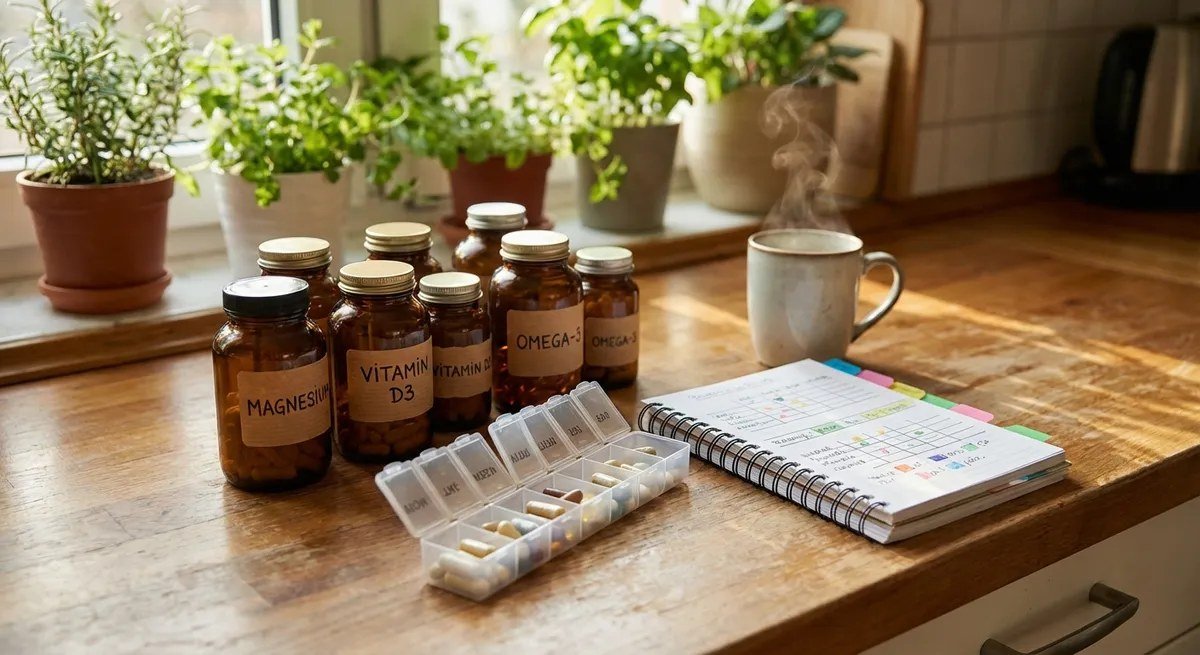
Walk into any pharmacy and the vitamin aisle looks like it was designed to overwhelm you into buying everything. Multivitamins, single nutrients, gummies, powders — each promising energy, immunity, and glow. So what vitamins should I take every day, really? The honest answer is shorter than the marketing suggests, and it starts with this: most of what you need should come from food.
That said, a few nutrients genuinely deserve attention because modern diets and indoor lifestyles make shortfalls common. Here’s the no-hype breakdown.
The Short List Most Adults Should Consider
Vitamin D. This is the big one. A huge share of American adults are low in vitamin D, especially if you work indoors, live above the southern states, or wear sunscreen religiously (which you should). Vitamin D supports bone health and immune function, and deficiency is linked to fatigue and low mood. The NIH Office of Dietary Supplements notes most adults need 600 IU daily, rising to 800 IU after 70 — but many people need a supplement to get there, particularly in winter. A blood test is the only way to know your level for sure.
Vitamin B12. Critical if you’re over 50 (absorption drops with age), vegetarian, or vegan — B12 comes almost entirely from animal foods. Low B12 causes fatigue, brain fog, and tingling hands, and the symptoms creep up so slowly people blame aging. If you don’t eat meat, dairy, or eggs regularly, a B12 supplement isn’t optional; it’s essential.
Magnesium. Not technically a vitamin, but it belongs on this list. Involved in hundreds of bodily processes including sleep and muscle function, and intake tends to run low. Food sources like nuts, beans, and leafy greens are best, but many people find a modest supplement helps with sleep quality and muscle cramps.
Omega-3s (EPA/DHA). Another non-vitamin worth mentioning. If you eat fatty fish twice a week, you’re covered. If not — and most Americans don’t — a fish oil or algae-based supplement is worth considering for heart and brain health.
What You Probably Don’t Need
Let’s clear some shelf space:
- Megadose vitamin C. Your body caps absorption around 200 mg daily; the rest of that 1,000 mg tablet becomes expensive urine. An orange or a bell pepper covers you.
- Generic “immune boost” blends. Usually underdosed versions of the nutrients above, marked up 300%. Eat the foods instead — our guide to improving your gut health with food covers why your immune system starts in your digestive tract.
- Biotin for hair growth. Unless you’re truly deficient (rare), the evidence is thin, and high doses can interfere with lab tests. Save your money.
- A kitchen-sink multivitamin “just in case.” For generally healthy eaters, large reviews haven’t found meaningful benefits — and more isn’t always safer. Fat-soluble vitamins (A, D, E, K) accumulate, so random megadosing can backfire.
Food First: The Nutrients Hiding in Your Kitchen
Before reaching for pills, it’s worth knowing how much a decent diet already covers. Leafy greens deliver folate and vitamin K. Citrus, peppers, and berries handle vitamin C. Eggs and dairy bring B12 and vitamin A. Nuts and seeds cover vitamin E and magnesium. Sunlight — yes, actual sunlight — gives you vitamin D for free about half the year.
The catch is that “a decent diet” is doing a lot of work in that sentence. If budget is the barrier, check out how to eat healthy on a budget — nutrient-dense eating doesn’t require a Whole Foods receipt. Frozen vegetables, beans, eggs, and oats are some of the cheapest nutrient sources in any grocery store.
A practical approach: get bloodwork at your next checkup and ask specifically about vitamin D, B12, and iron. Supplement what you’re actually low in, eat well for the rest, and retest in six months. That’s it. That’s the whole strategy.
Special Cases Worth Knowing
A few groups have needs beyond the basics. Pregnant people need folic acid before and during early pregnancy to prevent neural tube defects — this one is non-negotiable and doctor-directed. People with darker skin synthesize less vitamin D from sunlight and are more likely to need supplementation. Anyone on acid-reflux medications long-term may absorb less B12 and magnesium. And if you take blood thinners, vitamin K intake needs to stay consistent, so talk to your doctor before adding anything.
Also: tell your doctor about every supplement you take. “Natural” doesn’t mean inert — St. John’s wort, for example, interferes with birth control, antidepressants, and transplant drugs. The supplement industry isn’t regulated like pharmaceuticals, so buy from brands that do third-party testing (look for USP or NSF seals).
What Vitamins Should I Take Every Day? Your Questions Answered
Is it better to get vitamins from food or supplements?
Food, almost every time. Nutrients in whole foods come packaged with fiber, phytonutrients, and cofactors that aid absorption — an orange delivers vitamin C plus flavonoids that a tablet doesn’t. Food also makes overdosing nearly impossible, while supplements make it easy (especially fat-soluble vitamins A, D, E, and K, which accumulate). The exceptions are nutrients that are genuinely hard to get from modern life: vitamin D in winter, B12 for plant-based eaters, and sometimes iron for menstruating women. Supplement the gaps; eat the rest.
Can I take all my vitamins at once in the morning?
Mostly yes, with two nuances. Fat-soluble vitamins (A, D, E, K) absorb better with a meal containing some fat — taking them on an empty stomach wastes much of the dose. And calcium and iron compete for absorption, so if you take both, separate them by a few hours. Magnesium is often better in the evening since it can promote relaxation and sleepiness. A simple routine: D and multivitamin with breakfast, magnesium before bed, iron (if needed) on an empty stomach mid-morning away from coffee.
How do I know if a supplement brand is trustworthy?
Look for third-party testing seals — USP Verified, NSF Certified, or ConsumerLab approval. These mean an independent lab confirmed the bottle contains what the label claims (independent testing has repeatedly found otherwise). Avoid brands making disease claims (“cures arthritis!”), proprietary blends that hide doses, and anything sold primarily through influencer hype. Boring brands with transparent labels and testing seals beat exciting brands with big promises every time.
The Bottom Line
For most adults, the daily list is short: vitamin D (especially in winter), B12 if you’re plant-based or over 50, and possibly magnesium or omega-3s depending on your diet. Everything else, aim to get from food. Skip the megadoses, skip the hype blends, and let a blood test — not a marketing claim — decide what you actually need.


