
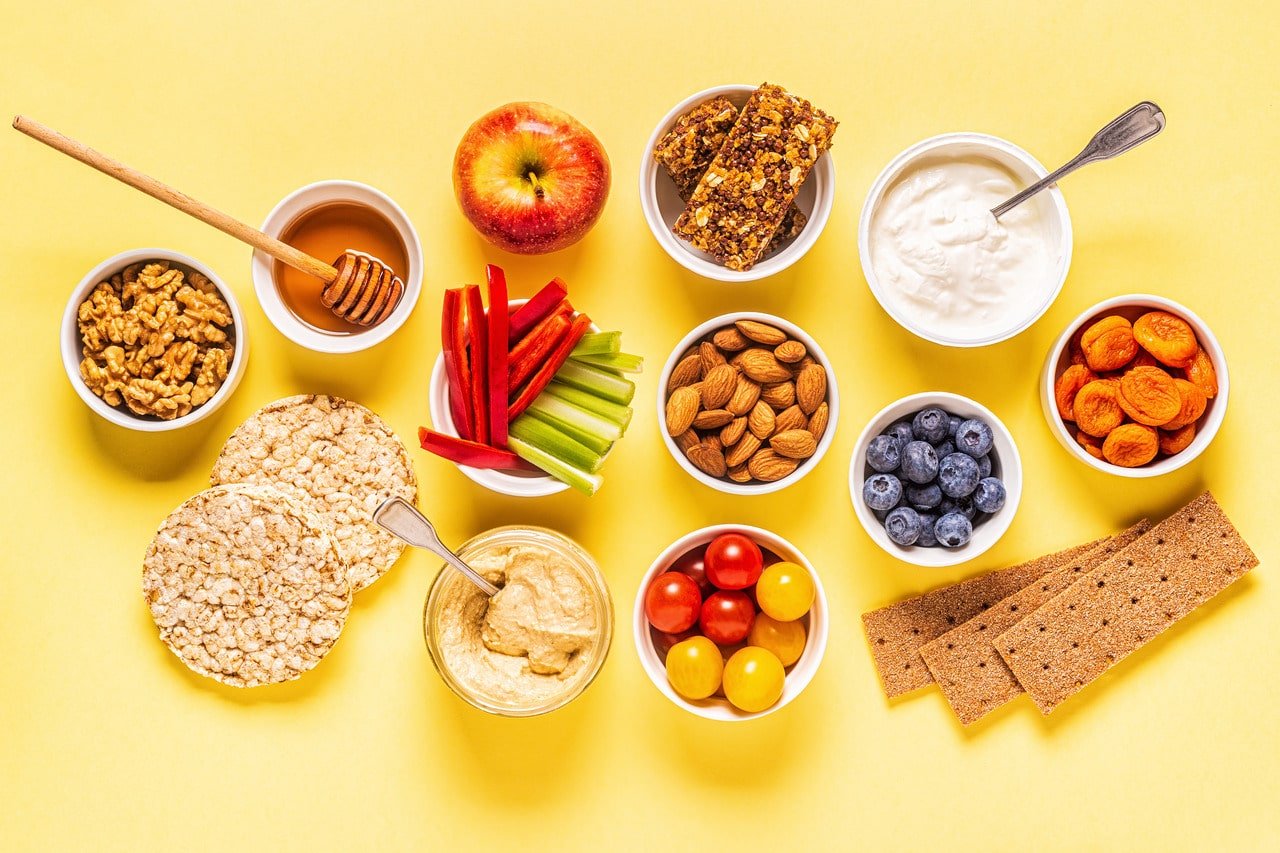
Snacking has a bad reputation in weight loss — but the problem was never snacking, it’s what and how much. The right snacks prevent the ravenous overeating that actually derails diets. So what are good snacks for weight loss? The formula: protein and/or fiber (satiety), reasonable calories (150-250), and genuinely enjoyable (you’ll actually eat them). Here are 15 that deliver.
What Are Good Snacks for Weight Loss? Protein Powerhouses
- Greek yogurt (plain) + berries: ~150 cal, 15g+ protein. The satiety king of snacks. Add cinnamon, not sugar.
- Hard-boiled eggs (2): ~140 cal, 12g protein. Nature’s portion control — see why eggs are healthy daily.
- Cottage cheese + fruit: ~180 cal, 14g protein. The texture divides people; the nutrition doesn’t.
- Tuna or chicken packets: ~100 cal, 16g+ protein. Desk-drawer friendly, no prep.
- Edamame (1 cup): ~190 cal, 17g protein + 8g fiber. The rare snack that’s both.
Fiber and Volume (Eat More, Weigh Less)
- Apple + tablespoon of peanut butter: ~200 cal. Fiber + fat + protein = the satiety trifecta.
- Vegetables + hummus: ~150 cal for a generous portion. Volume eating that actually satisfies.
- Air-popped popcorn (3 cups): ~100 cal. The highest-volume snack per calorie that exists. (Not the movie-theater butter bomb.)
- Oatmeal (small bowl): ~150 cal. Warm, filling, endlessly customizable — a breakfast that keeps you full works as a snack too.
- Chia pudding: ~180 cal. Fiber bomb that keeps you full for hours; prep the night before.
Smart Indulgences
- Dark chocolate (1 oz) + almonds: ~200 cal. Kills the “I need something” craving without the sugar spiral.
- Frozen banana “nice cream”: ~105 cal per banana. Blended frozen banana genuinely resembles soft-serve.
- Roasted chickpeas: ~150 cal per half cup. Crunchy, savory, fiber-rich — the chip replacement.
- Turkey or beef jerky (low-sugar): ~120 cal. Check labels; some are sugar bombs in disguise.
- Protein smoothie (small): ~200 cal. Fruit + protein powder + water/ice — a smoothie that keeps you full beats a sad rice cake.
The Academy of Nutrition and Dietetics emphasizes what this list demonstrates: successful weight-loss snacking is planned snacking, built on protein and fiber.
Snacks to Avoid (and What to Eat Instead)
Knowing what to dodge matters as much as knowing what to grab. The worst offenders:
“Healthy” imposters: Granola bars (most are candy bars with oats — check sugar: over 8g per bar is dessert), flavored yogurt (up to 25g sugar per tiny cup — buy plain, add fruit), veggie chips (fried starch with vegetable dust — eat actual vegetables), smoothie shop smoothies (600+ calories of fruit juice and sorbet — make your own), trail mix from the bulk bin (a handful is fine; the bag is 1,000 calories).
The vending machine hall of shame: Pastries and donuts (sugar + fat, zero satiety — hungry again in an hour), chips (engineered for overconsumption — the “can’t eat just one” is food science, not weak will), candy (pure sugar spike-and-crash). None are evil; all are terrible default snacks.
Liquid snacks: Fancy coffee drinks (up to 500 cal — a meal disguised as a beverage), regular soda (the single worst weight-loss saboteur in the American diet), “healthy” juices (fiber removed, sugar retained). Drink water, black coffee, or tea between meals.
The swap chart: Chips → roasted chickpeas or air-popped popcorn. Candy → dark chocolate + almonds or frozen fruit. Pastry → Greek yogurt + berries. Soda → sparkling water with lime. Granola bar → hard-boiled eggs or a banana + peanut butter. Each swap cuts hundreds of weekly calories without willpower — because the good option was available.
The real lesson: Bad snacking is usually an environment problem, not a discipline problem. Clear the danger zones (desk drawer, car, pantry front row), stock the good list from above, pre-portion everything. Willpower is unreliable; environments are forever. Design yours so the easy choice is the good choice — then snacking stops being the enemy and becomes what it should be: a tool that keeps you satisfied, energized, and on track.
Weight-Loss Snack FAQs
Should I stop snacking entirely to lose weight?
Not necessarily — planned snacking supports weight loss by preventing the extreme hunger that causes overeating. What to stop: unplanned, distracted, emotional snacking. The distinction isn’t snack vs. no-snack; it’s deliberate vs. mindless. A planned 200-calorie snack is a tool; a mindless 600-calorie pantry raid is the problem.
Are protein bars good for weight loss?
Some are; most are candy bars with protein marketing. Check: 200-250 cal max, 15g+ protein, under 8g sugar, recognizable ingredients. The good ones are genuinely useful (portable, portion-controlled); the bad ones are dessert. Read labels like the bar is guilty until proven innocent.
What about late-night snacking?
The calories count the same at any hour — “don’t eat after 8pm” works only because it eliminates mindless evening calories, not because of metabolic magic. If you’re genuinely hungry at night, a small protein-rich snack ([[i:166|cottage cheese, Greek yogurt]]) beats white-knuckling into a midnight binge. But habitual TV-snacking isn’t hunger — it’s routine. Distinguish the two: [[i:166|breaking the late-night habit]].
The Snacking Rules That Matter More Than the List
Pre-portion everything. Eating from the bag is how 200 planned calories become 600. Bowl it, bag it, then eat. Don’t snack distracted — TV snacking bypasses satiety signals entirely. Distinguish hunger from habit: drink water first, wait 15 minutes (late-night snacking is usually habit, not hunger). Keep good snacks visible and junk inconvenient — environment beats willpower every time.
And the big picture: snacks support safe fat loss and healthy weight loss rates — they’re tools, not cheats. A planned 200-calorie snack that prevents a 600-calorie binge is one of the best trades in nutrition. Snack smart, snack deliberately, and stop feeling guilty about eating between meals. The guilt was never the point; the protein was.
Building Your Snack System
The final level: stop choosing snacks daily and build a system. Stock the same 5-7 good snacks always (your personal roster from the lists above), pre-portion on grocery day into grab-bags, keep one at your desk/car/bag for emergencies, and do a 2-minute Sunday check (“what ran out?”). Systems beat decisions — when the good snack is the available snack, willpower becomes irrelevant. This is the unsexy secret of everyone who “eats healthy effortlessly”: they don’t. They just designed their environment so effort isn’t required. Design yours once, benefit daily.


