
We’ve all been there: you blend up a beautiful, virtuous smoothie, feel great for about 45 minutes, and then you’re raiding the pantry like you never ate at all. A smoothie that’s basically fruit juice with ice isn’t a meal — it’s a sugar delivery system. Learning how to make a smoothie that actually keeps you full comes down to understanding what satiety really requires: protein, fiber, and healthy fats, in the right amounts. Miss any of the three and you’ll be hungry again by 10 AM.
Here’s the target to aim for: at least 20 grams of protein, 8–10 grams of fiber, and a solid source of healthy fat. Hit those numbers and your smoothie will keep you satisfied for 3–4 hours, same as any solid breakfast.
How to Make a Smoothie That Actually Keeps You Full: The Formula
Think of it as building blocks. Every filling smoothie needs one item from each category:
1. Protein (the non-negotiable)
This is where most smoothies fail. A banana and some berries might have 2 grams of protein — that’s a snack, not breakfast. Your options:
- Greek yogurt (¾ cup = ~17g protein) — the easiest win, adds creaminess too
- Protein powder (1 scoop = 20–25g) — whey, or pea/rice blends for dairy-free
- Cottage cheese (½ cup = ~14g) — sounds weird, blends completely smooth, incredibly creamy
- Silken tofu (½ block = ~10g) — undetectable in the final product
- Nut butter (2 tbsp = ~8g) — plus healthy fats, double duty
2. Fiber (the hunger-killer)
Fiber slows digestion and keeps you full longer. The heavy hitters:
- Oats (¼ cup rolled = 4g fiber) — blend them dry first for the smoothest texture
- Chia seeds (1 tbsp = 5g fiber) — they gel up and add thickness
- Flaxseed (1 tbsp ground = 3g fiber) — plus omega-3s
- Avocado (½ = 5g fiber) — unbelievably creamy, you won’t taste it
- Berries and pears — among the highest-fiber fruits
3. Healthy fats (the satisfaction factor)
Fat triggers satiety hormones — it’s literally what tells your brain “we’re good here.” Nut butters, avocado, a tablespoon of coconut oil, or whole-milk yogurt all work. You don’t need much: 1–2 tablespoons of nut butter or half an avocado is plenty.
4. Liquid and flavor
Milk (dairy or soy for extra protein), or water/coconut water if your other ingredients already carry the nutrition. For flavor without a sugar bomb: frozen fruit, cocoa powder, cinnamon, vanilla extract, a Medjool date or two instead of honey.
Three Recipes That Actually Work
The Peanut Butter Banana Powerhouse: 1 banana, 2 tbsp peanut butter, ¾ cup Greek yogurt, ¼ cup oats (blended first), 1 tbsp chia seeds, 1 cup milk, ice. Roughly 35g protein, 12g fiber. This is a meal.
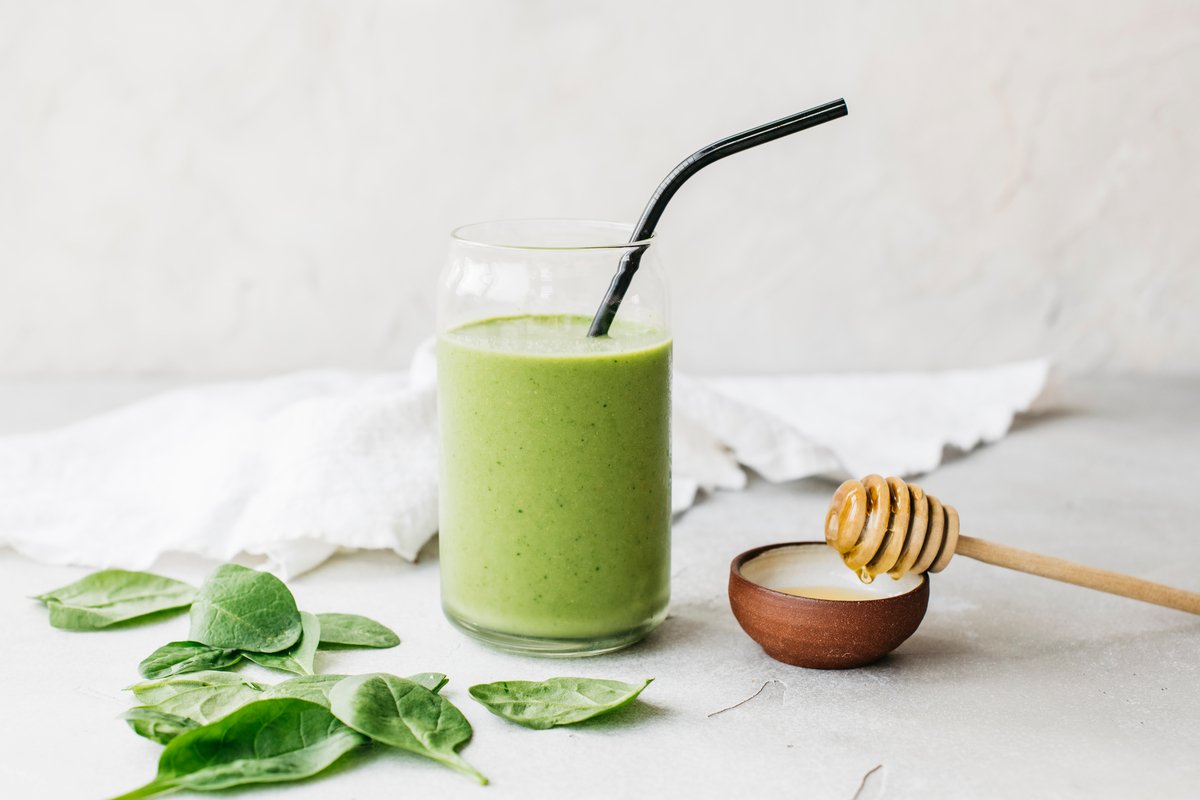
The Green One That Doesn’t Taste Green: 1 cup spinach (you won’t taste it, promise), ½ avocado, 1 pear, ½ cup cottage cheese, 1 tbsp flaxseed, 1 cup soy milk, squeeze of lime, ice. Creamy, lightly sweet, genuinely filling.
Chocolate Cherry Recovery: 1 cup frozen cherries, 1 scoop chocolate protein powder, 1 tbsp almond butter, 1 tbsp cocoa powder, 1 cup milk, ice. Tastes like dessert, performs like breakfast.
Mistakes That Sabotage Your Smoothie
- Too much fruit, nothing else. Two bananas + mango + orange juice = 60+ grams of sugar and a crash by mid-morning. Fruit is great; fruit alone isn’t a meal.
- Juice as the liquid. Even 100% juice is basically sugar water without the fiber. Use milk or water.
- Skipping the fat. A fat-free smoothie digests fast and leaves you hungry. The avocado or nut butter isn’t optional.
- Eyeballing protein. “Some yogurt” might be 5 grams or 15. Measure once so you know your baseline.
- Drinking it in 90 seconds. Satiety signals take ~20 minutes. Sip it slowly — treat it like a meal, not a shot.
Smoothies vs. Solid Food: An Honest Note
I’ll be straight with you: solid food generally keeps people fuller than blended food, because chewing itself contributes to satiety signals. A smoothie will never quite match eggs and toast for staying power. But a well-built smoothie beats a sad granola bar or skipped breakfast every time — and for busy mornings, workouts, or post-gym recovery, it’s genuinely excellent. If you want the heartiest possible breakfast in solid form, my fluffy pancakes with Greek yogurt on the side are hard to beat.
For overall nutrition context, the Harvard Nutrition Source is a solid, evidence-based reference for what a balanced meal actually needs — protein, fiber, healthy fats, the same trio we’re building here.
Meal-Prep Smoothies (Yes, Really)
You can prep freezer bags with all the solid ingredients (fruit, oats, seeds, nut butter dollops on parchment) and freeze them flat. In the morning: dump bag in blender, add liquid and yogurt, blend. Ninety seconds to a real breakfast. They keep a month in the freezer — and if you want the full system, my guide to freezing food safely covers the principles.
The Practical Takeaway
A smoothie that keeps you full = 20g+ protein + 8g+ fiber + healthy fats. Build every smoothie from those three blocks, go easy on the fruit juice, and sip it like a meal. Do that and you’ll stop thinking about lunch at 10:30.
Start with the peanut butter banana formula tomorrow morning. It’s the one I make most, and it’s never let me down.
Making It Kid-Friendly
Kids tend to reject anything green or “healthy-tasting,” but the same formula works with stealth. The chocolate cherry recipe above passes as a milkshake for most kids. For younger ones, try strawberry-banana with Greek yogurt and a spoonful of peanut butter — the berries mask everything. Let them pick the fruit; involvement dramatically increases the odds they’ll drink it. One caution: keep honey and added sweeteners out for kids under one, and go easy on protein powder for small children — Greek yogurt and nut butter provide plenty of protein for them without supplements. A smoothie they actually drink beats a “perfect” one they won’t touch.


