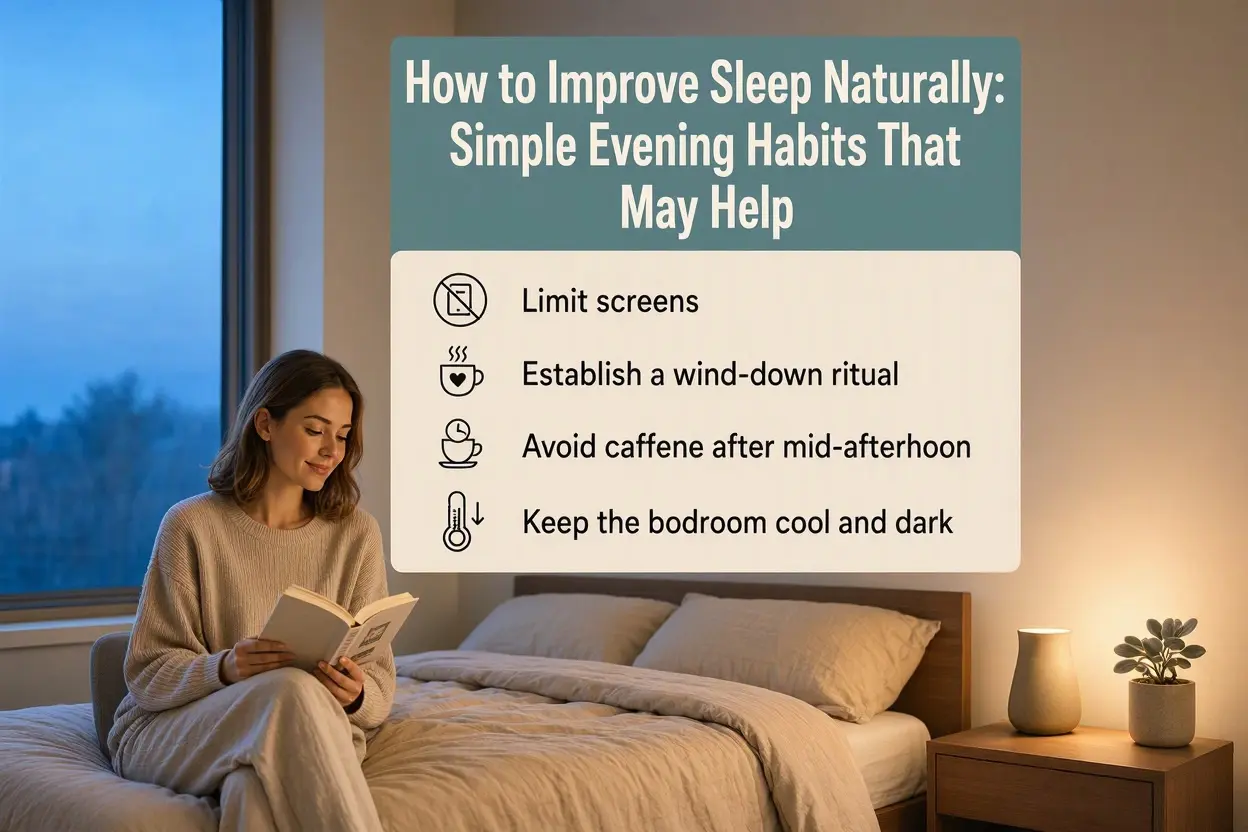
Getting a good night’s sleep can sometimes feel harder than it should. You may get into bed at a reasonable time, but your mind keeps running, your phone keeps calling for attention, or you simply don’t feel ready to sleep.
The good news is that improving sleep does not always require complicated routines or expensive products. Small changes to your evening habits can make it easier for your body and mind to slow down before bedtime.
If you’re wondering how to improve sleep naturally, the best place to start is with simple habits that you can actually maintain. Here are some practical ways to create a calmer evening and support better sleep.
Why Evening Habits Matter for Sleep
Your body follows a natural sleep-wake cycle, often called the circadian rhythm. What you do during the hours before bed can influence how prepared your body feels for sleep.
A busy evening filled with bright screens, heavy meals, work, or stressful conversations can make it difficult to relax. On the other hand, a predictable and peaceful bedtime routine can send your body a useful signal that the day is coming to an end.
You don’t need to change everything at once. Even one or two consistent habits may be a good starting point.
1. Keep a Consistent Bedtime
One of the simplest ways to support better sleep is to go to bed and wake up around the same time each day.
Your body tends to respond well to consistency. When your sleep schedule changes dramatically from one night to another, it can become harder to feel sleepy at the right time.
Try choosing a realistic bedtime that gives you enough opportunity to sleep. Keep the same general schedule on weekends when possible.
Consistency matters more than creating a perfect bedtime.
2. Put Your Phone Away Before Bed
For many people, the phone is the biggest obstacle to a relaxing evening.
Checking social media, watching short videos, replying to messages, or reading work notifications can keep your brain engaged when you’re trying to wind down. The light from screens may also interfere with your body’s normal preparation for sleep.
Consider putting your phone away 30 to 60 minutes before bedtime.
If you need your phone nearby, turn off unnecessary notifications and avoid using it for stimulating activities once you’re in bed.
Instead, use this time for something quieter, such as reading a physical book, listening to calm music, or simply talking with family.
3. Create a Relaxing Bedtime Routine
A bedtime routine doesn’t have to be complicated.
You might take a warm shower, change into comfortable clothes, brush your teeth, dim the lights, and spend a few minutes reading. Doing similar activities in the same order each evening can help create a sense of familiarity.
The goal is not to follow a strict checklist. The goal is to give yourself time to transition from a busy day to a restful night.
4. Avoid Heavy Meals Close to Bedtime
Eating a large or very heavy meal immediately before going to bed can leave some people feeling uncomfortable.
If possible, give yourself some time between dinner and bedtime. If you’re genuinely hungry later in the evening, a small and simple snack may be more comfortable than going to bed extremely hungry.
Pay attention to your own body. Foods that cause heartburn, bloating, or discomfort at night may be worth limiting in the evening.
5. Be Careful With Caffeine in the Evening
Coffee isn’t the only source of caffeine. Tea, energy drinks, cola, chocolate, and some other products can also contain caffeine.
Caffeine can stay in the body for several hours, so having it late in the day may make it harder to fall asleep.
If you regularly struggle with sleep, consider moving your last caffeinated drink earlier in the day and see whether it makes a difference.
6. Make Your Bedroom Comfortable
Your sleeping environment can have a bigger impact than you might expect.
A bedroom that is quiet, dark, and comfortably cool may make it easier to settle down. If outside noise is a problem, you could try earplugs or consistent background noise.
Your mattress and pillow also matter. They don’t need to be expensive, but they should provide enough comfort and support for you to sleep without constantly shifting positions.
Even small changes—such as reducing unnecessary light or keeping the room tidy—can make your bedroom feel more relaxing.
7. Try Gentle Stretching or Deep Breathing
You don’t need an intense workout at night to relax your body.
A few minutes of gentle stretching can help you transition into a calmer state. Slow breathing can also be useful when your thoughts feel busy.
Try sitting or lying comfortably and taking slow breaths. Focus your attention on the movement of your breathing rather than trying to force yourself to fall asleep.
The purpose is relaxation, not perfection.
8. Write Down Tomorrow’s Tasks
Sometimes the problem isn’t tiredness—it’s an overactive mind.
If you keep thinking about tomorrow’s appointments, work, shopping, bills, or unfinished tasks, spend a few minutes writing them down before bed.
A simple list can help get those thoughts out of your head and onto paper.
You don’t need to solve everything at night. Just make a note of what needs attention tomorrow and give yourself permission to stop thinking about it for the evening.
9. Limit Alcohol as a Sleep Strategy
Some people believe alcohol helps them fall asleep faster. While it can make you feel sleepy initially, it may interfere with the quality and continuity of sleep later in the night.
For better sleep habits, it’s better not to rely on alcohol as a way to fall asleep.
If you notice that your sleep becomes worse after drinking, that is another reason to reconsider alcohol close to bedtime.
10. Get Some Daytime Activity
Better sleep doesn’t begin only at night.
Regular physical activity during the day can support healthy sleep. You don’t necessarily need a demanding workout. Walking, cycling, stretching, household activities, or other forms of movement can all help you stay active.
If intense exercise close to bedtime makes you feel more alert, try doing it earlier in the day.
11. Get Natural Light During the Day
Spending some time in natural daylight can help support your body’s internal clock.
Try opening your curtains in the morning or spending some time outdoors during the day. A morning walk can be especially useful because it combines daylight with physical activity.
This simple daytime habit can complement your evening sleep routine.
12. Don’t Force Yourself to Sleep
One common mistake is becoming frustrated because you’re not falling asleep quickly.
Looking at the clock repeatedly and thinking, “I have to sleep now,” can increase stress and make relaxation more difficult.
If you’re awake for a while, focus on staying comfortable and relaxed rather than forcing sleep. If needed, get up for a quiet activity in low light and return to bed when you feel sleepy.
A Simple Natural Sleep Routine to Try Tonight
If you want to improve your sleep without making your evening complicated, try this simple routine:
2–3 hours before bed:
Have your evening meal and avoid unnecessarily heavy food.
1 hour before bed:
Reduce screen use, dim the lights, and finish demanding work.
30 minutes before bed:
Take a shower, read something relaxing, stretch gently, or practice slow breathing.
At bedtime:
Keep your bedroom dark, quiet, and comfortable. Put your phone away and allow yourself to relax.
You don’t have to follow this routine perfectly. The most useful routine is one you can realistically repeat.
How Long Does It Take to Improve Sleep Naturally?
There isn’t a fixed timeline for better sleep. Some people notice changes after improving their routine for a few nights, while others need more time.
Consistency is important. Instead of changing ten things at once, choose two or three habits and stick with them for a couple of weeks.
For example, you could start by keeping a consistent bedtime, reducing evening screen time, and getting natural light in the morning.
Once those habits feel normal, you can add others.
When Should You Talk to a Doctor About Sleep Problems?
Occasional difficulty sleeping is common. However, ongoing sleep problems shouldn’t always be dismissed as a bad routine.
Consider speaking with a healthcare professional if you regularly have trouble falling asleep or staying asleep, feel excessively tired during the day, frequently wake up gasping or choking, or your sleep problems are affecting your daily life.
Conditions such as insomnia and sleep apnea may require professional evaluation and treatment.
Natural sleep habits can support healthy sleep, but they aren’t a replacement for medical care when an underlying problem is present.
Final Thoughts
Learning how to improve sleep naturally doesn’t have to involve a complicated nighttime routine. Small, consistent changes can make your evenings calmer and create better conditions for restful sleep.
Start with the basics: maintain a regular sleep schedule, reduce screen use before bed, limit late caffeine, make your bedroom comfortable, and give your mind time to slow down.
Most importantly, don’t worry about creating a “perfect” sleep routine. Focus on habits that fit your lifestyle and that you can maintain over time.
Relevant Keywords
- how to improve sleep naturally
- natural ways to sleep better
- how to sleep better at night
- tips for better sleep
- healthy sleep habits
- evening habits for better sleep
- natural sleep tips
- how to improve sleep quality
- bedtime routine for better sleep
- ways to sleep naturally
- improve sleep quality naturally
- healthy bedtime routine
- sleep hygiene tips
- how to fall asleep naturally
- better sleep without medication
- relaxing bedtime habits
- nighttime routine for sleep
- habits that improve sleep
- natural remedies for better sleep
- tips for restful sleep
Frequently Asked Questions
1. How can I improve my sleep naturally?
You can start by keeping a consistent sleep schedule, limiting caffeine late in the day, reducing screen use before bed, getting regular daytime activity, and creating a relaxing bedtime routine.
2. What is the best natural way to sleep better?
There isn’t one solution that works for everyone. A consistent sleep schedule, comfortable bedroom, reduced evening stimulation, and healthy daytime habits are good places to start.
3. Does using a phone before bed affect sleep?
Using a phone before bed can make it harder for some people to wind down because of the stimulating content, notifications, and screen light. Reducing phone use before bedtime may help create a more relaxing routine.
4. What should I avoid before going to bed?
Consider limiting caffeine late in the day, heavy meals close to bedtime, alcohol as a sleep aid, intense stimulation, and stressful work immediately before bed.
5. How can I calm my mind before sleeping?
Writing down tomorrow’s tasks, reading, gentle stretching, slow breathing, and reducing screen use can help create a calmer transition to bedtime.
6. Is a bedtime routine really helpful?
A consistent bedtime routine can help signal that it is time to wind down. It does not need to be complicated; even a few relaxing activities repeated each evening can be useful.
7. How many hours of sleep should adults get?
Most adults generally need around 7–9 hours of sleep per night, although individual needs can vary.
8. When should I seek professional help for sleep problems?
If sleep difficulties continue regularly, significantly affect your daytime life, or occur alongside symptoms such as loud snoring or waking up gasping, talk with a healthcare professional.