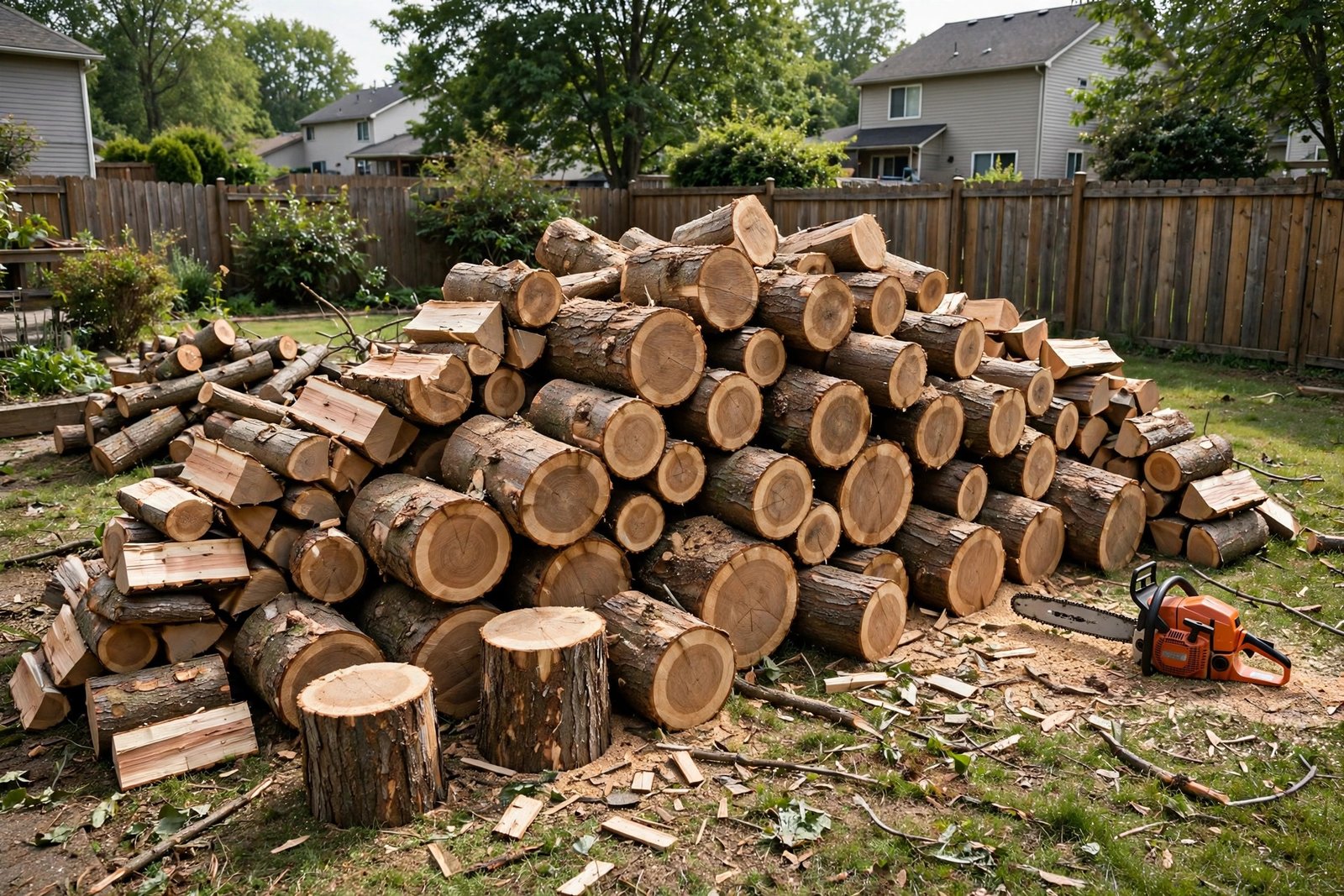
How do You Get Rid of Logs: What You Need to Know
The fastest ways to get rid of logs are curbside yard-waste pickup, hiring a junk removal service, renting a dumpster, or listing them free on Craigslist or Facebook Marketplace — firewood seekers will often haul them away at no cost to you. The best option depends on how many logs you have, their size, and whether they’re still usable as firewood or lumber.
Whether a storm dropped a tree in your yard or you just finished a big pruning project, logs are heavy, awkward, and most trash services won’t take them. Here’s every practical disposal method, from free to full-service, plus what to avoid.
Option 1: Give Them Away as Firewood (Often Free)
This is the easiest win. Post on Craigslist (free stuff section), Facebook Marketplace, or Nextdoor: “Free firewood — you cut and haul.” In the NYC metro area, where firewood sells for $250–$400+ per cord, people will happily come get usable hardwood logs. Cut logs into manageable lengths (16–18 inches) if you can — it dramatically increases takers.
Good firewood species: oak, maple, ash, hickory, cherry, birch. Avoid giving away diseased wood or species like black walnut that some people don’t want.
Option 2: Municipal Yard Waste Pickup
Many cities and towns collect branches and logs curbside, but almost all have size limits — commonly 4 feet long and 4–6 inches in diameter, bundled or bagged. Whole tree trunks won’t qualify. Check your local sanitation department’s rules: in New York City, the Department of Sanitation collects yard waste on designated days in certain areas, but large logs must go through private services.
If your logs exceed the limits, cut them down to size with a chainsaw (or hire someone with one) and bundle them to spec.
Option 3: Hire a Junk Removal Service
For large quantities or logs too big to handle, a junk removal company is the simplest hands-off option. Expect to pay:
- Small load (a few logs): $100–$200
- Half truckload: $250–$400
- Full truckload: $400–$600+
In the NYC area, prices trend toward the higher end. Get 2–3 quotes, and confirm the price includes cutting if the logs are still in large sections. Many tree service companies will also remove logs for a fee — sometimes cheaper if they already did the cutting.
Option 4: Rent a Dumpster
For very large jobs — a whole tree or storm cleanup — a small dumpster (10–15 yard) rented for a week typically costs $300–$500. You do the loading; they haul it away. Check that the rental company accepts yard waste and logs, and confirm weight limits, since logs are deceptively heavy (a single 2-foot oak section can weigh 100+ pounds).
Option 5: Chip or Mulch Them
Rent a wood chipper ($75–$150/day from a home improvement store) and turn branches and smaller logs into free mulch for your garden beds. This works best for limbs under 4–6 inches in diameter. The mulch is excellent for landscaping — just don’t use black walnut chips in vegetable gardens.
Option 6: Reuse or Sell Them
Before paying to dispose of logs, consider whether they have value:
- Sell as lumber: straight, large-diameter hardwood logs (especially oak, walnut, cherry) can interest local sawmills or woodworkers. A portable sawmill operator may even come to you.
- Landscape features: large logs make attractive rustic benches, borders, and garden edging.
- Hugelkultur beds: bury logs in raised garden beds — they decompose slowly and feed the soil for years.
- Firewood for yourself: season hardwood logs 6–12 months and you’ll have free winter heat or bonfire wood.
What NOT to Do With Logs
- Don’t burn them in an open pile without checking local burn bans and ordinances — open burning is illegal in NYC and most suburbs, and restricted in many rural areas during dry seasons.
- Don’t dump them illegally. Dumping logs on vacant lots, roadsides, or parkland carries hefty fines.
- Don’t put whole logs in your regular trash. They’ll be left at the curb and may earn you a violation notice.
- Don’t ignore diseased wood. Logs from trees killed by pests like emerald ash borer or spotted lanternfly may be subject to quarantine rules — check your state’s agriculture department before moving them.
- Don’t try to move massive logs alone. A large log can weigh several hundred pounds. Use proper equipment or hire help.
Step-by-Step: The Quickest Path
- Assess the pile: count the logs, note the species and sizes.
- Separate firewood-worthy logs (hardwood, 6″+ diameter) from junk wood.
- Post the good stuff free online — this often clears half the pile in a weekend.
- Cut the rest to your city’s yard-waste specs or bundle for pickup.
- For what’s left (huge trunks, stumps), get quotes from 2–3 junk removal or tree services.
FAQs
Will the trash company take logs?
Regular trash service won’t take whole logs. Most municipalities accept only cut, bundled branches under specific size limits through yard waste programs. Large logs require private junk removal or a dumpster.
How much does it cost to have logs removed?
Junk removal runs $100–$600+ depending on volume, with most residential jobs landing around $250–$400. In the NYC area, expect the higher end of that range.
Can I burn logs in my backyard?
Maybe — it depends entirely on local law. Open burning is banned in New York City and many suburbs; other areas allow recreational fires with restrictions on size and timing. Always check local ordinances and burn bans first.
Where can I dump logs for free?
Free options include giving them away as firewood online, municipal yard-waste programs (if cut to spec), and some county composting or brush-drop sites that accept logs at no charge. Call ahead to confirm accepted sizes.
What do I do with a tree stump and root ball?
Stumps are a separate job: rent a stump grinder ($150–$300/day), hire stump grinding service ($100–$400 per stump), or let it rot naturally by drilling holes and adding nitrogen fertilizer — the slowest but cheapest route.