How Long Before Grass Seed Sprouts? Complete Answer
How long before grass seed sprouts? 5 to 30 days depending on grass type. Germination times, soil temperature tips, and why seed fails to sprout.
Written by admin
Published November 9, 2026
Reading time 4 minutes
How Long Before Grass Seed Sprouts? Complete Answer
Grass seed typically sprouts in 5–30 days, depending on the grass type. Fast-germinating ryegrass sprouts in 5–10 days, fescue in 7–14 days, Kentucky bluegrass in 14–30 days, and warm-season grasses like Bermuda in 7–14 days (in warm soil). If nothing has sprouted after 30 days, something went wrong.
Germination time depends on three things: the seed species, soil temperature, and moisture. Get all three right, and you’ll see green shoots right on schedule. Here’s the full breakdown.
Germination Times by Grass Type
| Grass Type | Days to Sprout | Ideal Soil Temp |
|---|---|---|
| Perennial ryegrass | 5–10 days | 50–65°F |
| Tall fescue | 7–14 days | 50–65°F |
| Fine fescue | 7–14 days | 50–65°F |
| Kentucky bluegrass | 14–30 days | 50–65°F |
| Bermuda grass | 7–14 days | 70–95°F |
| Zoysia grass | 14–21 days | 70–95°F |
Why this matters in the NYC area: Cool-season grasses (fescue, bluegrass, ryegrass) are the right choice for New York’s climate. Seed them in early fall (late August through September) when soil is warm but air temperatures are cooling — germination is fastest and weeds compete less.
The 3 Requirements for Fast Germination
1. Correct Soil Temperature
Soil temperature matters more than air temperature. Cool-season seeds germinate best when soil is 50–65°F; below 50°F, germination slows to a crawl or stops. Buy a $10 soil thermometer and check before seeding. In spring, New York soils often don’t reach 50°F until late April or May — seeding too early is the most common reason for failure.
2. Consistent Moisture
Seeds must stay constantly moist until they sprout. Water lightly 2–3 times a day to keep the top half-inch of soil damp — never let it dry out, but avoid puddles that wash seeds away. Once seedlings reach 2 inches, shift to deeper, less frequent watering.
3. Good Seed-to-Soil Contact
Seed sitting on top of thatch or hard ground won’t germinate. Rake or dethatch the area, spread the seed, then lightly rake it in so it’s covered by about 1/8–1/4 inch of soil. A light layer of straw or peat moss over the seed holds moisture and improves germination.
What Grass Seed Looks Like When It Sprouts
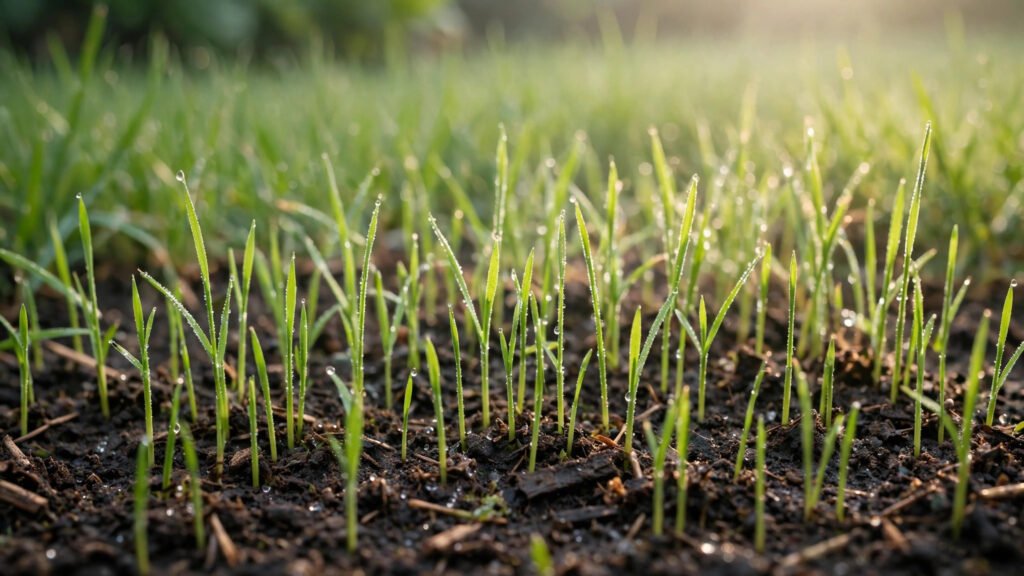
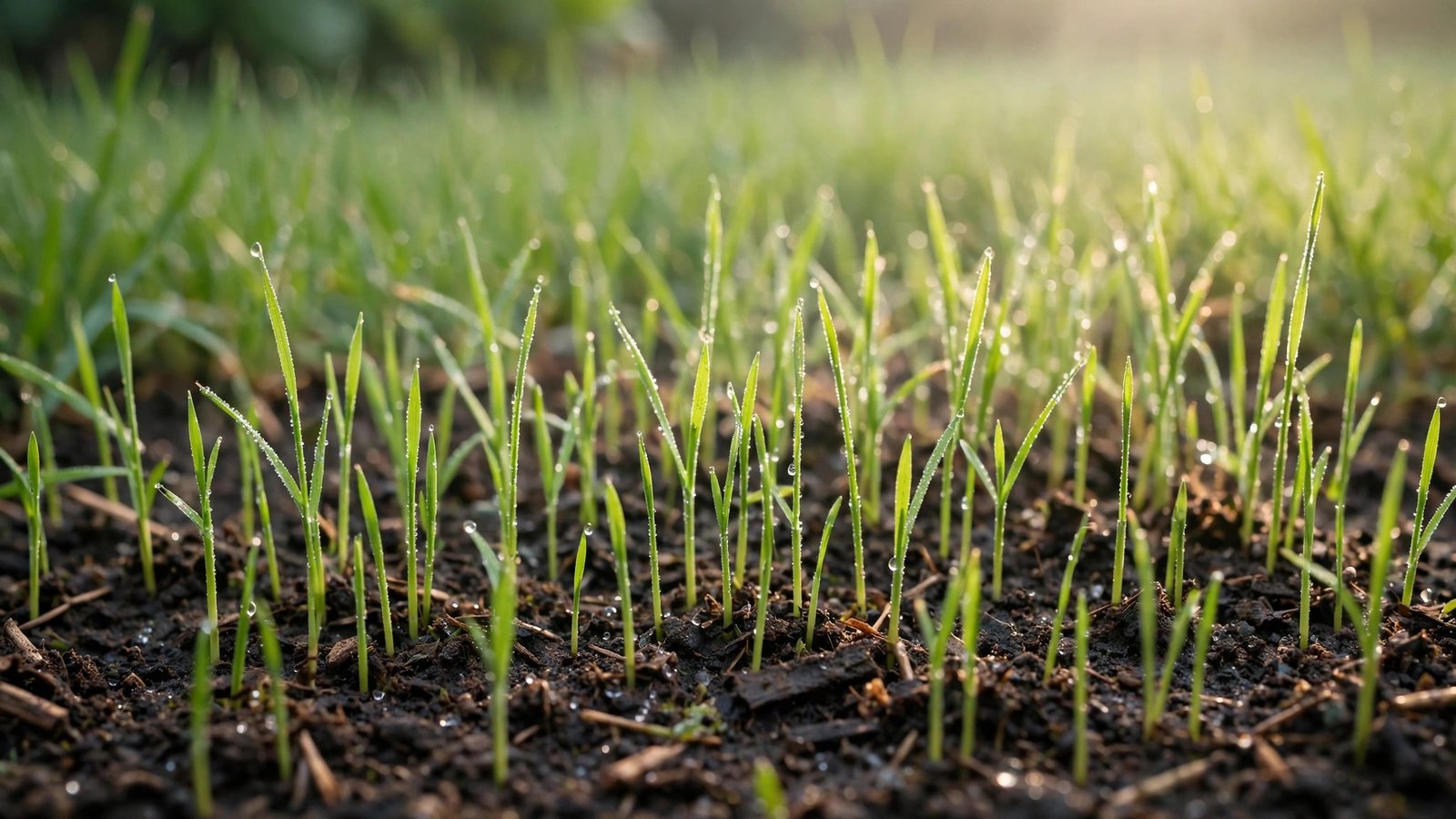
New seedlings look like fine, bright-green blades — thinner and lighter in color than mature grass. Don’t panic if growth seems patchy at first; seedlings fill in over several weeks. Avoid walking on new grass until it’s at least 3 inches tall, and don’t mow until it reaches 3.5–4 inches (then cut no more than one-third of the blade).
Best Grass Seed for the NYC Area
For New York lawns, a blend of tall fescue, perennial ryegrass, and Kentucky bluegrass is the gold standard. Each plays a role: ryegrass germinates fast (covering bare soil in days and crowding out weeds), fescue handles heat, shade, and foot traffic, and bluegrass spreads by rhizomes to fill in thin spots over time. Avoid cheap “contractor’s mix” bags that are mostly annual ryegrass — it sprouts fast but dies in winter, leaving you back where you started.
Buy seed labeled with a high germination rate (85%+) and zero weed seed. Quality seed costs more per bag but you use less of it, and the results are dramatically better.
Why Your Grass Seed Isn’t Sprouting
- Too cold — the #1 cause. Seeds planted in cold soil just sit there.
- Dried out — even one dry afternoon can kill germinating seeds.
- Buried too deep — more than 1/4 inch of soil and seedlings can’t push through.
- Old seed — grass seed loses viability after 2–3 years. Check the date on the bag.
- Birds and runoff — uncovered seed gets eaten or washed away. Use straw cover.
- Wrong grass for the region — warm-season grasses won’t germinate in cool New York springs.
FAQs
How long does it take for grass seed to fully grow?
Germination (sprouting) takes 5–30 days, but a full, established lawn takes 6–12 weeks from seeding. Plan on one full growing season before the lawn looks truly mature.
Can you walk on newly seeded grass?
Avoid it for the first 3–4 weeks. Foot traffic crushes tender seedlings and compacts the soil. If you must cross, lay down a board to distribute your weight.
Should I water grass seed every day?
Yes — light watering 2–3 times daily until germination, keeping the top layer of soil consistently moist. After sprouting, gradually reduce to once daily, then to deep watering every 2–3 days.
What happens if grass seed doesn’t germinate?
After 30 days with no sprouts, reseed. Diagnose the problem first (usually temperature or moisture), fix it, and overseed the bare areas rather than starting over completely.
Is fall really better than spring for seeding?
Yes, especially in the Northeast. Fall seeding (late August–September) gives seedlings two cool growing seasons (fall and spring) before summer heat stress, with far less weed competition than spring.