
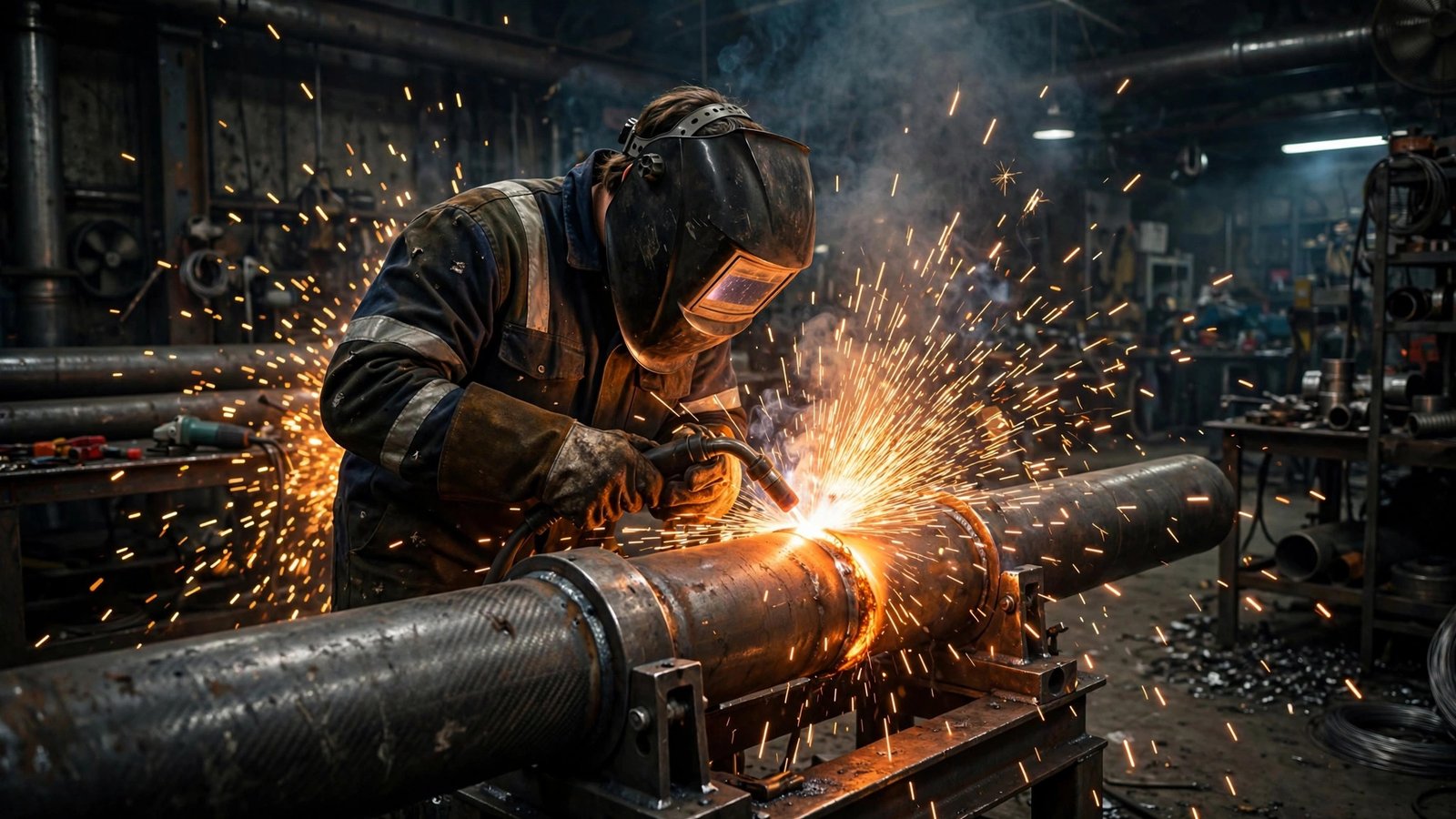
How Much do Pipe Welders Make? Salary Guide (2026)
Pipe welders in the United States earn an average of $55,000 to $75,000 per year, which works out to roughly $26 to $36 per hour. Entry-level pipe welders typically start around $45,000, while experienced welders working on pipelines, power plants, or offshore rigs can make $90,000 to $120,000 or more — with per diem and overtime pushing total compensation even higher.
Pipe welding is one of the best-paid trades in construction and manufacturing. But pay varies a lot depending on your certifications, the industry you work in, and where you live. This guide breaks down pipe welder salaries by experience level, industry, and location, plus what it takes to land the highest-paying jobs.
Pipe Welder Salary at a Glance (2026)
| Category | Typical Annual Pay | Typical Hourly Rate |
|---|---|---|
| Entry-level (0–2 years) | $45,000 – $55,000 | $22 – $26/hr |
| Mid-level (3–6 years) | $60,000 – $78,000 | $29 – $37/hr |
| Experienced (7+ years) | $75,000 – $95,000 | $36 – $46/hr |
| Top-tier (travel/pipeline/offshore) | $95,000 – $130,000+ | $45 – $60+/hr |
These figures reflect base wages. Travel welders often earn an additional $100–$150 per day in per diem for meals and lodging, which can add $25,000–$35,000 per year on top of wages.
What Affects a Pipe Welder’s Pay
1. Certifications
Certifications are the single biggest lever for higher pay. Welders holding an AWS D1.1 structural certification, a 6G pipe welding certification, or ASME Section IX credentials command significantly higher rates. The 6G position (a fixed pipe at a 45-degree angle) is the gold standard — passing it proves you can weld in the toughest positions, and employers pay accordingly.
2. Industry
Not all welding jobs pay the same. Here’s how industries compare:
- Oil and gas / pipeline work: $70,000 – $120,000+. The highest-paying sector, but it usually requires travel and long hours.
- Power plants and refineries: $65,000 – $95,000. Steady work with strong union representation in many regions.
- Shipbuilding and marine: $55,000 – $85,000.
- Commercial construction (plumbing/HVAC piping): $50,000 – $70,000.
- Manufacturing and fabrication shops: $45,000 – $65,000. Lower pay, but you sleep in your own bed every night.
3. Location
Pay follows the cost of living and the concentration of industrial work. In New York City, union pipe welders earn around $50–$60 per hour plus benefits through Local 46 (Metallic Lathers) or Plumbers Local 1 for piping work. Gulf Coast states like Texas and Louisiana offer abundant refinery and pipeline work at $28–$45 per hour. Alaska, North Dakota, and offshore rigs in the Gulf pay premiums because of remote conditions.
4. Travel and Overtime
Travel welders (“road dogs” in industry slang) can double their effective income. A welder making $35/hr on a pipeline project with 60-hour weeks and $125/day per diem can clear $110,000 in a single year.
How to Become a High-Earning Pipe Welder
- Get proper training. Complete a welding program at a trade school or community college (typically 7–18 months). In NYC, programs at places like Apex Technical School or various union apprenticeships are well-regarded.
- Earn your certifications. Start with AWS Certified Welder credentials, then pursue 6G pipe certification. Each cert is a pay raise waiting to happen.
- Consider a union apprenticeship. The United Association (UA) of Plumbers and Pipefitters offers paid apprenticeships that combine classroom training with on-the-job experience — and union scale wages are among the highest in the trade.
- Be willing to travel. The best-paying pipe welding jobs in 2026 are on pipelines, turnaround shutdowns, and offshore platforms. Flexibility to travel is the fastest route to six figures.
- Learn TIG in addition to MIG/Stick. TIG welders on stainless steel and exotic alloys (common in food processing, pharmaceutical, and semiconductor plants) earn premium rates.
Pipe Welder vs. Other Welding Jobs
Pipe welding pays more than general fabrication welding because of the skill and precision involved. For comparison, general welders average around $47,000 per year, underwater welders can make $100,000–$200,000 (with extreme risk), and welding inspectors earn $65,000–$90,000. Pipe welding sits in the sweet spot: excellent pay without the life-threatening risks of underwater welding.
Job Outlook for Pipe Welders
The outlook is solid. The Bureau of Labor Statistics projects steady demand for welders through the early 2030s, driven by aging infrastructure — much of America’s pipeline, water, and power infrastructure needs repair or replacement. The American Welding Society has warned of a shortage of over 300,000 welders by the end of this decade. Skilled, certified pipe welders will have their pick of jobs.
Mistakes That Keep Pay Low
- Skipping certifications — non-certified welders compete for the lowest-paying shop jobs.
- Staying at one shop too long — switching employers every few years early in your career is how you find your market rate.
- Ignoring TIG and exotic metals — versatility is what commands premium pay.
- Not joining a union — in markets like NYC, union scale can be 30–50% higher than non-union rates, plus full benefits.
FAQs
How much do pipe welders make per hour?
Most pipe welders earn $22–$46 per hour depending on experience and industry, with top travel welders exceeding $60 per hour. Union rates in cities like New York run higher, around $50–$60 per hour.
Can pipe welders make $100,000 a year?
Yes. Experienced pipe welders in oil and gas, on pipelines, or doing turnaround work routinely exceed $100,000 when overtime and per diem are included. Travel welders often reach this level within 3–5 years of experience.
How long does it take to become a pipe welder?
A trade school program takes 7–18 months, but becoming a skilled, well-paid pipe welder typically takes 3–5 years of hands-on experience and certifications. Union apprenticeships run about 5 years.
Is pipe welding a good career in 2026?
Yes. It offers strong pay, low educational debt, and excellent job security thanks to a national shortage of skilled welders and ongoing infrastructure work.
Do pipe welders need a college degree?
No. A high school diploma plus trade school training or an apprenticeship is the standard path. Certifications matter far more than degrees.