
How to Become a K9 Officer: Step-by-Step Guide (2026)
To become a K9 officer in the United States, you must first become a sworn police officer (or deputy sheriff), complete the police academy and field training, serve 1–3 years on patrol, and then apply for an opening in your agency’s K9 unit. Once selected, you and your assigned dog complete a K9 handler training course — typically 12 to 16 weeks — covering obedience, tracking, narcotics or explosives detection, and apprehension work.
Working as a K9 officer is one of the most competitive specialty assignments in law enforcement. Units are small, openings are rare, and the job comes with serious extra responsibility: you live with the dog, train with the dog daily, and are on call when your department needs a search or a track. This guide walks you through every step, from high school to your first deployment with your partner.
What Does a K9 Officer Actually Do?
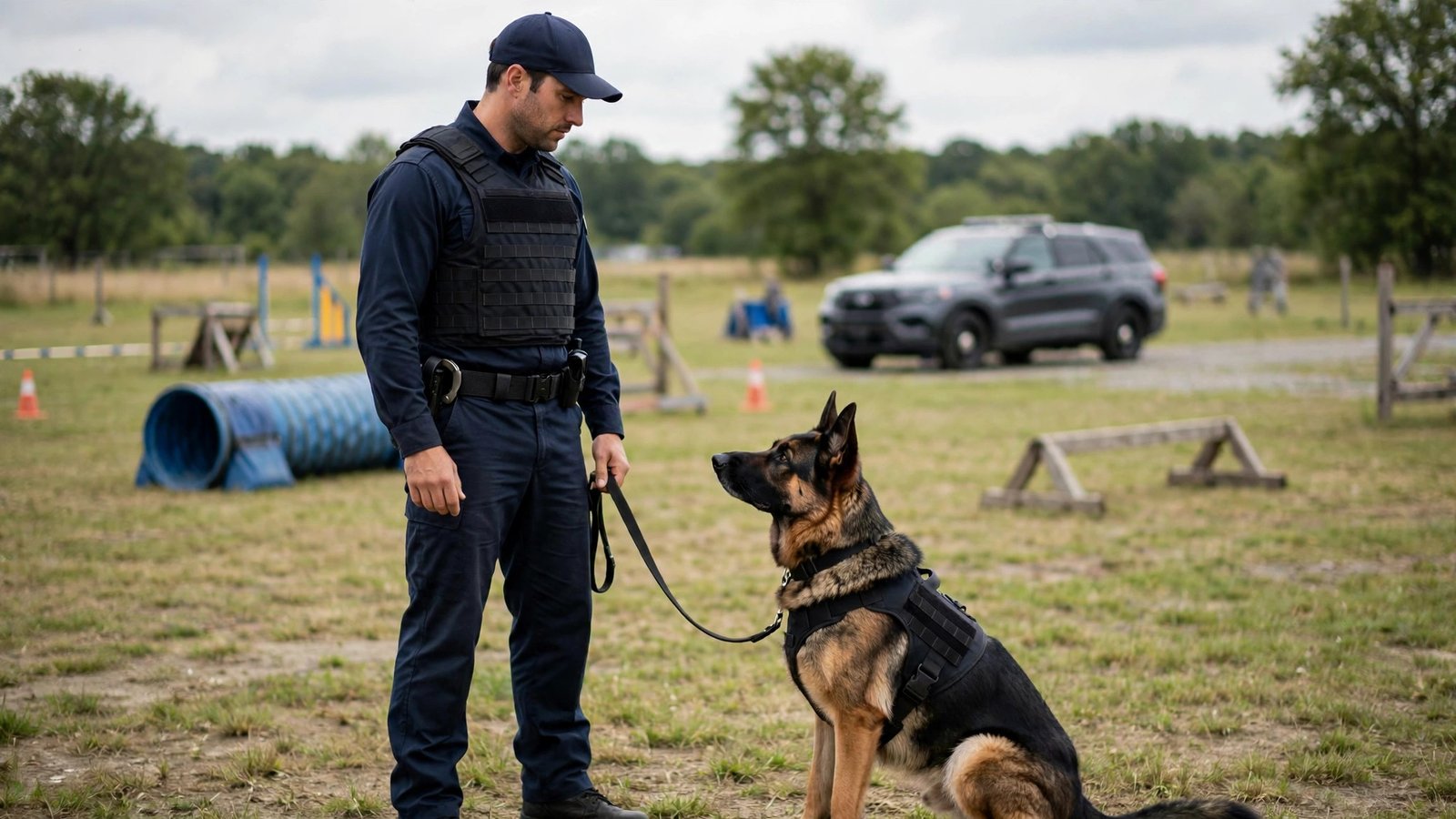
A K9 officer (also called a K9 handler) is a police officer paired with a trained working dog. The team is deployed for:
- Tracking suspects who fled on foot, using the dog’s scent-tracking ability.
- Narcotics detection — searching vehicles, luggage, buildings, and open areas for drugs.
- Explosives detection — often at airports, transit hubs, and large events. (In New York City, you’ll see K9 teams working major transit stations and venues regularly.)
- Patrol/apprehension work — controlled use of the dog to stop a fleeing or resisting suspect.
- Cadaver and search-and-rescue work in some units.
The work isn’t just deployments. Handlers train with their dogs several days a week, keep training logs, maintain the dog’s certifications, and take the dog home every night — it’s your partner and your responsibility, around the clock.
Step 1: Meet the Basic Requirements to Become a Police Officer
You cannot skip ahead to K9 work. Every handler starts as a regular sworn officer. Typical entry requirements for US police departments include:
- US citizen, at least 20–21 years old (some agencies hire at 18–20 for trainee roles)
- High school diploma or GED (college credits or a degree in criminal justice helps, especially for competitive agencies)
- Valid driver’s license and a clean driving record
- No felony convictions; misdemeanors and drug history are evaluated case by case
- Passing a written exam, physical fitness test, background investigation, polygraph, psychological evaluation, and medical exam
NYC note: The NYPD, the Port Authority, and federal agencies (CBP, TSA, Amtrak Police) all operate large K9 programs in the New York metro area, so officers in the region have more K9 openings to compete for than in most parts of the country — but the applicant pools are larger too.
Step 2: Graduate from the Police Academy
After being hired, you’ll attend a police academy — usually 6 to 8 months of intensive training in law, defensive tactics, firearms, emergency driving, report writing, and community policing. Then comes a field training program (typically 3–6 months) riding with an experienced officer. Most departments require you to complete probation (often one year) before you’re eligible for specialty assignments.
Step 3: Build Patrol Experience (1–3 Years)
Nearly every agency requires officers to serve on patrol before applying to K9. This is where you prove yourself: strong report writing, sound judgment, good arrests, clean discipline record, and genuine enthusiasm for the unit. Use this time to:
- Volunteer for details or shifts where you interact with the K9 unit (ride-alongs, searches, demonstrations).
- Get to know the handlers and supervisors — when a slot opens, internal reputation matters.
- Keep your fitness up. Handler tryouts are physically demanding.
- Start learning about working-dog behavior on your own (training books, seminars, Schutzhund or sport-dog clubs).
Step 4: Pass the K9 Handler Selection Process
When your department posts a K9 opening, expect a competitive selection process that may include:
- A written application and supervisory recommendations
- An oral board interview focused on why you want the assignment
- A physical agility test
- A practical dog-handling evaluation — agencies want to see confidence and calm around large, high-drive dogs
Tip: Departments strongly prefer officers with stable home lives and secure housing, since the dog will live at your home. Fenced yard, landlord permission (if renting), and family buy-in all help your case.
Step 5: Complete K9 Handler School (12–16 Weeks)
Once selected, you attend a handler course — run by your agency, a regional training center, or a vendor. You’ll be paired with a dog (usually a German Shepherd, Belgian Malinois, or Labrador/Golden Retriever for detection-only roles) and train together daily in:
- Basic and advanced obedience
- Tracking and trailing
- Area and building searches
- Narcotics or explosives detection (depending on assignment)
- Controlled apprehension and handler protection
- Courtroom testimony and legal standards for K9 searches
You’ll be evaluated and certified at the end. Certifications must be renewed — usually annually — with regular in-service training for the life of your assignment.
Salary, Lifestyle, and What to Know Before You Apply
K9 handlers typically earn their base officer salary plus a specialty differential or stipend — often $1,500 to $5,000+ per year, plus overtime from callouts and sometimes a take-home vehicle and kennel/food allowance. In high-cost areas like New York, total compensation runs well above national averages once overtime is included.
The lifestyle cost is real:
- On-call availability. Your phone rings at 2 a.m. for a track, you go.
- Daily training commitment. Dogs lose proficiency fast without consistent work.
- Home responsibilities. Boarding the dog is rarely practical; vacations require planning.
- Physical risk. Handlers work some of the most dangerous calls an agency runs.
- Emotional weight. Working dogs retire or are injured, and the bond is intense.
Mistakes to Avoid
- Trying to shortcut the patrol years. There is no civilian-to-K9 path in municipal policing. (Private security and federal contractor detection roles exist, but they’re a different career.)
- Assuming love of dogs is enough. Agencies select for police skill first, dog skill second. Be a good cop first.
- Neglecting the paperwork side. K9 deployments generate legal scrutiny — meticulous training logs and reports protect you and your agency.
- Underestimating the home commitment. If your living situation can’t accommodate a large working dog, sort it out before applying.
FAQs
How long does it take to become a K9 officer?
Typically 3–5 years total: 1–2 years to get hired and finish the academy plus probation, then 1–3 years of patrol experience before you’re eligible for a K9 opening, followed by a 12–16 week handler course.
Do I need to own a dog before becoming a K9 officer?
No. The department provides the dog. In fact, experience with pet dogs helps but is not required — agencies care more about your police work and your ability to learn handling skills in the academy course.
Can civilians become K9 handlers without being police officers?
For municipal police K9 units, no — you must be a sworn officer. However, federal agencies (TSA, Customs and Border Protection) hire civilian detection-dog handlers for some roles, and private security companies employ contract detection teams.
What breeds are used as police K9s?
German Shepherds and Belgian Malinois dominate patrol work (tracking + apprehension). Labradors and Golden Retrievers are favored for single-purpose detection work (narcotics, explosives) because of their friendly temperament and strong noses.