How to Get Into Medical Device Sales: Step-by-Step Guide (2026)
The direct answer: to break into medical device sales, you need a bachelor’s degree, 1–3 years of proven B2B sales experience, and a targeted job search aimed at entry-level roles like associate sales representative or sales development rep at device companies. Most successful candidates start in another sales role (pharma, B2B tech, or even high-ticket retail), build a track record of hitting quota, network aggressively with current device reps, and apply through referrals. Expect the process to take 3–9 months of focused effort.
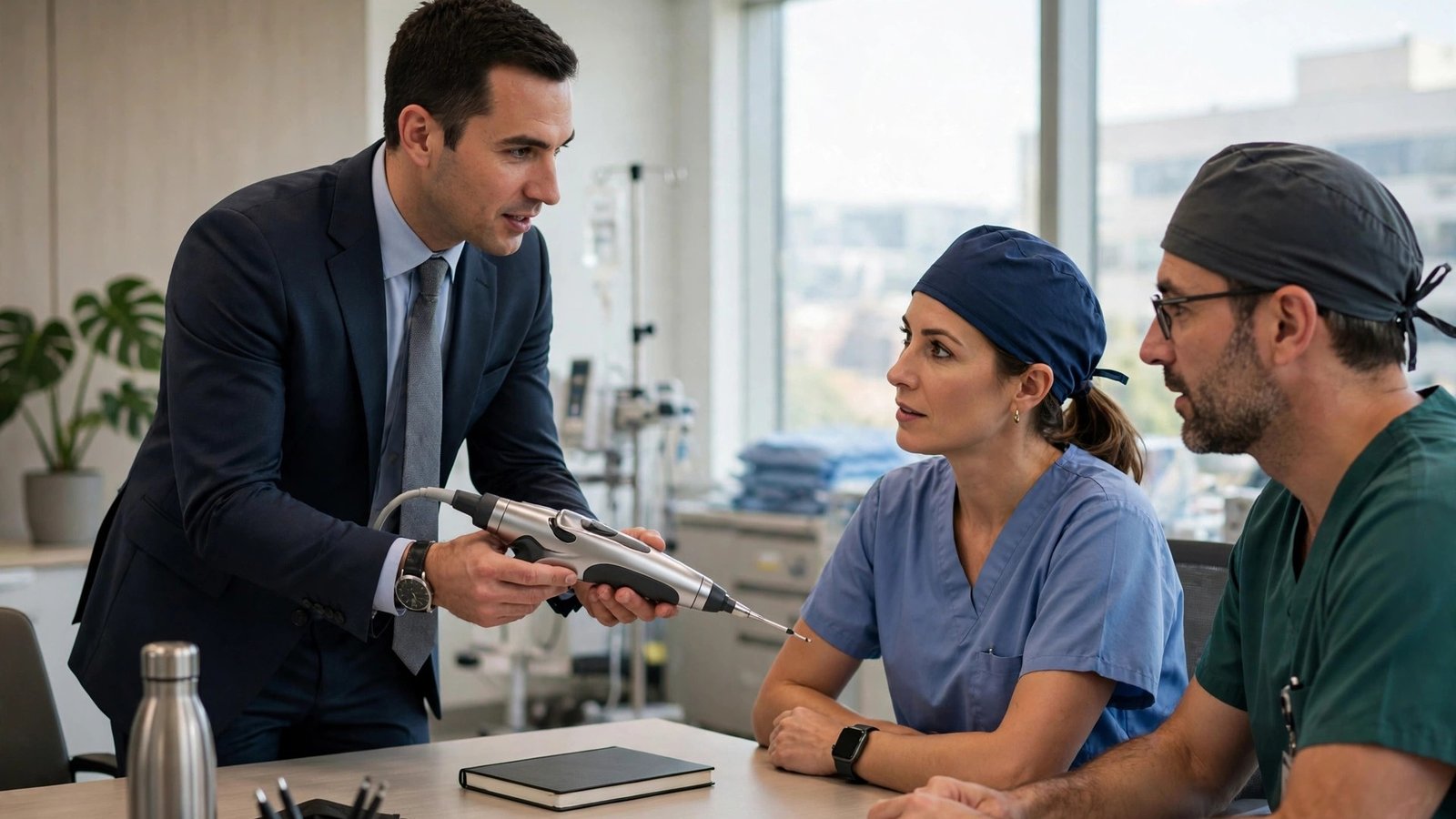
Medical device sales is one of the most lucrative sales careers in the country — top reps earn $200,000–$400,000+ — and it lets you work directly with surgeons in the operating room. Competition is fierce precisely because the rewards are so high. Here’s the exact playbook.
Step 1: Get the Degree (and Pick the Right Major)
A bachelor’s degree is effectively mandatory. The most valued majors are:
- Life sciences (biology, kinesiology, nursing) — you can speak the clinical language.
- Business/marketing — you understand the sales process.
- Engineering (biomedical especially) — prized for technical device roles.
No specific major is required, but a science background is a real advantage because you’ll be discussing anatomy, surgical technique, and clinical outcomes with surgeons. If you’re still in school, add sales experience through internships or campus sales roles.
Step 2: Build 1–3 Years of B2B Sales Experience
This is the step most people try to skip — and it’s why most applications fail. Device companies overwhelmingly hire proven sellers, not enthusiastic beginners. The best feeder roles:
- Pharmaceutical sales — the classic pipeline; same customers (physicians), same skills.
- B2B outside sales — copiers, payroll services, industrial equipment. Anything with a quota, a territory, and face-to-face selling.
- Surgical tech / clinical roles — some reps come from the OR side (surgical techs, nurses) and leverage clinical credibility.
- High-performance D2C sales — car sales, solar, Cutco-style roles can work if you can show elite numbers.
What matters is documented quota attainment: President’s Club, top-10% rankings, year-over-year growth. Vague claims about “great with people” mean nothing; numbers mean everything.
Step 3: Target the Right Entry Points
Don’t apply for senior territory rep roles — apply for the doors that actually open:
- Associate Sales Representative (ASR): The standard entry role. You support a senior rep, cover cases, and learn the territory. Pay is typically $60,000–$90,000 base plus bonus.
- Sales Development / Inside Sales: Phone-based prospecting roles at larger companies — a foot in the door.
- Clinical specialist roles: Some companies hire clinically-trained people to support cases, which can convert to sales.
- Smaller or startup device companies: Less prestigious but far more willing to hire hungry newcomers than Stryker or Medtronic.
Major employers to know: Stryker, Medtronic, Johnson & Johnson MedTech, Zimmer Biomet, Boston Scientific, Arthrex, Intuitive Surgical, and Edwards Lifesciences. New York City is a strong market — dense with hospitals, teaching centers, and company regional offices.
Step 4: Network Like It’s Your Job (Because It Is)
An estimated majority of device sales hires come through referrals, not job boards. Your networking plan:
- LinkedIn outreach: Message current reps and managers — not asking for a job, but asking for 15-minute advice calls. Ask what their territory looks like, what they wish they’d known, and who else you should talk to.
- Ride-alongs and shadowing: If a connection allows, observe a case. Understanding the OR environment sets you apart in interviews.
- Industry events and local medtech meetups: In NYC, look for healthcare and medtech networking events — they’re frequent and well-attended.
- Recruiters who specialize in med device: Several boutique firms place exclusively in this space. Get on their radar.
Track every conversation in a spreadsheet. Follow up. The candidate who talked to 40 reps gets hired; the one who applied to 40 job postings doesn’t.
Step 5: Nail the Interview Process
Device sales interviews are notoriously rigorous — often 4–6 rounds including:
- Phone screens testing your sales background and motivation.
- Behavioral interviews built around specific wins: “Tell me about a time you lost a deal and won it back.”
- Role-play or mock sales calls — you may be asked to sell a pen-like product or present a device brochure.
- Field ride days with a current rep — equal parts interview and reality check.
- Personality assessments measuring competitiveness, resilience, and coachability.
Prepare three to five detailed stories with numbers: quota percentages, deal sizes, rankings. Research the company’s products deeply enough to discuss them intelligently. And show you understand the lifestyle: early mornings, on-call cases, and living in scrubs.
What Medical Device Sales Reps Actually Earn
- Associate reps: $70,000–$120,000 total compensation.
- Territory reps (2–5 years in): $130,000–$220,000.
- Top performers in lucrative specialties (orthopedics, spine, robotics): $250,000–$400,000+.
Compensation is heavily commission-based — typically 40–60% of total pay is variable. High earnings come with high pressure: miss quota two quarters in a row and you’re on a performance plan.
Mistakes to Avoid
- Applying with no sales experience. “I’m passionate about healthcare” is not a qualification. Get sales results first.
- Only targeting the big names. Startups and mid-size companies hire far more entry-level reps.
- Generic resumes. Lead with quota attainment, rankings, and revenue numbers — not job duties.
- Ignoring the lifestyle reality. You’ll be on call for trauma cases at 2 AM and spend hours standing in the OR. Make sure you actually want this.
- Giving up after a month. This is a 3–9 month campaign. Treat it like a sales pipeline: activity, follow-up, persistence.
FAQs
Do I need a science degree for medical device sales?
No, but it helps. Business majors break in every day with strong B2B sales records. A science background just shortens the clinical learning curve and impresses surgeon customers.
Can I get into medical device sales with no experience?
Straight out of college with zero sales experience is very difficult, though not impossible — elite college athletes and top campus sales performers occasionally land associate roles. For everyone else, 1–3 years of B2B sales first is the realistic path.
What is the best specialty to sell into?
Orthopedics and spine historically offer the highest commissions; cardiology, neurology, and surgical robotics are also lucrative. Wound care and disposables pay less but are easier to enter.
Is medical device sales stressful?
Yes. Quota pressure, on-call cases, long OR days, and surgeon personalities make it demanding. The compensation reflects that. Burnout is real — the best reps build sustainable routines.
How long does it take to get hired?
Most candidates report 3–9 months from serious start to signed offer, including networking, applications, and the multi-round interview process.
The bottom line: get a degree, prove you can sell something else first, network relentlessly with current reps, and target associate-level roles. Do that consistently for six months, and medical device sales goes from fantasy to offer letter.