How Much is Barber School? Average Price Guide (2026)
Barber school costs $10,000 to $20,000 on average in 2026, with most programs falling between $3,000 and $25,000 total. Community college programs are cheapest ($3,000–$10,000), private barber schools average $12,000–$20,000, and premium programs in expensive cities can top $25,000. The price mainly depends on your state’s required training hours, the school’s location, and whether it is public or private.
Average Barber School Costs by School Type
- Community college barber programs: $3,000–$10,000. The best value — accredited, affordable, and eligible for federal financial aid. Not every state has them, though.
- Private barber schools: $12,000–$20,000. The most common option; specialized training, flexible schedules, but shop around because quality varies widely.
- Cosmetology schools with barbering tracks: $10,000–$22,000. Broader beauty education with a barbering focus.
- Apprenticeships: $0–$5,000. Available in some states as an alternative to school — you train under a licensed barber, sometimes paying a fee, sometimes earning a small wage.
What Determines the Price
Required hours by state
This is the biggest cost driver. States require anywhere from 800 to 2,000 training hours for a barber license. New York requires 600 hours — on the lower end nationally, which keeps NYC-area programs relatively shorter and cheaper than, say, California’s 1,500-hour requirement. More hours means more tuition, more kit costs, and more months before you can earn.
Location
Schools in major metros charge more. In the New York City area, expect barber programs to run $12,000 to $22,000 — above the national average, reflecting NYC rents and wages. Programs in smaller upstate cities or New Jersey suburbs are often cheaper.
What is included
Tuition sometimes excludes the student kit (clippers, shears, combs, mannequins: $500–$2,000), textbooks ($200–$500), exam and licensing fees ($100–$300), and uniforms. Always ask for the all-in number, not just tuition.
How Long Does Barber School Take?
Full-time students typically finish in 9 to 15 months; part-time or evening students take 18 to 24 months. In New York, the 600-hour requirement means a dedicated full-time student can finish in as little as 6 to 9 months. After graduation, you must pass your state’s written and practical licensing exams before you can work as a barber.
Paying for Barber School: Financial Aid Options
- FAFSA and Pell Grants: accredited barber schools qualify, and Pell Grants do not need to be repaid. This is free money — apply.
- Federal student loans: available at accredited schools; borrow only what you need.
- School payment plans: many private schools offer monthly plans with little or no interest.
- Scholarships: industry groups like the Beauty Changes Lives foundation and some clipper manufacturers offer barbering scholarships.
- GI Bill: veterans can often use education benefits at approved barber schools.
- State workforce programs: some states fund career training for eligible residents — worth checking with your local workforce center.
What Will You Earn After Barber School?
Barbers earn a median of about $36,000 per year nationally, but income varies enormously because most barbers earn through a mix of service prices, tips, and booth rental vs. commission splits. In New York City, experienced barbers in busy shops commonly earn $50,000 to $80,000+, with top shop owners and celebrity barbers earning six figures. Your income depends far more on skill, speed, clientele, and location than on which school you attended — which is another reason not to overpay for the priciest program.
How to Choose a Barber School (Without Overpaying)
- Check accreditation and state approval. The school must be approved by your state’s licensing board, or your hours will not count toward licensure.
- Ask for the license exam pass rate. A good school’s graduates pass at 80%+. Low pass rates are a red flag at any price.
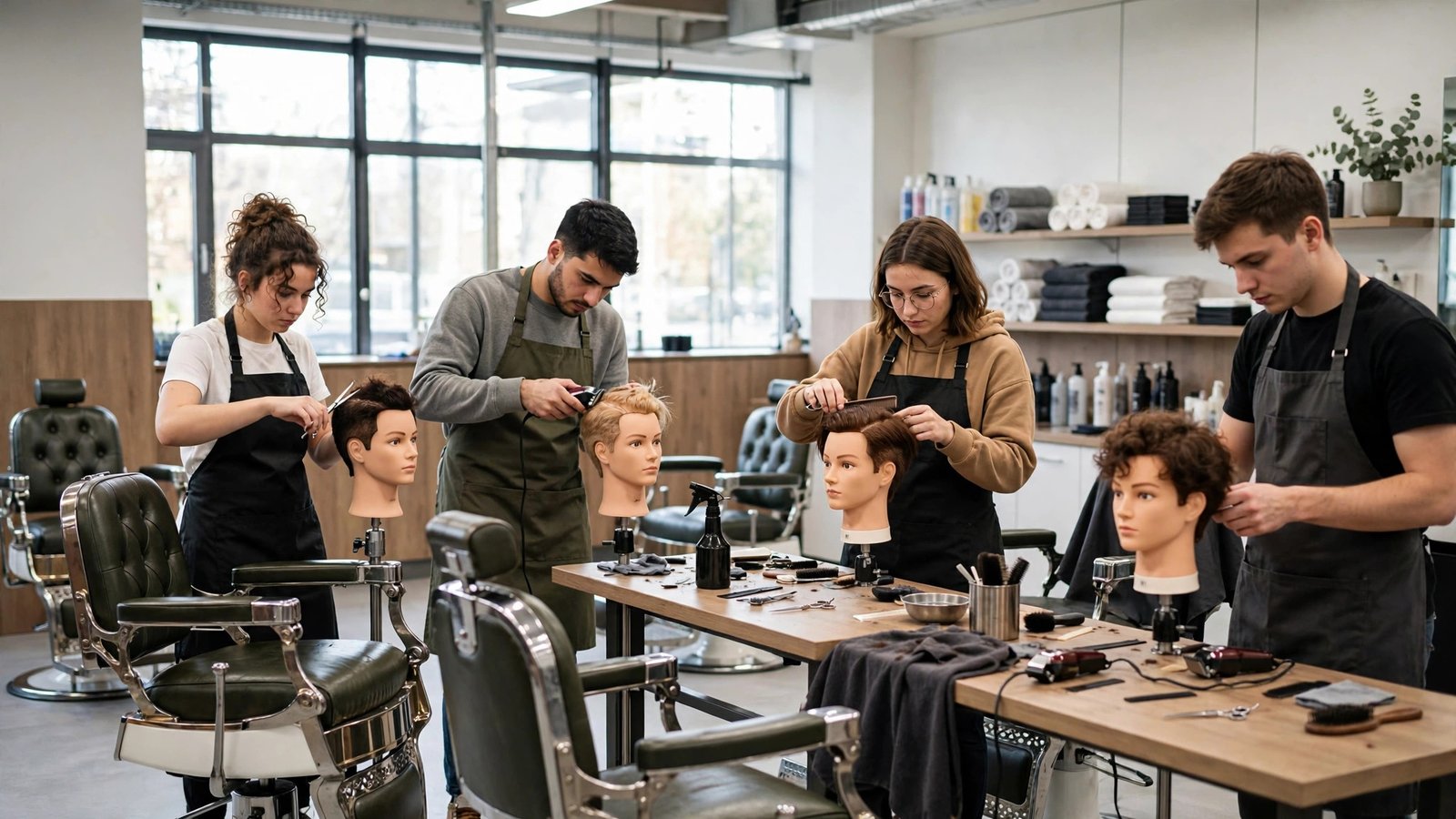
- Tour the student clinic. Real clients in chairs means real experience. Empty clinics mean you graduate underprepared.
- Compare total cost, not just tuition. Get the kit, fees, and exam costs in writing.
- Talk to recent graduates. Ask how long it took them to get licensed and find work — that tells you more than any brochure.
- Do not assume expensive means better. A $9,000 community college program with an 85% pass rate beats a $22,000 private school with a 60% pass rate every time.
Frequently Asked Questions
Is barber school worth the cost?
For most aspiring barbers, yes — it is the required path to licensure in nearly every state, and the investment is modest compared to a four-year degree. Just keep total costs reasonable relative to starting barber income in your area (often $30,000–$45,000 in year one).
Can you become a barber without going to barber school?
In some states, yes — through a licensed apprenticeship, which typically takes 2–3 years of supervised work. New York allows apprenticeship as an alternative to school in limited circumstances, but school is the faster and more common route. Check your state board’s current rules.
How much does the barber license exam cost?
Exam and licensing fees run $100 to $300 total in most states, covering the written exam, practical exam, and initial license issuance. New York’s fees are on the lower end of that range.
Do barber schools help you find a job?
Decent ones do — through job boards, shop partnerships, and alumni networks. But barbering is a reputation business: your book of clients matters more than placement stats. Many graduates start as junior barbers or booth renters and build from there.
What is the difference between barber school and cosmetology school?
Barbering focuses on men’s cuts, fades, beard work, and straight-razor shaving. Cosmetology covers a broader range — women’s hair, color, nails, skincare — with less depth on barbering specifics. If you want to cut men’s hair and do shaves, barber school is the direct path.
Barber school is a $10,000–$20,000 investment that can launch a career in under a year — and in New York, the 600-hour requirement makes it one of the faster routes in the country. Choose an approved school with strong exam pass rates, use financial aid before loans, and remember: in barbering, your skills and clientele determine your income far more than the name on your diploma.