Repair or Replace Broken Appliances in NYC? The Math
Is it better to repair or replace broken appliances in NYC? The 50% rule, real repair costs, energy math, and where New Yorkers get appliances fixed affordably.
Written by admin
Published November 6, 2026
Reading time 6 minutes
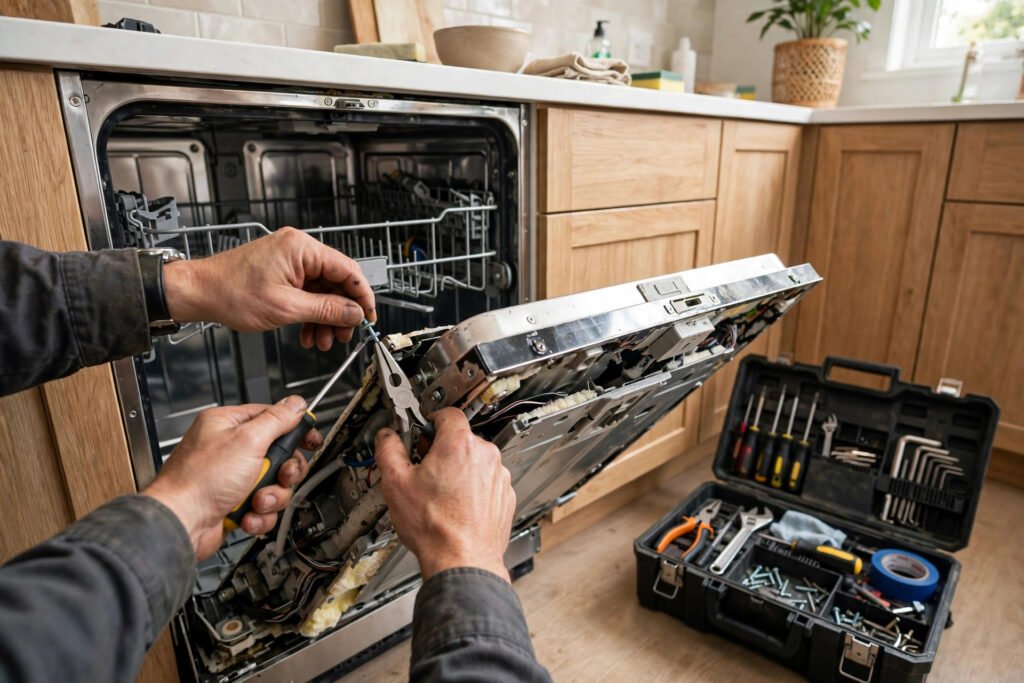
The dishwasher is leaking, the fridge is making a noise like a dying robot, and the repair guy just quoted you $280. A new one costs $700. Welcome to the repair-or-replace dilemma — the decision every homeowner and renter faces, where the wrong call wastes hundreds of dollars and the right call is not always obvious. In New York City, where repair labor is expensive but replacement logistics (walkup stairs, narrow doorways) are their own nightmare, the math has local twists.
Here is the framework professionals use, the real numbers, and the NYC-specific guidance.
The 50% Rule (and Its Limits)
The industry’s standard heuristic: if the repair costs more than 50% of a new replacement, replace. If less, repair. It is a decent starting point — but it ignores three critical factors:
Age vs. expected lifespan. A $300 repair on a 3-year-old dishwasher with a 10-year lifespan is smart; the same repair on a 9-year-old unit is throwing money at a dying machine. Always weigh repair cost against remaining life, not total life.
Energy efficiency. A 15-year-old refrigerator can use 2–3x the electricity of a modern ENERGY STAR model — $100–200/year in extra energy costs in NYC’s expensive electricity market. Sometimes replacement pays for itself. Check the ENERGY STAR savings calculators and the Department of Energy’s appliance guidance for your specific models.
Repair cascades. Old appliances fail in sequence — fix the dishwasher pump today, the control board dies next month. If an appliance is past 75% of its expected lifespan and needs a major repair, the odds of follow-on failures are high. One repair is maintenance; three in a year is a replacement signal.
Expected Lifespans: Know Your Appliance’s Clock
Typical lifespans (with decent maintenance): refrigerators 12–17 years; dishwashers 9–12; washing machines 10–13; dryers 12–15; ovens/ranges 15–20; microwaves 8–10; garbage disposals 8–12. These are averages — well-maintained units exceed them, abused ones do not.
The decision matrix: Young + cheap repair = repair, always. Old + expensive repair = replace, always. The tricky quadrant is old + cheap repair (a $120 fix on a 14-year-old fridge): here, repair as a bridge — buy yourself a year or two while you research replacements, but start saving for the inevitable.
Real NYC Repair Costs (2026)
NYC labor runs 20–40% above national averages. Typical ranges: refrigerator repairs $200–450 (compressor issues run higher); dishwasher $150–350; washer $150–400 (control boards and pumps are the common failures); dryer $120–300; oven/range $150–400. Diagnostic fees ($75–125) usually apply to the repair if you proceed.
Before calling anyone, check the obvious: is it plugged in securely, is the breaker tripped, is the filter/lint trap clean, is the water supply on? An embarrassing share of service calls resolve to these. Consumer Reports’ reliability data is worth checking before buying — some brands fail far more often than others, which changes the repair-vs-replace math for your specific model.
Where New Yorkers Get Appliances Fixed
Options in the five boroughs: manufacturer authorized service (best for in-warranty and complex sealed-system work, priciest); independent repair shops (often 20–30% cheaper, excellent for common failures — Yelp and word-of-mouth identify the good ones); and the growing repair cafe / fix-it clinic movement — free community events where volunteers help you fix small appliances, worth trying before paying anyone.
DIY is viable for the handy: YouTube has model-specific repair videos for nearly every common failure, and parts from online suppliers run a fraction of service pricing. Know your limits — sealed refrigeration systems and gas connections are professional-only (safety and legality), but pumps, belts, igniters, and control boards are well within DIY range for many.
If you are weighing a kitchen overhaul alongside the decision, our guide to the cheapest ways to update a kitchen on a budget helps you think holistically rather than appliance-by-appliance.
The Environmental Math
Repair is almost always the greener choice — manufacturing a new appliance embodies significant carbon and resources, and the old unit becomes e-waste (which NYC handles through specific programs, not curbside trash). The exception: replacing a truly ancient energy hog with an efficient model, where years of energy savings outweigh manufacturing emissions — typically true for 15+ year-old refrigerators and 20+ year-old everything.
When replacing, buy for longevity: simpler models with fewer electronic features fail less; check reliability ratings; and consider the repairability (brands with available parts and service manuals). The cheapest appliance is often the most expensive over its lifetime. And making your home more energy-efficient covers the broader context — appliances are one piece of the household energy puzzle, alongside options like the best smart thermostats for saving money.
The Renter’s Special Case
NYC renters: major appliances usually belong to the landlord, who is responsible for repair and replacement — know your lease and NYC housing maintenance codes before paying for anything yourself. For your own appliances (microwaves, window ACs, small appliances), the same 50%-rule math applies, with replacement often winning since small appliances are cheap and repairs relatively expensive.
Conclusion
Repair or replace? Apply the 50% rule as a starting point, then adjust for remaining lifespan, energy efficiency gains, and cascade risk. In NYC, get multiple quotes (labor varies enormously), try repair cafes for small stuff, DIY what is safe, and buy replacements for reliability over features. The goal is not to save every appliance — it is to never pay twice for the same decision.
Maintenance: The Repairs You Prevent
The cheapest repair is the one that never happens. A few maintenance habits dramatically extend appliance life: clean refrigerator coils yearly (dusty coils force the compressor to work harder — five minutes with a vacuum); clean the dishwasher filter monthly (clogged filters are the top cause of poor cleaning and pump strain); leave the washer door open after loads (prevents mold and seal degradation); clean the dryer vent thoroughly every year (lint buildup is both a fire hazard and an efficiency killer); replace HVAC filters on schedule. None of this is glamorous; all of it pushes the repair-or-replace decision years into the future. Think of maintenance as buying lifespan at pennies on the dollar — a $0 filter cleaning that adds two years to a $800 appliance is a 1,600x return. Set calendar reminders; future you, facing a working appliance instead of a $300 quote, will be grateful.
How do I find a reliable appliance repair person in NYC?
Start with manufacturer-authorized service for in-warranty work; for out-of-warranty, check reviews on multiple platforms, ask for the diagnostic fee and hourly rate upfront, and get the “repair vs. replace” opinion in writing — a trustworthy tech will tell you when replacement is smarter, since they make less money saying so.
Frequently Asked Questions
What is the 50% rule for appliances?
If a repair costs more than 50% of a new replacement’s price, replace; if less, repair. Adjust for the appliance’s age, energy efficiency gains from new models, and likelihood of cascading failures.
How long should a refrigerator last?
12–17 years typically. If yours is over 12 and needs a major repair (compressor, sealed system), replacement is usually the smarter call — especially given efficiency gains in new models.
Is it worth repairing a 10-year-old dishwasher?
Depends on the repair cost and the unit’s condition. A $150 pump replacement on an otherwise sound 10-year-old dishwasher buys useful years; a $350 control board on a rusting unit does not. Dishwashers average 9–12 years.
Are extended warranties worth it for appliances?
Rarely — the math favors the warranty company, and reliability data shows most appliances either fail in year one (covered by manufacturer warranty) or last past the extended period. Put the warranty cost in a repair fund instead.
Who is responsible for appliance repair in an NYC rental?
Landlord-provided appliances are generally the landlord’s responsibility under NYC housing maintenance codes. Document issues in writing, allow reasonable time for repair, and know your rights before paying out of pocket.