Nobody wants a lecture about shorter showers. The good news: the biggest water waste in your home is not your shower — it is leaks, inefficient fixtures, and habits you do not even notice. The average American household uses about 300 gallons of water per day, and the EPA’s WaterSense program estimates that the typical home could cut that substantially with almost zero lifestyle change. Here is how to save water at home without trying hard — the lazy person’s guide to lower water bills and a lighter footprint.
Fix the Leaks: The Invisible Flood
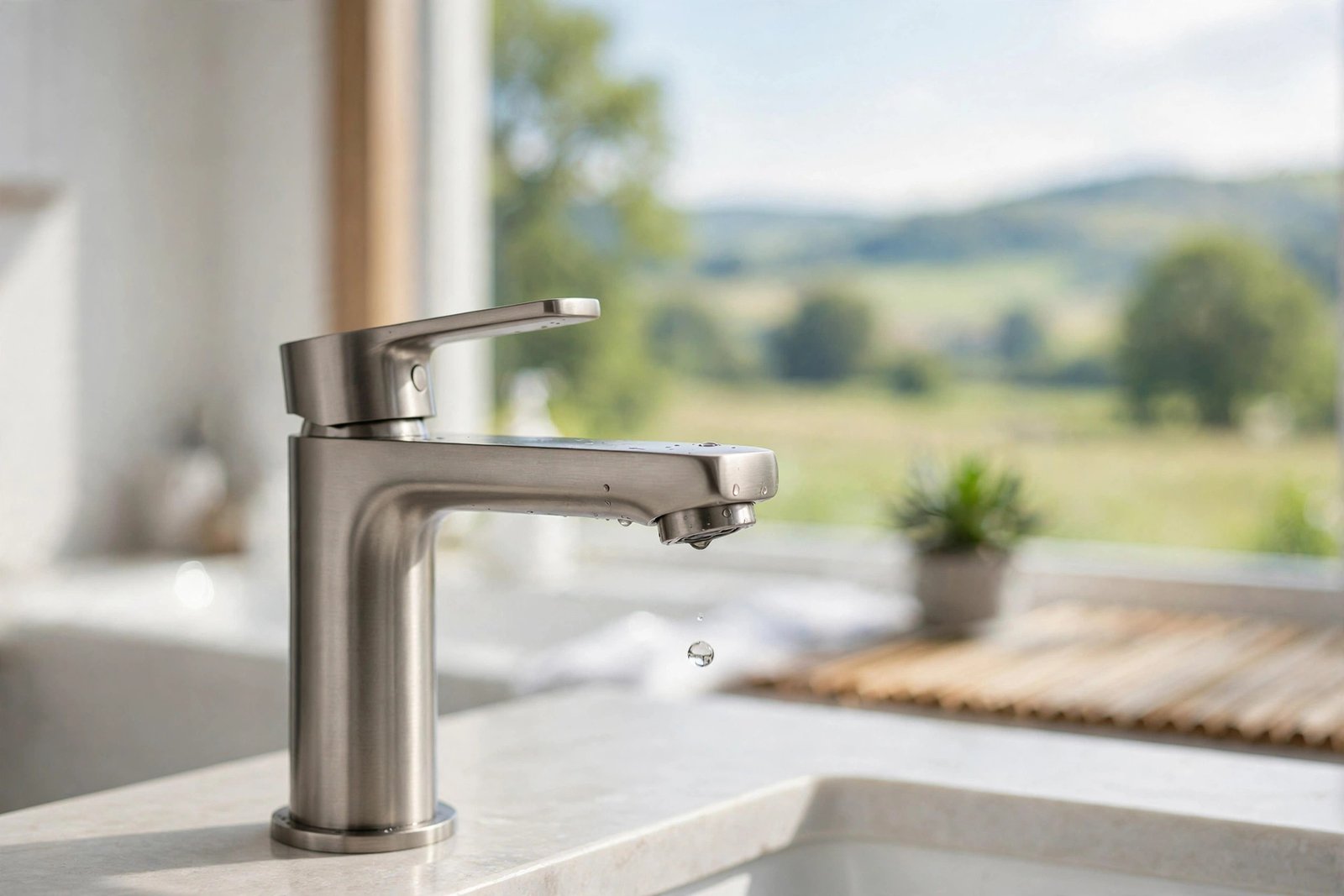
A single dripping faucet wastes 3,000+ gallons per year. A running toilet — the silent kind you cannot hear — can waste 200 gallons per day, adding hundreds to your annual water bill. Leaks are the largest source of household water waste, and fixing them requires effort exactly once.
The toilet test: drop food coloring in the tank, wait 15 minutes without flushing. If color appears in the bowl, you have a silent leak — usually a worn flapper, a $5 part that takes 10 minutes to replace. This one test saves more water than a year of shorter showers.
Faucet drips: usually a worn washer or cartridge — cheap parts, simple fixes, countless YouTube tutorials. If you rent in NYC, this is your landlord’s responsibility — report it; they are legally required to fix plumbing issues.
Check your water meter: note the reading, avoid water for two hours, check again. Any movement means a leak somewhere. Finding it is detective work worth doing — the Department of Energy’s water-saving resources walk through the process.
Upgrade Fixtures Once, Save Forever
The highest-ROI water move: replace old fixtures with WaterSense-labeled ones. Old toilets use 3.5–7 gallons per flush; modern WaterSense toilets use 1.28 — same performance, 60–80% less water, thousands of gallons saved yearly per toilet. Old showerheads flow at 5+ gallons per minute; WaterSense models deliver a satisfying shower at 2.0 or less.
Faucet aerators are the unsung heroes: $5 screw-on devices that cut faucet flow from 2.2+ GPM to 1.5 or 1.0 with no perceptible difference in use. Install them on every faucet in ten minutes. For NYC renters: aerators and showerheads are removable upgrades — install them, enjoy the savings, take them when you move. (Check your lease, but these are universally considered acceptable.)
These one-time upgrades are the definition of “without trying hard” — and they pair with broader efficiency: see making your home more energy-efficient for the energy side of the same coin.
The Habits That Cost Nothing
Full loads only. Dishwashers and washing machines use nearly the same water whether full or half-empty. Wait for full loads — this alone cuts laundry/dish water use by a third for many households. (Modern dishwashers, by the way, use far less water than hand-washing — stop pre-rinsing and let the machine work.)
Cold-water laundry. Heating water is the energy cost, but cold washes also tend to be shorter and gentler — and modern detergents are formulated for cold. Your clothes will not know the difference.
Turn off the tap. Brushing teeth, shaving, washing dishes by hand, scrubbing vegetables — the tap does not need to run during the non-rinsing parts. This sounds trivial; it saves thousands of gallons yearly per person.
Reconsider the lawn (if you have one). Outdoor watering is the largest discretionary use for homes with yards. Water deeply but infrequently (encourages deep roots), water in early morning (less evaporation), and let grass go dormant in summer — brown lawns recover; the water bill does not. NYC apartment dwellers can skip this section entirely — one of density’s hidden water savings.
The Kitchen: Hidden Water Wins
Thaw frozen food in the fridge, not under running water. Keep a pitcher of drinking water in the fridge instead of running the tap until it is cold. Scrape dishes instead of rinsing (modern dishwashers handle it). Compost food scraps instead of using the garbage disposal — disposals are water hogs, and living more sustainably at home covers the composting setup.
And the meta-move: wasting less food wastes less water. It takes roughly 1,800 gallons of water to produce a pound of beef and 200+ gallons for a pound of avocados — every uneaten meal is embodied water down the drain. Meal planning is water conservation in disguise.
NYC-Specific Notes
New York City’s water comes from the Catskill/Delaware watershed — famously high-quality, unfiltered water delivered by gravity. The system is a marvel, but it is not infinite: droughts have triggered restrictions before, and the city’s aging infrastructure loses water to leaks too. DEP offers free water surveys for buildings, and many NYC apartments still have old, inefficient fixtures — if your shower could strip paint, a $15 WaterSense showerhead is your move. Check nyc.gov’s water conservation pages for current programs and rebates.
Conclusion
Saving water at home without trying hard means: fix leaks once (the toilet dye test takes 15 minutes), install aerators and efficient fixtures once, then adopt three free habits — full loads, tap off when not rinsing, cold laundry. That is it. No shower timers, no lifestyle overhaul, no guilt. The laziest conservation is the best conservation, because it is the kind you actually maintain. Your water bill — and the Catskills — will thank you.
The Water Footprint Beyond the Tap
Your direct water use — showers, toilets, laundry — is only part of the story. The indirect water embedded in what you buy dwarfs it: producing a single cotton t-shirt takes ~700 gallons, a pound of beef ~1,800 gallons, a smartphone ~3,000+ gallons across its supply chain. You cannot meter this water, but you influence it through consumption choices — which is why buying less, buying used, and wasting less food are water conservation strategies too, not just carbon ones. The single most water-efficient purchase is the one you do not make; the second most efficient is the used one, whose manufacturing water was spent long ago. When you make your home more energy-efficient, you are usually saving water as well — power plants are among the largest water consumers in the country, so every kilowatt-hour avoided is water saved upstream.
Does a dishwasher or hand-washing use less water?
The dishwasher, by a wide margin — 3–5 gallons per full load versus 20+ gallons hand-washing the same dishes. Run it full, skip pre-rinsing, and let the machine do what it was designed to do.
Frequently Asked Questions
How much water does a leaky toilet waste?
A silently running toilet can waste 200+ gallons per day — over 70,000 gallons per year. The food-coloring tank test takes 15 minutes and the usual fix (a new flapper) costs about $5.
Do low-flow showerheads actually work well?
Modern WaterSense showerheads (2.0 GPM or less) use air-infusion and nozzle design to feel like high-flow models. The bad reputation comes from early 1990s models; current ones are genuinely satisfying.
Is it better to hand-wash dishes or use a dishwasher?
A modern dishwasher, run full, uses 3–5 gallons per load — far less than hand-washing the same dishes (20+ gallons). Skip pre-rinsing; scrape and load.
How much water does a dripping faucet waste?
A faucet dripping once per second wastes over 3,000 gallons per year. Usually fixed with a cheap washer or cartridge replacement.
Can renters install water-saving fixtures?
Yes — faucet aerators and showerheads are removable, non-permanent upgrades universally considered acceptable. Keep the originals and reinstall when you move. Report leaks to your landlord; plumbing repairs are their responsibility.