What Is Busking and Is It Legal in NYC Subways?
What is busking and is it legal in NYC subways? The real rules: MTA regulations, Music Under New York auditions, banned spots, and how street musicians earn.
Written by admin
Published November 2, 2026
Reading time 6 minutes
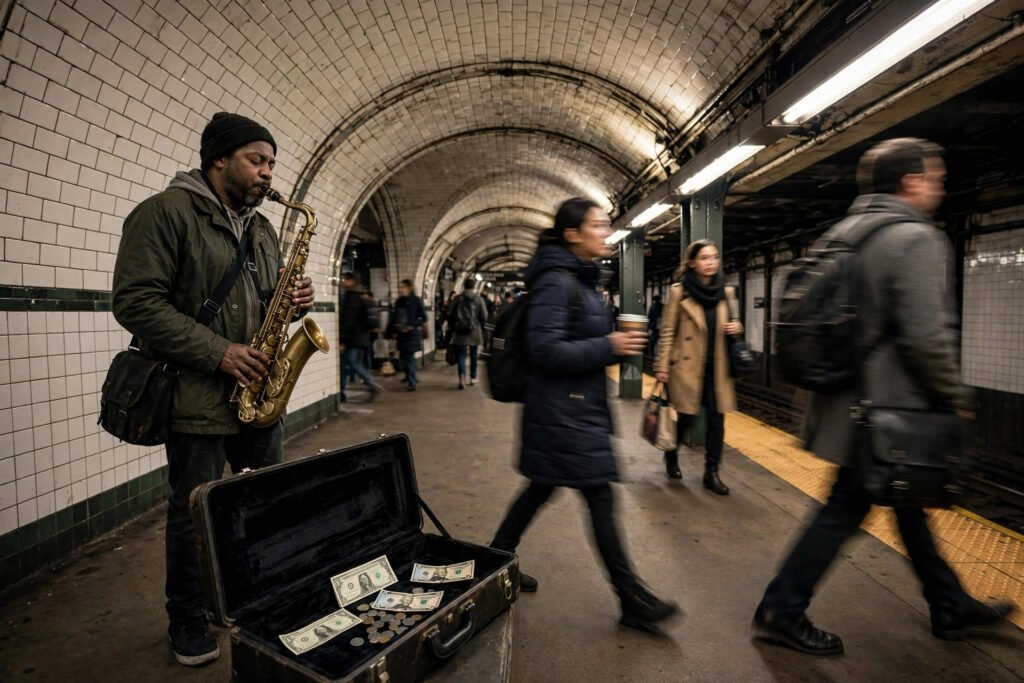
The saxophonist in the Times Square station, the violinist at Union Square, the bucket drummers whose rhythms you feel in your chest — busking is woven into New York City’s identity. But is it legal? The short answer is yes, with important rules. The longer answer involves the MTA, the First Amendment, amplification limits, and a prestigious audition program that turns subway platforms into sanctioned concert stages.
Here is everything you need to know about busking legally in NYC subways in 2026.
The Legal Foundation: Protected Speech
Street performance in New York is protected by the First Amendment as a form of free expression — this was established through decades of case law. You do not need a permit to perform music in most public spaces in NYC, including subway stations. The city cannot ban busking outright.
What the city and MTA can do is regulate the time, place, and manner of performance: where you stand, how loud you are, and whether you block foot traffic. These regulations are the practical rulebook every busker must know. The NYCLU has defended performers’ rights repeatedly and publishes guidance on where free-expression protections apply.
MTA Rules: What the Transit Authority Actually Requires
The MTA’s rules for subway performers, published in its rules and regulations, boil down to a few key points:
You may perform in stations as long as you do not block the movement of passengers, obstruct stairways, elevators, escalators, or train doors, or interfere with transit operations. Common sense, but it is the most common reason performers get moved along.
Amplification is restricted. The rules limit amplified sound — generally, amplification must not be audible beyond a certain distance, and in practice, many successful subway performers go fully acoustic or use small battery amps at modest volume. Excessive amplification is the fastest way to attract negative attention from both police and fellow performers.
Stay out of train cars. Performing inside moving subway cars occupies a legal gray area that leans toward prohibited — it is considered panhandling-adjacent solicitation in a confined space where passengers cannot leave. Station platforms and mezzanines are the accepted venues; train cars are where performers get into trouble.
Solicitation rules. You may accept voluntary donations (the open guitar case is classic), but aggressive solicitation — approaching passengers, blocking paths to demand money — crosses the line.
Individual station managers and NYPD officers have discretion in enforcement, which means the practical reality varies by station and hour. Experienced buskers learn which spots and times work and build relationships with station staff.
Music Under New York: The Sanctioned Program
The MTA runs Music Under New York (MUNY), an auditioned program that grants selected performers access to 30+ high-traffic, high-visibility station locations — the prime spots where foot traffic and acoustics are best. Auditions are held annually and are competitive; hundreds apply for a limited number of spots.
MUNY membership does not just grant locations — it confers legitimacy. MUNY performers get an official banner, scheduling for premium spots, and far fewer hassles from enforcement. For serious subway musicians, it is the closest thing to a residency the underground offers. Audition with your strongest 5 minutes, choose material that works in cavernous acoustic spaces, and treat it like the professional opportunity it is.
Non-MUNY performers can still play in general areas of stations — MUNY simply reserves the premium designated spots. Know which locations are MUNY-reserved to avoid conflicts.
Above Ground: Streets, Parks, and Plazas
Street-level busking follows overlapping jurisdictions. On sidewalks, performance is generally protected speech; in parks, the Parks Department requires permits for amplified sound and for performing in certain high-traffic areas. Times Square’s pedestrian plazas, Central Park’s prime spots, and major tourist areas have their own enforcement cultures — generally tolerant of good performers who follow the unwritten rules (reasonable volume, no blocking, rotate spots).
Vendors selling merchandise (CDs, etc.) face separate vendor regulations — performing is protected, but commercial vending may require a license. Keep the two activities conceptually separate. For the business side of performing, our guide to running a business from your apartment legally covers the NYC small-business basics that apply to working musicians too.
The Unwritten Rules of the Busking Community
The legal rules keep you out of trouble; the community rules keep you working. Veteran buskers follow a code:
Respect the rotation. At popular spots, performers rotate in turns. Do not set up 20 feet from another musician and start playing — ask about the rotation and wait your turn.
Volume discipline. The fastest way to make enemies is drowning out the performer at the next spot. Keep your levels reasonable; the subway’s natural acoustics carry sound beautifully without much amplification.
Leave the spot cleaner than you found it. Basic respect that costs nothing and builds goodwill with station staff and fellow performers.
Tip the ecosystem. The bucket drummers, the mariachi bands, the classical violinists — this is a community. Regulars look out for each other, share intel on good spots and times, and warn about enforcement changes. Be a good citizen and the community returns it.
Making Real Money Busking
Busking income varies enormously — from $20 on a slow Tuesday to several hundred on a busy weekend evening for top performers at prime spots. The variables: location foot traffic, time of day (rush hours and weekend evenings are peak), weather, performance quality, and showmanship. Performers who engage the crowd — eye contact, energy, a visible tip jar with seed money — consistently out-earn those who stare at their shoes.
Treat it as a business: track your best spots and times, build a social media following from your street audience (QR codes on your sign), and sell recordings or merchandise where regulations allow. Many successful NYC artists — from indie bands to solo instrumentalists — built their first audiences underground. And if you are exploring the city’s music scene more broadly, start by finding free concerts in your city to understand what audiences respond to.
Getting around to scout spots is part of the job — our guide to the cheapest way to get around New York City will save a working busker real money.
Conclusion
Busking in NYC subways is legal, protected, and — done right — a legitimate way to earn money and build an audience. The rules are reasonable: do not block traffic, mind your amplification, stay on platforms (not in train cars), and respect the community’s unwritten code. Consider auditioning for Music Under New York for access to the best spots. And check current regulations on nyc.gov and the MTA’s official rules before you start, since enforcement details evolve. The subway stage has launched careers for decades — bring your best material, respect the space, and play like the whole city is listening. It is.
Frequently Asked Questions
Do I need a permit to busk in NYC subways?
No permit is required for unamplified musical performance in subway stations — it is protected speech. The MTA’s Music Under New York program offers sanctioned premium spots via audition but is not required to perform.
Can I use an amplifier in the subway?
Amplification is restricted under MTA rules — it must not disturb transit operations or be excessively loud. In practice, most successful subway performers use small amps at modest volume or play fully acoustic.
Is it legal to perform inside subway cars?
This is risky territory. Performing in moving cars is treated as prohibited solicitation in most enforcement — stick to platforms and mezzanines, where performance is clearly protected.
How much money do NYC subway buskers make?
It varies from $20 to several hundred dollars per session depending on location, time, weather, and performance quality. Rush hours and weekend evenings at busy stations are the most lucrative.
What is Music Under New York?
An MTA program that auditions performers annually for access to 30+ premium station performance locations. Members get official banners, scheduled spots, and fewer enforcement hassles.