How to Find a Good Vocal Coach in New York City
How to find a good vocal coach in New York: what credentials matter, fair NYC rates, red flags to avoid, and the questions to ask before you book a trial lesson.
Written by admin
Published November 2, 2026
Reading time 6 minutes
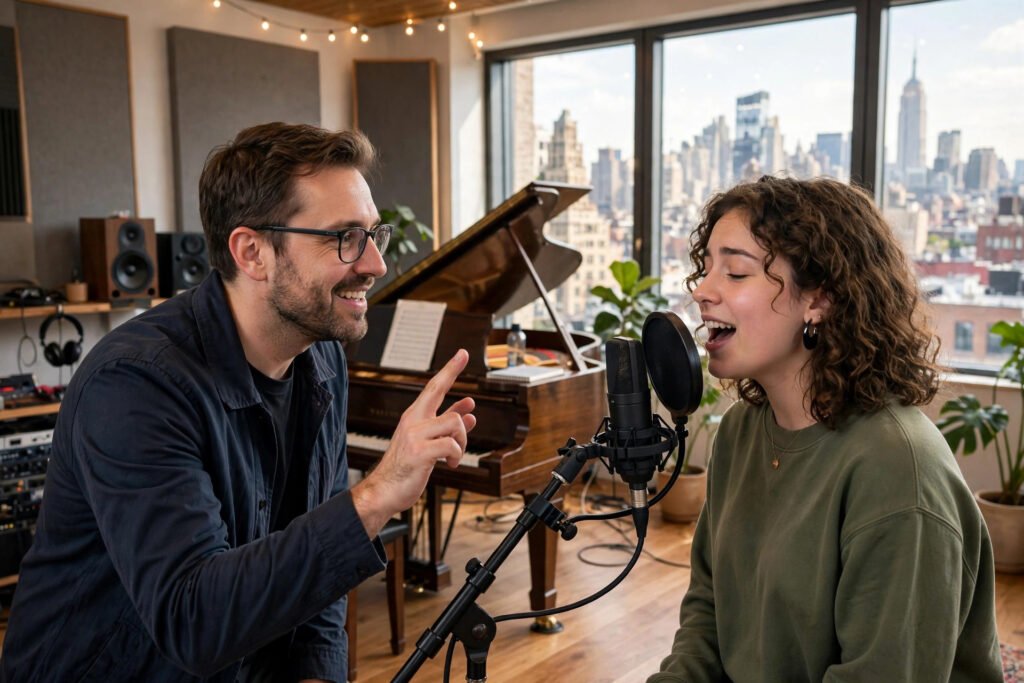
New York City has more voice teachers per square mile than anywhere else in America — Broadway veterans, opera professionals, session singers, and YouTube-famous coaches, all within a subway ride. That abundance is wonderful and paralyzing: rates range from $40 to $400 an hour, credentials vary wildly, and the wrong teacher can waste your money or even damage your voice. Finding a good vocal coach in New York is a skill in itself.
Here is how to navigate the market like an insider.
What “Good” Actually Means
A good vocal coach is not the most famous or expensive one — it is the right teacher for your voice, goals, and level. Different specialties matter enormously:
Classical/opera coaches train technique for unamplified singing — breath management, resonance, diction in multiple languages. Choose these for legit musical theater, choral, or classical goals.
Contemporary/pop/rock coaches focus on microphone technique, belting safely, runs, and style. Broadway belters, pop singers, and rock vocalists need this track — classical technique alone will not get you there.
Speech-level and voice therapy-adjacent coaches help with speaking voice, vocal recovery, and efficiency. Useful for actors, teachers, and anyone with vocal fatigue issues.
Match the specialty to your goal. A brilliant opera coach is the wrong choice for a singer-songwriter who needs to belt over a band, and vice versa. Ask directly: “What styles do you primarily teach?” Vague answers are a red flag.
Credentials That Matter (and Ones That Do Not)
Meaningful credentials: performance careers in your target style, music degrees from recognized programs, long-term students with verifiable progress, membership in professional teacher organizations, and training in vocal pedagogy or vocology (the science of voice habilitation).
Overrated credentials: social media follower counts, vague “worked with stars” claims (backup singers “work with” stars), reality TV appearances, and certifications from weekend courses. None of these predict teaching ability.
The real test: do their students improve? Ask for student recordings (before/after if available), ask to observe a lesson, and trust your experience in a trial lesson: did you learn something concrete in 30 minutes? Did you leave understanding your voice better? A good teacher produces “aha” moments quickly.
NYC Rates: What to Expect in 2026
Manhattan rates for established coaches typically run $120–250/hour; outer-borough and newer teachers run $60–120/hour; elite Broadway/opera coaches can exceed $300. Group classes and workshops ($30–60/session) are the budget path and excellent for beginners.
Price correlates weakly with quality past a point — many superb teachers charge mid-range rates, and some expensive coaches trade on reputation. Budget for weekly or biweekly lessons; sporadic monthly lessons produce slow progress. If cost is a barrier, start with self-study — daily breathing and pitch-matching exercises cost nothing — and add coaching when you can.
Red Flags: When to Walk Away
Pushing through pain. Any coach who tells you to sing through pain, hoarseness, or discomfort is dangerous. Vocal folds are delicate; the American Academy of Otolaryngology is clear that pain means stop. A responsible teacher modifies or ends the lesson.
One-size-fits-all methods. “My method works for everyone” is a sales pitch, not pedagogy. Good teaching adapts to your instrument.
No assessment. A first lesson should include listening to you, identifying your current level and issues, and setting goals. A coach who launches into exercises without hearing you sing is not teaching — they are reciting.
Contract pressure. Demanding large upfront packages before you have had a trial lesson is a business tactic, not a teaching practice. Pay lesson-to-lesson initially.
Badmouthing other teachers. Professionals do not need to tear down colleagues. It signals insecurity or marketing, not expertise.
Where to Look
NATS directory. The National Association of Teachers of Singing maintains a searchable teacher directory — the most reliable starting point for vetted instructors.
Music schools and conservatories. Many offer community or continuing-education voice programs with excellent faculty at below-market rates. Faculty and advanced students often teach privately too.
Theater and industry networks. Backstage’s resources and NYC performer communities are full of coach recommendations from working singers — the most honest reviews come from peers, not ads.
Referrals. Ask singers whose voices you admire who they study with. In NYC’s tight-knit vocal community, the same excellent names surface repeatedly.
Moving to the city for a performing career is a big life change — our guide to dealing with loneliness in a new city covers the human side that no coach can teach.
The Trial Lesson: Your Audition of Them
Treat trial lessons as interviews. Prepare two contrasting pieces or exercises, arrive warmed up, and evaluate:
Did they listen more than they talked? Did their explanations make physical sense? Did you experience a concrete improvement or insight? Did you feel respected and safe? Do their other students’ results impress you? Would you look forward to next week?
Trust your gut alongside the evidence. The teacher-student relationship is intimate — you are literally exposing your instrument — and rapport matters. The technically brilliant coach you dread seeing will not get your best work.
Getting the Most From Lessons
Once you find your coach: practice between lessons (a lesson without practice is entertainment, not training), record lessons (with permission) for review, bring questions, and communicate honestly about what is and is not working. The best students are not the most talented — they are the most consistent and communicative. Supplement with self-study using the best YouTube channels for learning guitar mindset applied to voice: curated free resources accelerate everything a coach teaches.
Group Classes and Workshops: The Underrated Path
Private lessons are the default recommendation, but group voice classes deserve more respect — especially for beginners. A good group class ($30–60/session) delivers weekly guided practice, ensemble singing experience, performance opportunities in a low-pressure setting, and the motivating spectacle of watching peers improve. Many NYC community music schools, conservatories’ continuing-ed programs, and independent studios run adult group voice classes tiered by level. The format also solves the commitment problem: a 6–8 week session is a defined, affordable experiment versus open-ended private lessons. Use group classes to build fundamentals and confidence, then add private lessons when you have specific technical goals a group setting cannot address. For many adult learners, the combination — group for musicianship and joy, private for technique — outperforms either alone, at lower total cost.
Conclusion
Finding a good vocal coach in New York means matching specialty to goals, verifying real teaching results over marketing, watching for red flags around vocal health, and trusting the trial lesson experience. The city’s density of talent is your advantage — excellent teachers exist at every price point if you know how to look. Take the time to find the right one; your voice is a once-in-a-lifetime instrument, and the person guiding it should earn that trust lesson by lesson.
Frequently Asked Questions
How much do vocal lessons cost in NYC?
Typically $120–250/hour in Manhattan, $60–120/hour in outer boroughs or with newer teachers, $300+ for elite coaches. Group classes run $30–60/session.
How often should I take voice lessons?
Weekly or biweekly for steady progress. Monthly lessons work for maintenance or specific goals but build skills slowly. Daily personal practice between lessons matters more than lesson frequency.
Can a vocal coach fix a bad voice?
Most “bad” voices are untrained voices — pitch, breath support, and resonance are all trainable. True limitations are rare. A good coach will give you an honest assessment in the first lesson or two.
Should I choose in-person or online lessons?
In-person is better for beginners (posture, breath, and subtle tension are harder to assess on video). Online works well for intermediate+ singers and for access to specialized coaches. Many NYC teachers offer both.
How do I know if a vocal coach is bad?
Red flags: encouraging singing through pain, no initial assessment, one-size-fits-all methods, pressure for large upfront payments, no verifiable student results, and badmouthing other teachers.