How to Start a Band in New York City: The 2026 Playbook
How to start a band in NYC: finding members, booking rehearsal rooms, playing your first gigs, permits, and the business basics every New York band needs in 2026.
Written by admin
Published November 1, 2026
Reading time 6 minutes
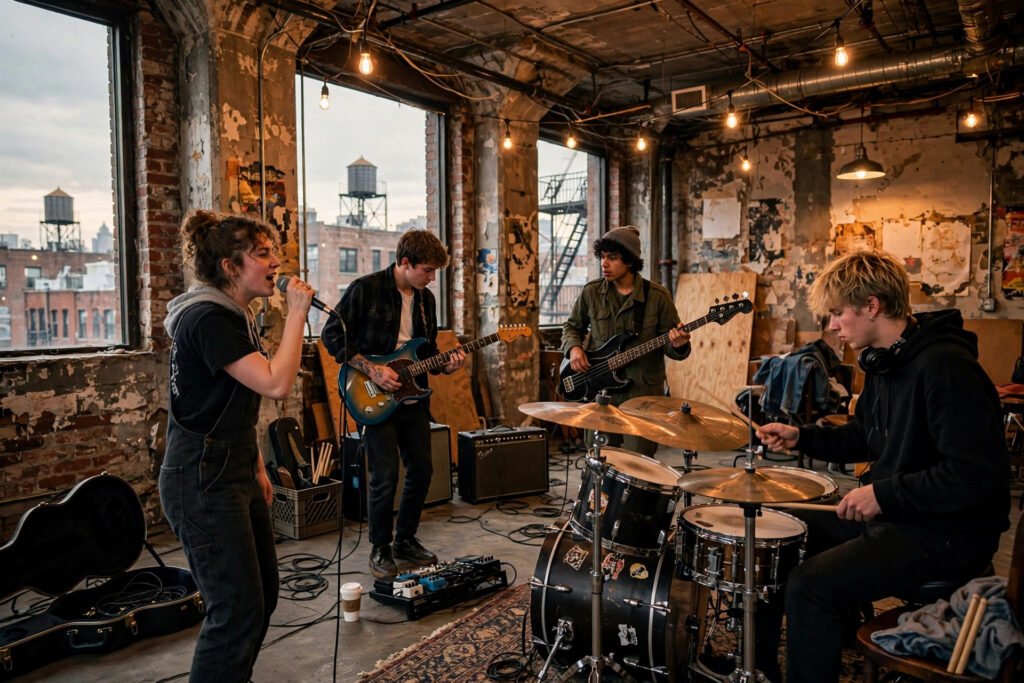
Every legendary New York band started the same way: a few people in a room, making noise together, figuring it out as they went. The Ramones in Forest Hills. Sonic Youth in downtown lofts. Vampire Weekend in Columbia dorm rooms. New York City remains one of the best places on earth to start a band — dense with musicians, venues, and audiences — but it is also one of the most logistically challenging. Rehearsal space is expensive, apartments are tiny, and the competition for every gig is fierce.
This is the practical playbook: finding members, rehearsing, gigging, and handling the business side, written for 2026 New York.
Finding Your People
A band is a relationship before it is a musical project. Start by defining what you want: genre, commitment level (weekend hobby vs. serious pursuit), and goals (record an EP? play out monthly? just jam?). Clarity here prevents the classic breakup cause — mismatched expectations.
Where to look in NYC:
Musician classifieds and apps. Bandmix, Craigslist’s musician section, and NYC-specific Facebook groups and subreddits remain the highest-volume sources. Be specific in your ad: influences, commitment, borough, and a recording or video if you have one.
Open mics and jam nights. The fastest way to find players whose style and personality you actually like. NYC’s open mic circuit — from East Village bars to Brooklyn cafes — is a rolling audition. Show up regularly, play well, be easy to talk to.
Music schools and lesson studios. Even as an adult beginner-adjacent player, bulletin boards at music schools connect you with serious, reliable musicians. Teachers often know students looking for bands.
Your existing scene. Go to local shows — finding free concerts in your city is also how you meet the people who play them. Most NYC bands form through scene friendships, not ads.
Audition practically: jam once with no pressure, then talk honestly about goals and schedules. Check reliability more than chops — the brilliant flake destroys more bands than the mediocre-but-dependable player ever will.
Rehearsing in the World’s Most Expensive City
Rehearsal space is the NYC band’s eternal problem. Options, roughly cheapest to priciest:
Apartment rehearsal (quiet instruments only). Acoustic guitars, electronic drums, and amp-modelers through headphones can work in an apartment — and if anyone is running a business from their apartment legally, noise compliance matters doubly. Full drum kits and cranked amps in apartments are a fast track to neighbor war.
Hourly rehearsal studios. NYC has dozens, concentrated in Manhattan (Midtown, the Village) and Brooklyn (Williamsburg, Bushwick, Gowanus). Rates run roughly $15–40/hour for a basic room, more for large or premium rooms. Many offer monthly lockout rooms — your own space, shared cost across the band — which becomes economical if you rehearse weekly.
Shared artist spaces. In Brooklyn and Queens, some warehouse and loft spaces rent to bands monthly. These require connections and often involve DIY buildouts, but the per-band cost can beat commercial studios.
Rehearse efficiently: arrive with parts learned, warm up fast, and work on arrangements — not individual practice. At $25/hour, noodling is expensive.
Getting Your First Gigs
NYC venues book through relationships and proven draw. The ladder typically looks like:
House shows and DIY spaces. The traditional entry point. Lower stakes, friendly crowds, and the best place to tighten your live set.
Openers and multi-band bills. Befriend bands one rung above you and ask to open. Venue bookers trust recommendations from bands they already book.
Showcase nights and battle-of-the-bands. Mixed value — good for stage time, rarely career-moving. Treat them as rehearsal with an audience.
Your own shows. Rent a small room, promote it yourself, keep the door. In the social media era, a band with a real local following can outdraw the venue’s own promotion.
For booking, a short, professional email works: who you are, links to your best two songs and a live video, your draw (honest numbers), and specific dates. Bookers ignore long bios and attachments. Follow up once. And always — always — promote your own shows; venues remember bands that bring people.
The Business Side Nobody Warns You About
Even a casual band is a small business, and NYC rewards bands that act like one:
Agree on money and ownership early. Who owns the band name? How are gig payments split? Who owns recordings? Write it down — a simple band agreement prevents the disputes that kill promising groups. This is unglamorous and essential.
Register your songs. Join a performing rights organization (ASCAP, BMI, or SESAC — all free or cheap for writers) so you collect royalties when your music is played, streamed, or performed. Copyright your recordings with the U.S. Copyright Office.
Handle taxes. Gig income is taxable. Keep records of payments and expenses (gear, rehearsal space, travel) from day one; musicians are classic audit-bait because of cash payments and poor records.
Permits for public performance. Street and subway performing has its own rulebook — the MTA’s official performer rules cover the subway side, so check them before playing underground. For amplified outdoor shows, check nyc.gov for sound permits.
Recording on a New York Budget
You do not need a $500/day Manhattan studio to release music in 2026. The realistic tiers:
DIY home recording. A decent interface, one good microphone, and free or cheap DAW software can produce releasable demos and even final tracks for many genres. NYC apartments demand quiet recording techniques — direct-input guitars, programmed or electronic drums, and vocals recorded in closets full of clothes (it works).
Project studios. Brooklyn and Queens are full of small studios charging $40–80/hour with experienced engineers. For a 4-song EP, two well-planned days can suffice if you rehearse relentlessly beforehand.
Full studios. Worth it for drums and full-band live tracking — the room sound is the one thing money genuinely buys. Book one day for drums, do the rest cheaper.
Release strategy matters as much as recording quality: singles on a steady schedule outperform the “spend a year on an album nobody hears” approach for new bands. Distribute through an aggregator (DistroKid, TuneCore), pitch to playlists, and play release shows. The National Association of Music Merchants tracks how independent artists are thriving with exactly this model.
Conclusion
Starting a band in New York City is harder logistically and better musically than almost anywhere else. The costs — rehearsal space, gear, time — are real. But so are the rewards: the densest concentration of musicians, venues, and music lovers in America, all within a subway ride. Find people whose company you enjoy, rehearse with discipline, gig relentlessly, handle the business basics, and release music steadily. Most NYC bands do not fail for lack of talent; they fail from logistics, flakiness, and untreated business disagreements. Solve those, and the music takes care of itself.
Frequently Asked Questions
How much does it cost to start a band in NYC?
Beyond instruments you own, budget roughly $100–200/month per member for shared rehearsal space, plus gig promotion costs. Recording a 4-song EP at a project studio runs $800–2,000 if you are well-rehearsed.
Where do NYC bands rehearse cheaply?
Hourly rehearsal studios in Brooklyn and Queens ($15–40/hour), shared monthly lockout rooms split among members, and quiet apartment rehearsal for acoustic/electronic setups. Avoid full-volume rehearsal in apartments.
Do I need a permit to perform in the NYC subway?
Subway performance is generally legal under MTA rules with restrictions on location, amplification, and blocking passenger flow. The Music Under New York program offers sanctioned spots via audition.
How do bands get booked at NYC venues?
Through relationships, proven local draw, and professional booking emails with strong live video. Start with DIY shows and opener slots, build a following, then approach venues with real attendance numbers.
Should a new band sign with a label?
Almost certainly not at the start. Modern distribution lets you release independently and keep your rights. Labels make sense only when you have leverage — an audience — and a clear reason you need their capital and connections.