What Is the Placebo Effect and Why It Works in New York City
What is the placebo effect and why does it work? The brain chemistry, real New York research, and what sugar pills reveal about how healing actually happens.
Written by admin
Published October 31, 2026
Reading time 7 minutes
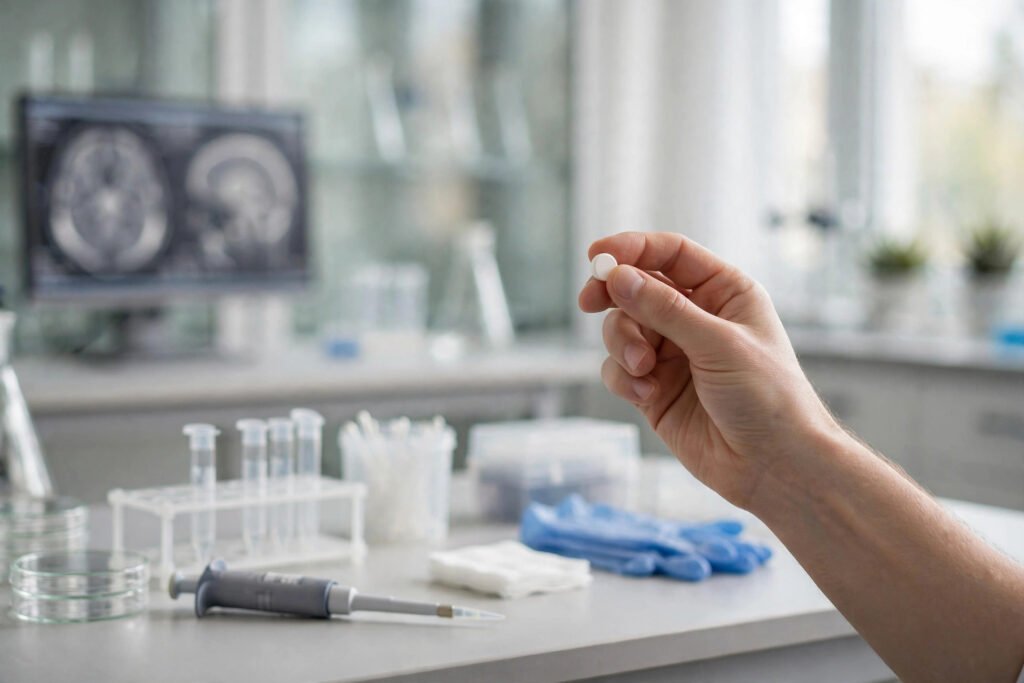
Every year, thousands of New Yorkers walk into clinical trials at places like Mount Sinai, Columbia, and NYU Langone — and get better on a pill containing absolutely nothing. No drug. No active ingredient. Just a sugar tablet, an injection of salt water, or a sham procedure. And yet their pain fades, their depression lifts, or their migraines ease. This is the placebo effect, and it is one of the most fascinating, most misunderstood phenomena in all of medicine.
If you live in New York City, you are surrounded by placebo research. The city hosts some of the densest concentrations of clinical trial centers in the world, and its researchers have produced landmark findings about why belief alone can trigger measurable biological change. Understanding the placebo effect is not just trivia — it changes how you think about medicine, pain, and your own body’s capacity to heal.
What the Placebo Effect Actually Is
The term “placebo” comes from Latin, meaning “I shall please.” In modern medicine, a placebo is any treatment with no therapeutic effect on its own — a sugar pill, a saline injection, a fake surgery incision. The placebo effect is the real, measurable improvement that happens anyway, driven by the patient’s expectation, the clinical setting, and the brain’s own chemistry.
This is not imagination. Brain scans show that placebo responses produce genuine neurochemical changes: the release of endorphins (the body’s natural painkillers), dopamine (in Parkinson’s patients expecting relief), and even changes in immune activity. When a migraine patient takes a pill they believe is powerful, their brain can literally manufacture its own pain relief. As researchers at the National Institutes of Health have documented, placebo research has moved from a nuisance in drug trials to a serious field of neuroscience in its own right.
The Brain Chemistry Behind Belief
How does an inert pill change your biology? The answer lies in expectation circuits. When you expect relief, your prefrontal cortex — the brain’s planning and prediction center — signals the release of endogenous opioids. In one famous PET scan study, patients given a placebo painkiller showed opioid activity in the exact brain regions that light up with morphine.
Conditioning plays a role too. If you have taken real painkillers hundreds of times, your body learns to associate the ritual — swallowing a pill, sitting in a doctor’s office — with relief. That learned association alone can trigger a partial response, much like Pavlov’s dogs salivating at a bell. This is also why the color, size, and price of a pill change its effectiveness: larger pills work better than small ones, two pills beat one, and — remarkably — expensive placebos outperform cheap ones. Your brain is running a sophisticated prediction engine, and every cue feeds into it.
There is also a social dimension. A doctor who communicates warmth and confidence produces stronger placebo responses than a rushed, dismissive one. This is one reason psychologists at the American Psychological Association study expectation effects so closely — the therapeutic relationship itself is an active ingredient.
Landmark Studies — Including New York Research
New York City has been central to placebo science. Researchers at Columbia University’s medical center have studied how expectation shapes pain processing, using functional MRI to watch placebo responses unfold in real time. Their work helped establish that placebo analgesia is not just “reporting bias” — patients are not simply telling doctors what they want to hear. The brain’s pain-processing regions genuinely quiet down.
Other landmark findings include:
The sham surgery surprise
In studies of arthroscopic knee surgery and vertebroplasty (a spinal procedure), patients who received sham operations — anesthesia and incisions, but no actual repair — improved just as much as those who got the real procedure. These results forced medicine to reexamine which surgeries actually work through their mechanics versus through expectation and the natural course of healing.
The open-label placebo
Perhaps the strangest finding: placebos work even when patients know they are placebos. In trials at Beth Israel Deaconess and elsewhere, patients told explicitly “this is a placebo pill with no active ingredient” still improved — for irritable bowel syndrome, chronic back pain, and fatigue. The ritual of treatment, taken mindfully, seems to carry power on its own.
The nocebo flip side
Expectation cuts both ways. The “nocebo” effect — expecting harm — can produce real side effects from inert treatments. Patients warned extensively about side effects report more of them. New York researchers studying how stress can trigger real physical pain have documented similar pathways: negative expectations amplify genuine suffering through the same brain circuits.
Why Placebos Are Stronger in Some Conditions
The placebo effect is not evenly distributed. It is strongest in conditions with a large subjective component: pain, depression, anxiety, fatigue, migraines, irritable bowel syndrome, and Parkinson’s symptoms. It is essentially zero for things like broken bones, bacterial infections, or tumors — no amount of belief will set a fracture.
The pattern makes sense when you think about it. These are conditions where the brain’s own regulatory systems — pain modulation, mood chemistry, gut-brain signaling — are the main levers. A placebo does not cure the disease; it recruits the body’s own regulatory machinery. That is also why placebo responses vary so much between individuals: genetics, personality, and past medical experiences all tune the system.
What This Means for You as a Patient in NYC
Understanding the placebo effect makes you a smarter patient, not a more gullible one. A few practical takeaways:
Choose clinicians you trust. The warmth and confidence of your doctor measurably change outcomes. If you feel rushed and dismissed, the treatment itself works less well — that is not superstition, it is neuroscience.
Do not stop real medication. The placebo effect complements treatment; it does not replace it. Nobody should abandon prescribed drugs for sugar pills. The lesson is that mindset and ritual amplify medicine, not that they substitute for it.
Be careful with hype. New York’s wellness scene is full of expensive treatments whose benefits may be largely placebo-driven — certain IV drips, trendy supplements, and boutique procedures. Before paying, it is worth checking the evidence, much like being skeptical about risks of using AI for medical advice instead of qualified professionals.
Harness it ethically. You can recruit your own expectation circuits: consistent routines, positive framing of treatment, good sleep, and stress management all strengthen the brain’s self-regulation. Even small things matter — researchers have found that whether coffee is actually bad for your health depends partly on your expectations about it.
The Placebo Effect and Drug Development
Here is a twist: the placebo effect is getting stronger over time, and it is causing problems. In US clinical trials, placebo responses in pain and depression studies have risen steadily for decades. This makes it harder to prove new drugs work, since they must beat an ever-rising placebo bar.
Pharmaceutical companies now design elaborate trials to minimize placebo responses, and some researchers argue we should flip the approach: instead of fighting the placebo effect, medicine should learn to maximize it ethically — through better communication, healing environments, and honest framing — alongside proven treatments. The CDC’s mind-body health resources reflect this growing mainstream acceptance.
Conclusion
The placebo effect is not proof that medicine is fake — it is proof that your brain is a pharmacy. Expectation, ritual, conditioning, and trust trigger real neurochemistry that changes pain, mood, and symptoms. New York’s research institutions have helped prove this is biology, not imagination. The smart move is not to chase sugar pills, but to respect the power of your own mind as a partner in healing: choose doctors you trust, take treatment rituals seriously, manage stress, and stay skeptical of anyone selling belief alone at boutique prices. Your brain is already the most sophisticated drug delivery system you own.
Frequently Asked Questions
Can the placebo effect cure serious diseases?
No. Placebos can relieve symptoms like pain, nausea, and fatigue, but they do not shrink tumors, kill infections, or repair tissue. They modulate the body’s regulatory systems; they do not replace actual treatment.
Why do more expensive placebos work better?
Because expectation scales with perceived value. Your brain uses price as a cue for potency — a well-documented quirk of the prediction machinery that also applies to real drugs, wine, and even painkillers.
Do placebos work if you know it is a placebo?
Surprisingly, yes — “open-label” placebos have shown real benefits for IBS, chronic pain, and fatigue in clinical trials. The ritual of taking treatment seems to matter even without deception.
What is the nocebo effect?
The nocebo effect is the placebo’s dark twin: expecting side effects or harm can produce real symptoms. It is why careful, balanced communication from doctors matters so much.
Are New York clinical trials safe to join?
Trials at major NYC academic centers follow strict federal oversight, including institutional review boards and informed consent. You can browse legitimate studies through government trial registries and always ask what the placebo arm involves before enrolling.