NYC School Admissions: What Every Parent Must Know
What should parents know about NYC school admissions? Pre-K to high school timelines, lotteries vs. screened schools, charters, deadlines, and mistakes to avoid.
Written by admin
Published October 23, 2026
Reading time 6 minutes
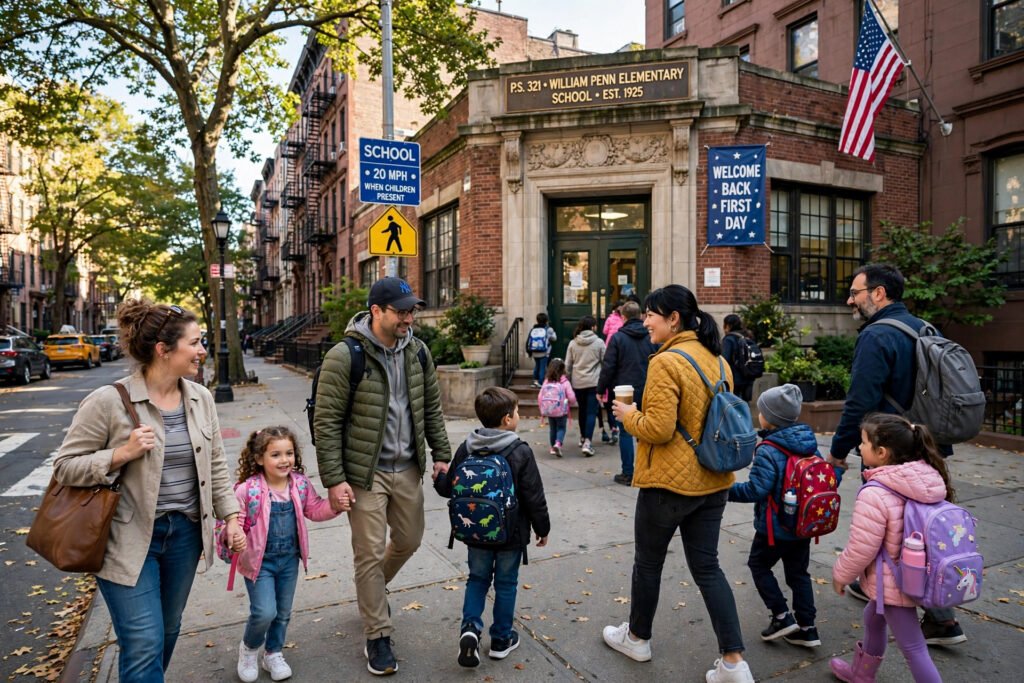
New York City’s school admissions system is famously one of the most complex in the country — a maze of lotteries, screened programs, specialized tests, charter lotteries, and deadlines that shift yearly. Every fall, thousands of parents discover too late that they missed a window or misunderstood a rule. This guide gives parents the full picture: how the system works at each level, the deadlines that matter, the strategies that work, and the mistakes to avoid.
The big picture: school choice, NYC-style
Unlike most American cities, NYC does not simply assign your child to the neighborhood school (though zoned schools remain the default guarantee). At every transition point — pre-K, kindergarten, middle school, high school — families can apply to schools citywide through centralized processes. This creates extraordinary opportunity: a kid in the South Bronx can attend one of the best high schools in America for free. It also creates extraordinary complexity. The through-line: at every level, the families who research early and meet deadlines get dramatically better outcomes. Bookmark the official NYC Public Schools enrollment hub — it is the single authoritative source (statewide policy behind it sits with the NY State Education Department), and rules change often enough that last year’s advice may be wrong.
Pre-K and kindergarten: the first maze
Pre-K for All offers free full-day pre-K to every 4-year-old in the city — one of the best deals in American public education. Applications typically open in winter for the following fall; you rank up to 12 programs, and placement is by lottery with sibling and zone priorities. Apply even if your first choices seem like long shots — the lottery is real, and many families get pleasant surprises.
Kindergarten: your zoned school guarantees a seat, but you can also apply to unzoned schools, charter schools (separate lotteries), and Gifted & Talented programs. The G&T landscape has been reformed repeatedly — check current-year rules rather than relying on what your neighbor did three years ago. Key parent move: tour schools in the fall before applications open. The vibe of a school — hallway order, office warmth, how the principal talks about struggling kids — tells you more than any rating site.
Middle school admissions
Middle school is where NYC’s system first gets strategic. Students apply in 5th grade, ranking choices across the borough (and sometimes citywide). Schools fall into buckets: zoned (guaranteed), screened (selective by grades/attendance), and open/lottery. The screened middle schools — Anderson, NEST, TAG, Wagner, 30Q227 — are fiercely competitive and feed the top high schools. What matters: 4th-grade grades and attendance are the record that counts, so the preparation starts earlier than parents expect. Rank honestly with safeties included — the same principle as high school. And remember that a great “fit” middle school your child loves beats a pressure-cooker they dread; the research on adolescent well-being is unambiguous here.
High school admissions: the main event
High school is the highest-stakes round: 400+ schools, two parallel systems (SHSAT specialized schools and the main application), auditions for LaGuardia, and 12 ranked choices. It also helps to understand the classroom culture your child is entering as AI reshapes homework and teaching. The parent-specific additions: start researching in 7th grade spring, calendar every deadline the day it is announced, and have the “safety school” conversation early so it is a plan, not a panic. Also note: high school admissions stress radiates through the whole family. Protecting your own bandwidth matters — see finding time for yourself as a parent — because admissions season coincides with everything else in your life, and AI tools for busy parents can genuinely help manage the research sprawl.
Charter schools: the parallel track
Charter schools (Success Academy, KIPP, Uncommon, and dozens of others) run separate lotteries outside the DOE system — you must apply to each network individually, usually in winter/spring. They are free, public, and open to all by lottery. Some post remarkable academic results; others are indistinguishable from neighborhood schools. Evaluate them like any school: visit, ask about teacher turnover and discipline philosophy, talk to current families. The lottery deadlines are easy to miss because they are not on the DOE calendar — set your own reminders.
Deadlines: the calendar that rules everything
Typical rhythm (verify yearly — these shift): Fall: school tours, open houses, SHSAT registration, kindergarten/pre-K info sessions. Early winter: pre-K and kindergarten applications open; charter lotteries open. Late fall/December: high school and middle school applications due; SHSAT administered. Spring: offers released (pre-K through high school); acceptances, waitlists, appeals. The cardinal rule: never rely on a school to remind you. The DOE communicates, but emails get buried. Own your calendar.
How to evaluate schools (beyond test scores)
Test scores correlate heavily with family income — they tell you who attends more than how well the school teaches. Better signals: student growth data (are kids improving year over year?), teacher retention (stable staff = healthy school), course offerings (APs, arts, languages — breadth signals resources), college matriculation lists for high schools (the full list, not highlights), and your visit impression (orderly hallways, engaged kids, a principal who knows students’ names). Talk to parents whose kids are struggling at the school — how the school handles its hardest cases reveals its true character. And keep perspective on the digital side of school life: protecting kids from inappropriate content online is part of modern parenting that schools handle unevenly.
Common parent mistakes
Applying only to famous schools. The “name” schools reject 90%+ of applicants. A balanced list with schools you researched and respect is the winning strategy at every level.
Missing the charter lotteries. They are separate, earlier than you think, and easy to overlook.
Over-optimizing for prestige over fit. The two-hour commute, the pressure culture, the program that does not serve your child’s actual interests — fit predicts thriving; prestige predicts stress.
Not having a plan B. Waitlists move. Appeals exist. Supplementary rounds place thousands of kids. Panic helps nothing; a calm backup plan helps everything.
Starting too late. Every level rewards the family that started researching a year early. If you are reading this “late,” start today — late action beats perfect inaction.
Conclusion
NYC school admissions reward three things: early research, deadline discipline, and honest ranking with real safeties. The system is complex but navigable — hundreds of thousands of families do it every year, and the ones who do well are not the most connected but the most prepared. Start a year before you think you need to, tour more schools than feels necessary, and remember the actual goal: a school where your specific child will learn, grow, and be happy. Everything else is logistics.
Frequently Asked Questions
When do NYC school applications open?
Pre-K and kindergarten applications typically open in winter; middle and high school applications open in fall with December deadlines. Charter lotteries run on separate winter/spring timelines. Verify dates yearly on the DOE site.
Does my child have a guaranteed school seat?
Yes — your zoned neighborhood school guarantees a seat at the elementary and middle school levels. High school has no zoned guarantee; placement is through the application process.
How do charter school lotteries work in NYC?
Each charter network runs its own lottery, usually in spring, with random selection among applicants. You must apply to each network separately — they are not part of the DOE application.
What is the difference between screened and lottery schools?
Screened schools select students based on academic records (grades, attendance, test scores). Lottery/ed-opt schools admit by random lottery, sometimes with academic diversity quotas. Zoned schools guarantee seats to zone residents.
Can we appeal a school placement?
Yes — appeal processes exist at each level, and waitlists move significantly through the summer. Contact the DOE Office of Student Enrollment promptly after offers are released.