What Is a Good Credit Score to Buy a House in NYC?
What is a good credit score to buy a house in NYC? Minimums vs. sweet spots, what lenders check, the improvement plan, and co-op realities. Unlock better rates.
Written by admin
Published October 31, 2026
Reading time 5 minutes
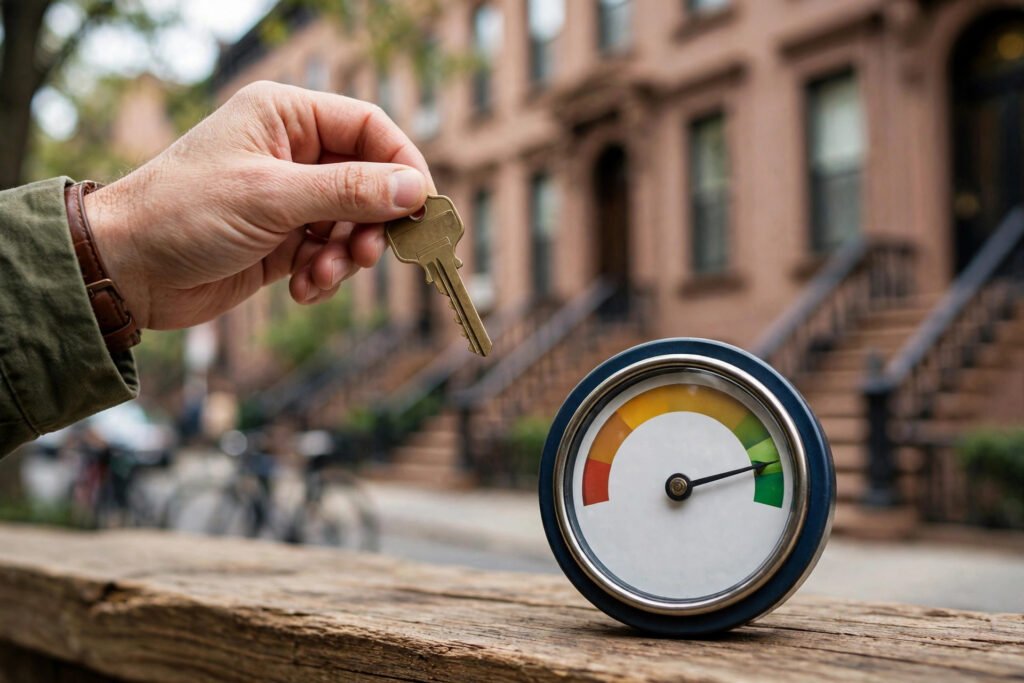
Your credit score is the silent partner in every home purchase — it determines whether you get approved, what interest rate you pay, and ultimately whether homeownership costs you tens of thousands more or less. In New York City’s brutal market, where every dollar of monthly payment matters, the difference between a 620 and a 760 score can mean $500+ monthly on the same home. So what is a good credit score to buy a house in NYC? The honest answer has two layers: the minimum that gets you in the door, and the score that gets you the best deal. Here’s both, plus exactly how to get there.
The minimums: what actually gets approved
Let’s start with the floors. FHA loans — the workhorse of first-time NYC buyers — go down to 580 with 3.5% down (500–579 possible with 10% down, though few lenders offer it). Conventional loans (Fannie Mae/Freddie Mac) generally require 620 minimum. VA loans (for eligible veterans) have no official minimum, but most lenders impose 620. USDA loans: 640 typical lender requirement.
But “approved” and “advisable” differ. Buying at 580–620 means higher rates, mandatory mortgage insurance, fewer lender options, and — critically in NYC — co-op board rejections. Most NYC co-op boards want 700+, some 720+, regardless of what lenders allow. The lender says yes; the board says no. In New York’s co-op-heavy market, the practical minimum is higher than the technical one.
The sweet spots: where the money is saved
Here’s where scores translate to dollars. At 740+, you unlock the best conventional rates — the pricing tier where lenders compete hardest for you. The jump from 680 to 740 can save 0.25–0.50% on your rate; on a $500,000 NYC-area loan, that’s $75–150/month, or $27,000–$54,000 over 30 years. From 620 to 740, the savings are dramatic — potentially $300–500/month.
Private mortgage insurance (PMI) also prices by score: borrowers under 680 pay substantially more for PMI, and at 760+ with 20% down you avoid it entirely. The score doesn’t just affect approval — it prices every component of the loan. Check your real scores (mortgage lenders use FICO, not VantageScore — the free score from your credit card may differ by 20–40 points) before house hunting. The Consumer Financial Protection Bureau’s mortgage resources explain how scores affect loan pricing in detail.
What lenders actually look at (beyond the number)
The score opens the door; the full credit picture closes the deal. Lenders scrutinize: payment history (the 35% giant — any late payments in the last 12–24 months are red flags), credit utilization (keep under 30%, ideally under 10% in the months before applying), length of history (don’t close old cards before buying), recent inquiries and new accounts (no new credit in the 6–12 months before applying — that furniture store card can torpedo a mortgage), and debt-to-income ratio (typically capped at 43–50% including the new mortgage).
NYC-specific: lenders verify rent payment history more carefully here, and co-op boards often run their own deeper financial reviews. Two years of clean, documented payments across the board is the gold standard. If you’re building credit from thin history, getting a loan with no credit history covers the foundational tactics that apply to mortgages too.
How to raise your score before buying (the 6–12 month plan)
Buying in a year? Execute this plan. Months 12–6 out: pull all three bureau reports from AnnualCreditReport.com (the official free source), dispute every error (wrong late payments, accounts that aren’t yours, outdated negatives — disputes work more often than people think), and pay down revolving balances to under 30% utilization (under 10% is ideal). Set every account to autopay minimums — one 30-day late can cost 60–100 points.
Months 6–0: don’t open any new credit, don’t close old accounts, don’t co-sign anything, don’t make large undocumented deposits (lenders question them), and keep utilization low through your closing date — lenders re-pull credit before funding, and a maxed-out card discovered at the last minute can kill the deal. Authorized-user status on a family member’s old, clean card can boost thin files quickly. Most buyers gain 40–100 points in 6–12 months of disciplined execution.
NYC realities: boards, prices, and strategy
In New York, the credit score is necessary but not sufficient. Co-op boards — governing most affordable purchases — evaluate the whole financial picture: post-closing liquidity (often 12–24 months of mortgage plus maintenance in reserves), debt-to-income ratios stricter than lenders’ (many boards cap at 25–30%), and employment stability. A 780 score with no reserves loses to a 720 with two years’ reserves.
Strategy: get pre-approved (not just pre-qualified) before touring, keep saving money on groceries every month and other expenses to build both down payment and reserves simultaneously, and target your score 20+ points above minimums to absorb the inevitable fluctuations. Remember that mortgage pre-approval typically lasts 60–90 days — time your credit optimization to peak when you need it.
Rapid rescoring and lender credits: two insider tools
Two lesser-known tools can help in time crunches. Rapid rescoring — a service your mortgage lender (not you directly) can initiate — updates your credit file with new information (a paid-down balance, a corrected error) in days rather than waiting for the next reporting cycle. It costs a fee per account updated, but when a 15-point bump unlocks a better rate tier before your rate lock expires, it pays for itself hundreds of times over. Ask your loan officer about it if you’re close to a threshold.
Second, understand lender credits and discount points through the score lens: borrowers with top-tier scores get offered better combinations of rates and credits, while lower-score borrowers often face a worse menu entirely. This is another hidden cost of mediocre credit — not just a higher rate, but fewer options. The CFPB’s guide to discount points helps you evaluate these tradeoffs with your specific numbers rather than rules of thumb.
Conclusion
A good credit score to buy a house in NYC is 740+ for the best rates and smoothest approvals, 700+ for comfortable conventional options, 620+ for basic conventional approval, and 580+ for FHA — but co-op boards effectively demand 700+ regardless. The score prices your entire loan: each tier saves tens of thousands over the mortgage’s life. Pull your reports early, dispute errors, crush utilization, autopay everything, and avoid new credit for a year before buying. In NYC’s market, your credit score isn’t just a number — it’s negotiating leverage worth real money.
Frequently Asked Questions
What credit score do I need to buy a house in NYC?
740+ unlocks the best rates; 700+ works comfortably for conventional loans; 620+ is the conventional minimum; 580+ qualifies for FHA. NYC co-op boards typically want 700+ regardless of loan type.
Can I buy a house with a 650 credit score?
Yes — FHA and some conventional lenders approve at 650, but you’ll pay higher rates and PMI. Improving to 700+ before buying often saves more than waiting costs.
How fast can I raise my credit score to buy a house?
Most buyers gain 40–100 points in 6–12 months by disputing errors, paying down utilization below 10%, autopaying everything, and avoiding new credit.
Do mortgage lenders use the same score I see for free?
Usually not — lenders use FICO scores (often mortgage-specific versions), while free scores are often VantageScore. They can differ by 20–40 points; get your FICO scores before applying.