
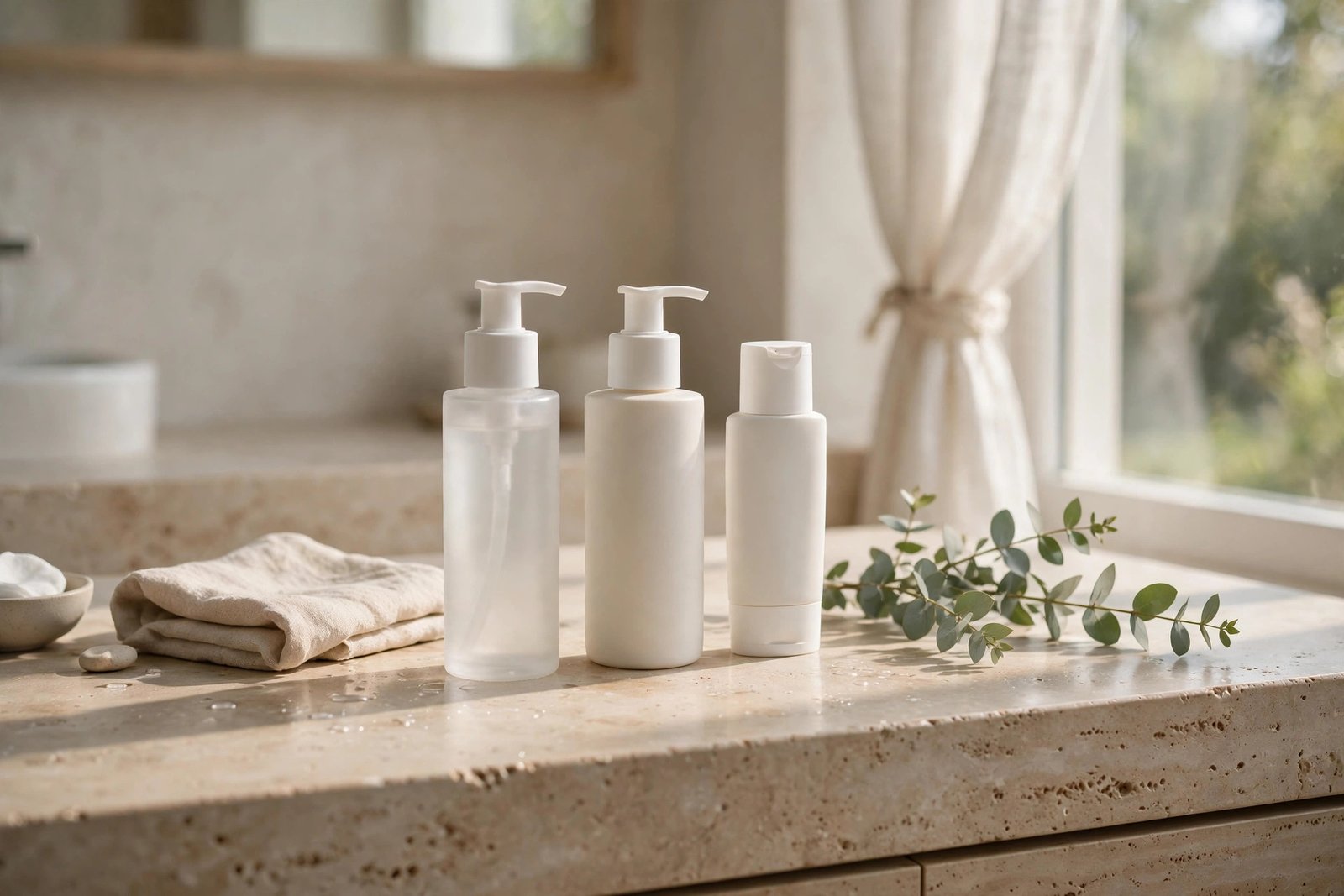
Skincare has a complexity problem. Walk into any beauty aisle and you’re confronted with twelve-step routines, serums with unpronounceable ingredients, and influencers insisting you need products for problems you didn’t know you had. Here’s the truth dermatologists will tell you: a beginner needs three to four products, not twelve. Most skin issues improve with consistency on the basics, not with exotic additions. This guide strips skincare down to what actually works — the right products, in the right order, matched to your skin type — so you can build a routine you’ll actually stick with instead of a shelf of expensive regrets.
Know your skin type first (everything depends on this)
Before buying anything, identify your skin type with the bare-face test: wash with a gentle cleanser, pat dry, wait an hour without applying products, then observe. Tight or flaky? Dry. Shiny all over? Oily. Shiny T-zone (forehead, nose, chin) but normal cheeks? Combination. Comfortable and even? Normal. Easily irritated, red, or reactive? Sensitive. This single observation determines every product choice that follows — the “best” moisturizer for oily skin is a disaster for dry skin, and most skincare frustration comes from using products formulated for someone else’s face.
Skin type can shift with seasons, age, hormones, and climate. New Yorkers often discover their skin behaves differently in humid August versus dry, heated-apartment January. Reassess twice a year rather than clinging to a routine that stopped working.
The only three steps that truly matter
Every effective beginner routine rests on three pillars. One: cleanse — remove the day’s sunscreen, oil, and grime every evening with a gentle cleanser matched to your skin type (foaming or gel for oily, cream or milky for dry). Morning cleansing can be lighter — lukewarm water or a gentle cleanse suffices. Two: moisturize — seal hydration in while skin is slightly damp. Oily skin needs this too; skipping moisturizer often makes oily skin oilier as it overcompensates. Choose gel or lightweight lotion for oily skin, richer creams for dry. Three: sunscreen every morning — SPF 30+, broad spectrum, the single most impactful anti-aging and skin-health product that exists. Nothing else you buy matters as much as daily sun protection.
That’s the complete essential routine: cleanser, moisturizer, sunscreen. Everything below is optional enhancement, not requirement. Master the basics for a month before adding anything.
Adding actives: vitamin C, retinoids, and exfoliants
Once the basics are habitual, one active ingredient at a time can target specific concerns. Vitamin C serum (morning, before moisturizer) brightens and supports collagen — look for L-ascorbic acid in opaque packaging, and expect 4–6 weeks for visible results. Retinoids (night only) are the most evidence-backed anti-aging and acne-fighting ingredients in dermatology — start with low-strength retinol twice weekly, expect mild flaking initially, and never combine with strong exfoliants at first. Chemical exfoliants (AHAs like glycolic acid for dullness, BHAs like salicylic acid for clogged pores) used 1–2 times weekly dissolve dead skin more gently than scrubs.
The golden rules of actives: introduce one new product every two weeks (so you can identify irritants), use pea-sized amounts (more product doesn’t mean more results), and back off at the first sign of persistent stinging or redness. The American Academy of Dermatology offers excellent free guidance on using these ingredients safely.
What to skip (the industry won’t tell you)
Toners are largely optional in modern routines — most were designed for pH-balancing after harsh old-fashioned cleansers, a problem gentle modern cleansers don’t create. Expensive eye creams are usually just moisturizer in a smaller jar; your regular moisturizer works fine around the eyes unless you have specific concerns. Physical scrubs with rough particles can cause micro-tears — chemical exfoliants do the job better. Sheet masks are fun self-care but deliver transient results. And “natural” or “clean” labels mean nothing regulatory — poison ivy is natural. Judge products by ingredient lists and your skin’s response, not marketing.
The FDA’s cosmetics information is sobering reading: cosmetics aren’t pre-approved for safety the way drugs are, which means marketing claims deserve skepticism and patch-testing new products is genuinely wise.
Building your actual routine: morning and night
Morning (keep it fast): gentle cleanse or water rinse, vitamin C serum if using, moisturizer, sunscreen. Total time: three minutes. Night (the workhorse): cleanser to remove the day, active treatment (retinoid or exfoliant on their scheduled nights), moisturizer — slightly richer than daytime if your skin is dry. That’s it. Write it on a sticky note on your mirror for the first month until it’s muscle memory.
Support the routine from the inside too: the best foods for healthy skin — colorful vegetables, healthy fats, adequate protein — genuinely affect skin quality over time. And don’t underestimate how much water to drink every day: hydration won’t fix skin alone, but chronic dehydration shows on your face first.
Troubleshooting common beginner problems
Breaking out after starting a routine? It’s usually one of three things: a comedogenic product (check for heavy oils and butters if you’re acne-prone), introducing too many actives at once, or — counterintuitively — purging from a new retinoid or exfoliant, which brings underlying congestion out faster and resolves in 2–4 weeks. Persistent new breakouts beyond a month mean dropping the most recent addition.
Stinging, redness, or flaking? You’ve overdone actives — scale back to just cleanser, moisturizer, and sunscreen for a week (dermatologists call this a “skin reset”) and reintroduce slowly. No improvement after 8–12 weeks of consistent basics? That’s when a dermatologist visit beats another product purchase — prescription options exist for concerns that over-the-counter products can’t touch, and a single visit often saves hundreds in wasted experiments.
Budget building: good skin under $50
Effective skincare doesn’t require luxury prices. Drugstore staples from brands like CeraVe, Vanicream, Neutrogena, and La Roche-Posay are dermatologist-recommended and cost $12–18 per product — a complete three-step routine for under $50. Buy the sunscreen you’ll actually reapply (the best sunscreen is the one you use), choose fragrance-free if you’re sensitive, and ignore the $80 serums until you’ve mastered the basics. Price correlates with packaging and marketing far more than with results.
Conclusion
Building a skincare routine as a beginner comes down to this: identify your skin type, nail the three essentials (gentle cleanser, moisturizer, daily sunscreen), add one active at a time only after the basics are habitual, and give everything 8–12 weeks before judging. Skip the twelve-step routines, the marketing hype, and the products for problems you don’t have. Consistency with simple, well-chosen products beats complexity every time — your skin doesn’t need more products, it needs the right few, used every day.
Frequently Asked Questions
What order do I apply skincare products?
Thinnest to thickest: cleanser, treatments/serums, moisturizer, sunscreen (morning only, always last). Wait roughly a minute between layers for absorption.
How long before I see results from a new routine?
Skin cell turnover takes 4–6 weeks, so judge the basics after two months and actives after three. Immediate “results” are usually just moisturization — real change is slow.
Do I need moisturizer if I have oily skin?
Yes — use a lightweight gel or oil-free lotion. Skipping moisturizer often triggers more oil production as skin compensates for the perceived dryness.
Can I build an effective routine on a budget?
Absolutely. Dermatologist-recommended drugstore brands offer complete routines under $50. Expensive products rarely outperform well-formulated affordable ones — consistency matters more than price.