
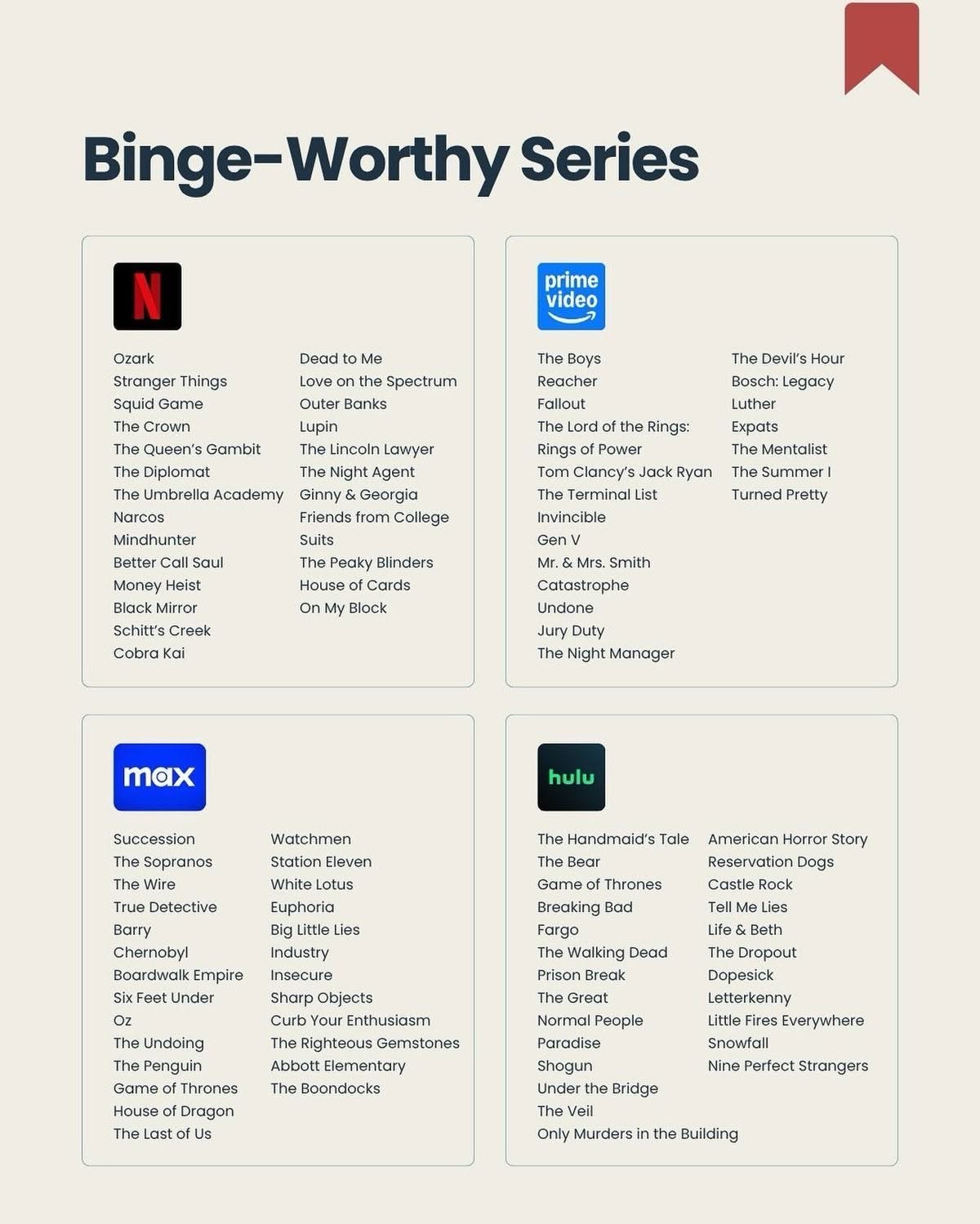
There are more good shows right now than any human could watch in a lifetime — and yet somehow we all spend 45 minutes scrolling and end up rewatching The Office. The paradox of choice is real. If you’re trying to figure out how to find good new shows to binge-watch without the scroll fatigue, you need better discovery systems, not more options. Here’s what actually works.
How to Find Good New Shows to Binge-Watch: The Discovery Systems
1. Follow curators, not algorithms
Streaming algorithms optimize for engagement, not quality — they’ll push whatever keeps you watching, which is why your recommendations feel like a hall of mirrors. Human curators are better. Find 2–3 critics or publications whose taste aligns with yours and follow their recommendations. Good starting points: the TV critics at major newspapers, the Rotten Tomatoes TV section (sort by the critics’ score, not audience), and genre-specific newsletters. When a critic whose taste you trust loves something, that’s worth more than a thousand algorithmic suggestions.
2. Use the “three-episode rule” wisely
Here’s a practical filter: give a new show three episodes. If you’re not hooked — or at least intrigued — by episode three, bail with zero guilt. Life’s too short and the queue’s too long. The exception: shows everyone agrees have a slow start but legendary payoffs (ask a trusted friend where it “gets good” and skip to there if needed). But as a default, three episodes is enough data. This rule alone will save you from dozens of hours of mediocre television.
3. Mine the “if you liked X” goldmine properly
“More like this” sections are actually useful when you seed them right. Finished a show you loved? Search “[show name] shows like” and read the Reddit threads and articles — real humans explaining why a recommendation fits (“if you liked the political scheming in Succession, try…”) beats an algorithm’s opaque similarity score. The r/televisionsuggestions community is excellent for this: describe what you loved about a show and get tailored picks.
4. Check what’s actually good right now
Aggregators solve the “where is it streaming” problem: JustWatch shows what’s on every service and what’s trending. Rotten Tomatoes and Metacritic give you the critical consensus at a glance — sort by score within a genre and work downward. For a more social approach, Letterboxd (technically for film, but the community lists TV too) surfaces what passionate viewers are actually excited about, not what marketing departments are pushing.
5. Ask the right way
“Any good shows?” gets useless answers. “I loved Severance’s weird mystery-box tension and Ted Lasso’s warmth — what should I watch next?” gets great ones. The more specific you are about what grabbed you (the tone, the pacing, the characters, the setting), the better the recommendations. Ask friends whose taste you respect, not the group chat at large.
Binge-Watching Without the Burnout
A word on the binge itself: the all-night, 8-episode marathon feels great in the moment and hollow after. The shows you remember most fondly are usually the ones you savored — an episode or two a night, with time to think about them. Consider the “two-episode rule” for great shows: watch two, then stop, even if you want more. Anticipation is part of the pleasure, and you’ll actually remember the plot. Also: the best binge shows have episodes that end with momentum — if you find yourself checking your phone mid-episode, that’s data. Switch shows.
Genre Jump-Starts (If You’re Stuck in a Rut)
Most of us default to one genre. Deliberately rotating genres keeps things fresh:
- Prestige drama: the heavy hitters everyone talks about — worth it for the cultural literacy alone
- Smart comedy: half-hour shows are the lowest-commitment way to try something new
- Limited series: 6–10 episodes, complete story, no multi-season commitment — the ideal binge format
- Documentary series: space documentaries and true crime docs are binge-worthy in their own right
- International shows: some of the best television of the last decade isn’t in English — subtitles are a small price for great storytelling
- Reality/competition: zero-guilt palate cleansers between heavy dramas
Managing the Subscription Maze
You don’t need every service at once. The smart play: subscribe to one or two at a time, binge what you want, cancel, rotate to the next. Most services are month-to-month — there’s no prize for paying for five simultaneously while only watching one. Keep a running watchlist (your phone’s notes app is fine) of shows per service, then subscribe when the list is long enough to justify a month. For families juggling multiple viewers, my guide to the best streaming services for families breaks down which services earn their keep.
The Practical Takeaway
Finding good shows to binge = follow human curators over algorithms + the three-episode rule + specific “shows like X” research + aggregators (JustWatch, Rotten Tomatoes, Metacritic) + asking friends the right way. Then savor the great ones instead of speed-running them.
Pick one discovery method and try it tonight. Your scroll time is about to drop dramatically.
The Watchlist System That Ends Decision Paralysis
Here’s the practical system: maintain one watchlist (phone notes app, or your streaming service’s list — but only one, or shows vanish into the void). When anyone recommends something or a critic raves, it goes on the list immediately with a one-line note about why (“critic X loved the writing,” “like Severance but funnier”). Once a month, spend 15 minutes pruning: check what’s still available, delete what no longer appeals, star the top three. When it’s time to pick, you choose from the starred three — never from the infinite scroll. This converts “what should we watch?” from an open-ended anxiety into a multiple-choice question. Couples and families: keep a shared list so everyone’s picks are in the mix. The list is the discovery; the choosing becomes easy.
The paradox of the streaming age is that the best show for you is almost certainly already out there — you just haven’t found it yet. With these discovery systems in place, the finding gets easier every month: your curators sharpen, your watchlist grows, your instincts improve. Give it a few weeks and you’ll go from scrolling paralysis to having a queue you’re genuinely excited about. The golden age of television is only golden if you can find the gold.


