
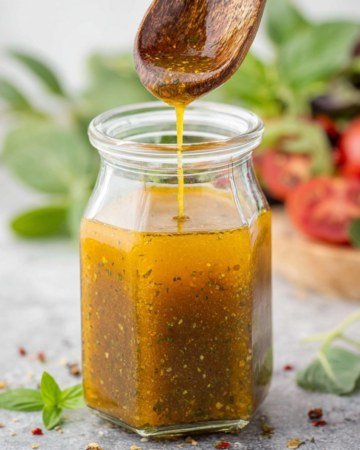
Bottled salad dressing is one of the great kitchen cons. You pay four dollars for a bottle that’s mostly soybean oil, water, and ingredients you can’t pronounce — and it doesn’t even taste that good. Once you learn how to make your own salad dressing in 5 minutes, you’ll never go back. Homemade dressing is fresher, cheaper, endlessly customizable, and honestly takes less time than finding the bottle in a cluttered fridge door.
Every great vinaigrette follows the same skeleton: fat + acid + seasoning + something to bring it together. Memorize the ratio, and you can improvise forever.
How to Make Your Own Salad Dressing in 5 Minutes: The Master Formula
The classic vinaigrette ratio is 3 parts oil to 1 part acid. That’s the whole foundation:
- 3 tablespoons extra-virgin olive oil (or avocado oil, or a mix)
- 1 tablespoon acid — red wine vinegar, lemon juice, apple cider vinegar, balsamic
- 1 teaspoon Dijon mustard (the emulsifier — this is what keeps it from separating)
- 1 small garlic clove, minced or grated (or ¼ tsp garlic powder)
- Salt and freshly cracked pepper to taste
- Optional: 1 teaspoon honey or maple syrup to balance sharp acids
Put everything in a jar, screw on the lid, shake for 15 seconds. Done. That’s a perfect everyday vinaigrette, and it took under two minutes. The mustard is the unsung hero — it’s a natural emulsifier that binds oil and vinegar into a creamy, cohesive dressing instead of a separated oily mess.
Five 5-Minute Dressings to Rotate Through
1. Classic lemon-herb vinaigrette
Olive oil + lemon juice + Dijon + minced shallot + chopped fresh herbs (parsley, dill, or basil) + salt and pepper. Bright, fresh, goes with everything. The shallot mellows into the dressing and adds a sweetness raw onion can’t match.
2. Creamy ranch (without the packet)
½ cup mayo + ¼ cup sour cream + splash of buttermilk or milk to thin + garlic powder, onion powder, dried dill, dried parsley, salt, pepper, squeeze of lemon. Whisk it. It tastes like actual food instead of the neon-green packet stuff, because it is.
3. Asian-inspired sesame ginger
Sesame oil + rice vinegar + soy sauce + grated fresh ginger + a touch of honey + a minced garlic clove. Incredible on slaws, grain bowls, and anything with cabbage. Toasted sesame oil is potent — a little goes a long way.
4. Balsamic that isn’t syrupy-sweet
Good balsamic + olive oil + Dijon + a tiny bit of honey + salt and pepper. The trick is using real balsamic vinegar of Modena rather than the caramel-colored impostors — the flavor difference is night and day, and you need less of it.
5. Creamy avocado-lime
Half an avocado + lime juice + olive oil + cilantro + garlic + water to thin, blended smooth. Dairy-free, creamy, and fantastic on taco salads and grain bowls. Use it within a day or two — the lime slows browning but doesn’t stop it forever. (My guacamole anti-browning guide explains the science.)
Storage: How Long Does Homemade Dressing Last?
Vinaigrettes (oil + vinegar, no dairy): 2–3 weeks in a sealed jar in the fridge. They’ll solidify when cold — just let them sit at room temperature for 10 minutes and shake. Creamy dressings with mayo, yogurt, or sour cream: about a week. Anything with fresh avocado: 2–3 days max. Always label with the date; your future self won’t remember when “that jar” was made.
Troubleshooting Common Issues
- It separated: You need an emulsifier. Add a teaspoon of Dijon or honey and shake hard. Adding the oil slowly while whisking (rather than dumping) also helps.
- Too sharp/acidic: More oil, or a pinch of sugar/honey to round it out. A grated apple or pear in the salad itself also balances sharp dressing.
- Too bland: Almost always needs more salt and more acid. Salt in layers — a properly salted dressing wakes up the entire salad.
- Garlic is overpowering: Raw garlic intensifies as it sits. Use less next time, or let the dressing rest 10 minutes and taste again — grating on a microplane distributes it more evenly than mincing.
Beyond Salad: What Else to Do With It
Homemade dressing is secretly a multi-tool. Vinaigrette doubles as a chicken marinade (the acid tenderizes beautifully). Drizzle lemon-herb dressing over perfectly cooked shrimp or roasted vegetables. Sesame-ginger dressing turns plain rice noodles into a meal. Ranch goes on everything — pizza crusts, buffalo wings, raw vegetables that kids mysteriously eat when ranch is involved.
The Practical Takeaway
Homemade salad dressing = 3 parts oil + 1 part acid + Dijon + garlic + salt, shaken in a jar. Five minutes, pennies per serving, infinitely better than bottled. Make a jar on Sunday and your salads all week will be dramatically better.
Start with the master vinaigrette. Once you’ve tasted the difference, the bottled stuff in your fridge door is going to start looking very suspicious.
The Real Cost Comparison
Let’s talk money, because the savings are almost comical. A bottle of decent vinaigrette runs $4–6 for 12 ounces. Homemade: olive oil (about $0.50 for 3 tablespoons at typical prices), vinegar ($0.10), Dijon ($0.10), garlic and seasonings ($0.10) — roughly $0.80 for 4 ounces, or about $2.40 for the equivalent 12 ounces. You’re paying half price for something that tastes twice as good, with no preservatives, no high-fructose corn syrup, and no ingredients you can’t pronounce. Over a year of regular salad eating, that’s easily $100+ saved. The jar method also means zero packaging waste per batch — one reusable jar, washed and refilled. It’s one of those rare kitchen switches where the cheaper option is also the better-tasting and healthier one. No tradeoff required.
Once the master vinaigrette becomes second nature, start improvising with confidence. Swap the vinegar for pickle brine, add a spoonful of tahini for creaminess, throw in fresh herbs from the garden, or whisk in a little miso for depth. The ratio is a starting point, not a law — taste as you go, adjust boldly, and within a month you’ll be making dressings without measuring anything. That’s when you know the skill is truly yours.
The classic formula here is the traditional vinaigrette — three parts oil to one part acid — a ratio that has balanced salads for centuries.


