
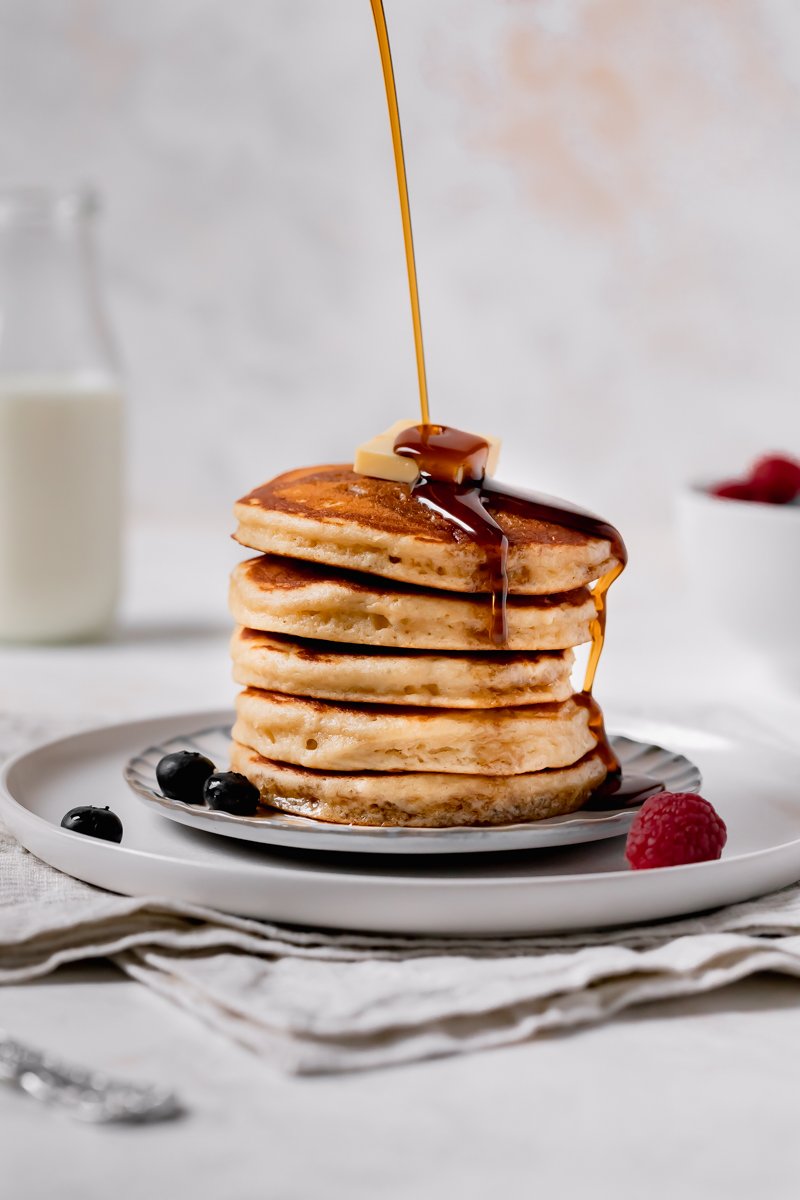
There’s nothing sadder than a pancake that lies flat on the plate like a wet tortilla. I’ve eaten my share of them — dense, rubbery, the kind you need a gallon of syrup to choke down. But once you learn how to make fluffy pancakes from scratch, there’s honestly no going back to the box mix. The difference is ridiculous, and it takes maybe five extra minutes.
Here’s the thing most people get wrong: fluffy pancakes aren’t about some secret ingredient. They’re about technique — a few small decisions in how you mix, rest, and cook the batter. Get those right and you’ll get pancakes that are tall, golden, and soft enough to cut with a fork.
How to Make Fluffy Pancakes From Scratch: The Base Recipe
Let’s start with the recipe itself. This makes about 8 medium pancakes, enough for 3–4 people (or two very hungry ones). You’ll need:
- 2 cups all-purpose flour
- 2 tablespoons sugar
- 2 teaspoons baking powder
- ½ teaspoon baking soda
- ½ teaspoon salt
- 2 cups buttermilk (or milk + 2 tablespoons vinegar, rested 5 minutes)
- 2 large eggs
- 3 tablespoons melted butter, plus more for the pan
- 1 teaspoon vanilla extract (optional but lovely)
Whisk the dry ingredients in a big bowl. In a second bowl, whisk the buttermilk, eggs, melted butter, and vanilla. Pour the wet into the dry and stir just until combined. Lumps are fine — I mean it. Lumps are your friends here.
The Real Secrets to Fluffy Pancakes
The recipe is only half the story. These are the techniques that actually create the fluff:
1. Don’t overmix — seriously, walk away from the whisk
This is the number one pancake crime. When you stir flour and liquid together, you develop gluten, and gluten makes things chewy and tough — great in bread, terrible in pancakes. Mix until the flour streaks just disappear, even if there are lumps. Ten to twelve strokes is usually enough. If your batter looks perfectly smooth, you’ve already gone too far.
2. Rest the batter for 5–10 minutes
I know, waiting is annoying when you’re hungry. But resting lets the flour hydrate and gives the baking powder a head start, which means thicker batter and a better rise in the pan. You’ll literally see the batter get fluffier while it sits. Use this time to heat the pan and make coffee — or check out my guide on how to make iced coffee at home that tastes like a café, since pancakes and iced coffee are a perfect Saturday pairing.
3. Get the leavening right
Baking powder does the heavy lifting, and it loses strength over time. If your can has been sitting in the pantry since 2022, buy a fresh one — it costs a couple of dollars. To test yours, drop half a teaspoon into hot water. If it fizzes vigorously, you’re good. No fizz, no fluff.
4. Medium heat, not high
A screaming-hot pan burns the outside before the inside cooks, which kills the rise. Medium heat (about 350°F on an electric griddle) is the sweet spot. Test with a drop of water — it should dance and sizzle, not explode. Butter the pan lightly between batches; too much butter fries the edges instead of browning them evenly.
5. Flip once, and only once
Watch for bubbles forming on the surface and the edges looking set — that’s your cue, usually 2–3 minutes. Flip confidently, cook another 1–2 minutes, and get them off the heat. Pressing down with the spatula is a tragedy I see constantly. All it does is squeeze out the air you worked so hard to create.
Common Mistakes (and Easy Fixes)
- Flat pancakes: Usually old baking powder or overmixed batter. Check both.
- Gummy centers: Heat too high, or pancakes too thick. Lower the heat and use a ¼-cup scoop for consistent size.
- Uneven browning: Your pan has hot spots. Rotate the pan or move pancakes around between flips.
- Tough texture: Overmixing, almost guaranteed. Next batch, stir less than feels right.
Fun Variations Worth Trying
Once you’ve nailed the base, play around. Blueberries folded in right before cooking are a classic for a reason. For something richer, swap half the flour for whole wheat or add a mashed ripe banana to the wet ingredients (reduce the sugar slightly). Chocolate chips make them kid-approved, and a little lemon zest plus ricotta instead of some of the buttermilk gives you that fancy-brunch vibe.
If you’re building a full breakfast spread, these pair beautifully with fluffy scrambled eggs like a diner makes — sweet and savory on one plate is hard to beat.
The Practical Takeaway
Making fluffy pancakes from scratch comes down to five things: fresh baking powder, a lumpy batter, a short rest, medium heat, and one confident flip. That’s it. No special equipment, no exotic ingredients — just a whisk, a bowl, and a little patience.
According to King Arthur Baking’s tested buttermilk pancake method, the rest step is one of the most underrated parts of the process, and home cooks who skip it consistently get thinner results. So set a timer, pour yourself some coffee, and let the batter do its thing.
Try it this weekend. Once you taste a genuinely fluffy homemade pancake, the box mix in your pantry is going to start gathering dust.
Can You Make the Batter Ahead of Time?
Short answer: it’s better fresh, but you can prep smart. Mix the dry ingredients the night before and store them in a jar — then in the morning you just whisk in the wet ingredients and you’re cooking in five minutes. What you shouldn’t do is mix the full batter ahead: the baking powder starts reacting the moment it hits liquid, and by morning most of the lift is gone. Cooked pancakes, on the other hand, freeze beautifully. Cool them completely, stack with parchment squares between each one, and freeze in a zip-top bag. Reheat straight from frozen in the toaster and they’re nearly as good as fresh — a perfect busy-weekday breakfast.


