
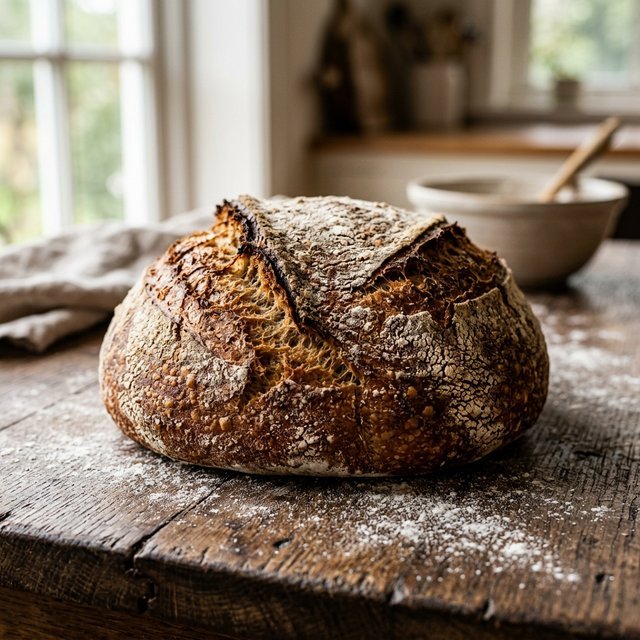
Warm bread from your own oven — crackling crust, steamy crumb, the smell filling the house. It feels like advanced baking, but the easiest bread is genuinely simple. So what is the easiest homemade bread recipe for beginners? No-knead bread: four ingredients, five minutes of active work, and a long slow ferment that does everything for you. If you can stir and wait, you can make bakery-quality bread.
Why No-Knead Works (The Science)
Traditional bread needs kneading to develop gluten — the protein network that traps gas and gives structure. No-knead bread develops gluten through time instead of labor: a very wet dough ferments 12–18 hours, and the long, slow fermentation builds gluten passively while developing deep, complex flavor that quick breads can’t match. Jim Lahey popularized it; King Arthur Baking’s no-knead recipes have refined it. The method is nearly foolproof because time is forgiving — an extra few hours barely matters.
What Is the Easiest Homemade Bread Recipe for Beginners? The Recipe
Ingredients: 3 cups (360g) all-purpose or bread flour, 1/4 teaspoon instant yeast (yes, really that little), 1 1/4 teaspoons salt, 1 1/2 cups (355ml) lukewarm water.
- Mix (5 minutes). Combine everything in a large bowl until no dry flour remains — a shaggy, sticky mess is correct. Cover with plastic wrap or a damp towel.
- Wait (12–18 hours). Room temperature. The dough will bubble, rise, and develop a slightly sour, yeasty smell. Longer = more flavor (up to ~24 hours). This is the entire “work” of the recipe.
- Shape (5 minutes). Flour your hands and a work surface generously. Scrape the dough out, fold it over itself a few times (this builds surface tension), and shape into a rough ball. Rest 30 minutes on parchment paper while the oven preheats.
- Bake in a Dutch oven (45 minutes). Preheat oven to 450°F with the Dutch oven inside for at least 30 minutes. Lower the dough (on its parchment) into the screaming-hot pot, cover, bake 30 minutes. Uncover, bake 15 more until deep golden brown.
- Cool (1 hour minimum). The hardest step. Cutting early = gummy interior (the crumb is still setting). Wait. Listen to the crackle.
Why the Dutch oven: the lid traps steam from the dough, which keeps the crust soft initially so the loaf expands fully (oven spring), then uncovered baking crisps it. It’s the home approximation of a professional steam-injected oven — and it’s why the crust shatters so satisfyingly.
Troubleshooting
- Dense/gummy: underbaked (most common) or cut too soon. Bake darker than you think — deep brown, not golden. Internal temp should hit 205–210°F.
- Flat spread: dough too wet or over-fermented (went too long in a warm kitchen). Next time: slightly less water, or shorter ferment.
- Pale soft crust: oven not hot enough, or Dutch oven not preheated. Preheat fully — 30+ minutes.
- Stuck to the pot: use parchment paper. Every time. (Cornmeal works too, but parchment is foolproof.)
- Bland: under-salted or under-fermented. Don’t skimp on salt; give it the full ferment time.
Easy Variations (Once You’ve Nailed the Base)
- Whole wheat: replace 1 cup flour with whole wheat; add 2 tablespoons extra water.
- Seeded: fold in 1/2 cup mixed seeds during shaping; top with more.
- Olive-rosemary: chopped olives + fresh rosemary folded in — instant artisan bakery.
- Cheese-jalapeño: cubed cheddar + diced jalapeños. Dangerous.
- Overnight timing: mix at 8pm, bake at noon next day. Fits real life perfectly.
Beyond No-Knead: Your Next Steps
Once this feels easy (it will, by loaf three): try focaccia (even easier — dimple and bake in a sheet pan), pizza dough (same long-ferment principles — see restaurant-style pizza at home), then sandwich loaves and sourdough (the deep end — rewarding, but master the basics first). Each builds on the same fermentation understanding.
Gear (Minimal)
Dutch oven with lid (the one essential purchase — 5+ quart enameled cast iron), large bowl, parchment paper, instant-read thermometer (optional but helpful). That’s it. No stand mixer, no proofing baskets, no specialty anything. Bread was made for millennia with less.
Bread Troubleshooting: What Went Wrong and Why
Beginner bread fails in predictable ways. The diagnosis chart:
- Dense and heavy: under-kneaded (gluten never developed), under-proofed (yeast didn’t finish), or too much flour (scooping instead of spooning-and-leveling). The big three — fix these and 80% of dense loaves disappear.
- Didn’t rise at all: dead yeast (test in warm water with sugar — should foam in 10 min), water too hot (kills yeast above 140°F), or a cold kitchen (rise near — not on — gentle warmth).
- Rose then collapsed: over-proofed — the yeast exhausted its food and the structure gave way. The poke test: indent springs back slowly = ready; springs back fast = needs more time; stays dented = over-proofed (bake immediately anyway — still edible).
- Thick hard crust, raw inside: oven too hot. Tent with foil halfway, verify oven temperature with a thermometer (most ovens lie by 25°F).
- Pale and soft: underbaked — bread should sound hollow when thumped on the bottom. Color = flavor; don’t fear a deep golden crust.
- Giant air holes: under-shaped (didn’t degas properly) or over-proofed. Punch down firmly, shape tightly — surface tension is structure.
The confidence builder: no-knead bread (flour, water, salt, yeast, time) removes kneading and shaping from the equation — if it fails, the variable is fermentation, which teaches you to read dough. Master that, and every breakfast toast you ever make starts from something you built with your own hands. There’s no going back to store-bought after your first truly great loaf — you’ve been warned.
The Practical Takeaway
The easiest homemade bread for beginners is no-knead: 4 ingredients, 5 minutes of mixing, 12–18 hours of waiting, baked in a preheated Dutch oven at 450°F. Time does the kneading; steam does the crust work. Bake it darker than feels safe, cool it fully before cutting, and prepare for the moment someone asks which bakery it’s from. Then make it weekly — because once you’ve had real bread warm from your oven, store-bought becomes the backup plan.


