
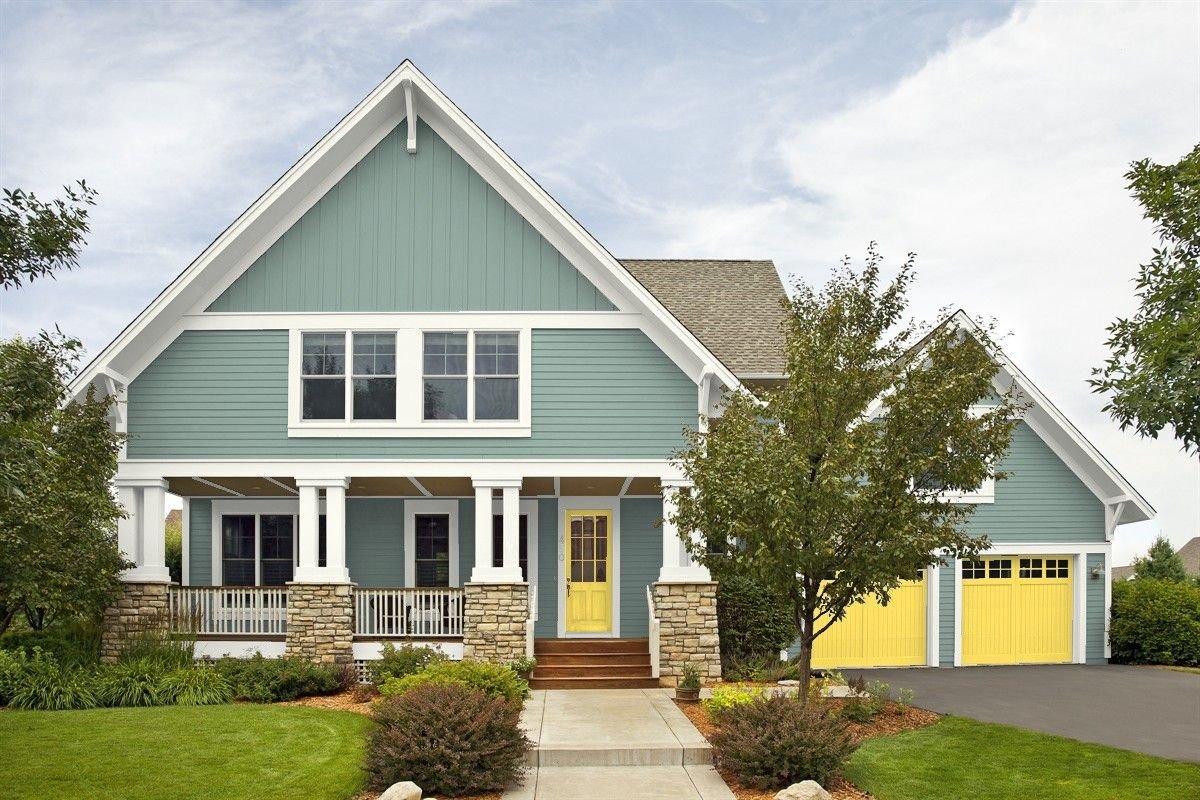
Exterior paint is the most public design decision you’ll ever make — the whole neighborhood sees it, and repainting costs $3,000–$8,000, so you want to get it right the first time. So how do I choose exterior paint colors for my house? It’s part color theory, part architecture, part neighborhood diplomacy. Here’s the step-by-step process designers and experienced painters actually use.
Step 1: Start With What You Can’t Change
Your house already has fixed elements — work with them, not against them:
- Roof color. The biggest fixed element. Gray/black roofs pair with almost anything; brown roofs want warm siding colors; red roofs limit you to compatible earth tones.
- Brick or stone accents. Pull undertones from them — a brick with orange undertones fights cool gray siding.
- Neighboring houses. You don’t need to match, but clashing with every house on the street hurts resale. Note the street’s general palette and position yourself within its range.
- Architectural style. Victorians carry multi-color schemes; Craftsman homes suit earthy palettes; modern homes handle bold contrast; colonials love classic white/navy/brick.
- Landscape. Lots of greenery? Colors look different against green — test accordingly.
Step 2: Build the Three-Color Scheme
Classic exteriors use three colors: field (siding, ~60%), trim (~30%), and accent (front door, shutters, ~10%). The formula that never fails: field in a mid-tone, trim in a lighter shade (often warm white — not stark white, which glares), accent in a confident contrasting color. Behr’s exterior color tools let you visualize combinations on sample home styles, which helps enormously.
Proven combinations:
- Timeless: warm white field, bright white trim, black or deep red door.
- Modern farmhouse: white or light gray field, white trim, black windows/door.
- Coastal: light blue-gray or sandy beige field, white trim, navy door.
- Craftsman: olive, sage, or warm brown field, cream trim, deep red or bronze door.
- Bold contemporary: charcoal or deep navy field, white trim, natural wood door.
- Brick homes: keep brick, paint trim/siding in complementary cream, sage, or warm gray.
How Do I Choose Exterior Paint Colors for My House? Step 3: Test Properly
This is where most people fail — choosing from a 2-inch swatch indoors. Do this instead:
- Buy sample quarts ($8–$12 each) of your top 3–4 field colors.
- Paint large test boards (2×3 ft minimum) or directly on the house in an inconspicuous spot.
- View at different times: morning, noon, dusk, and under your exterior lighting at night. Colors shift dramatically — a gray that’s perfect at noon can look purple at dusk.
- View from the street. Exterior colors read lighter and brighter in full sun than on the swatch — when in doubt, go slightly darker/more saturated than your instinct.
- Live with it a few days. The $40 in samples prevents a $5,000 regret.
Common Mistakes
- Choosing from the swatch alone. The #1 error. Always test big, outside, over days.
- Ignoring undertones. That “neutral gray” has blue/purple/green hiding in it — and full sun exposes undertones ruthlessly. Compare swatches against a pure white to reveal them.
- Too many colors. Four+ colors looks chaotic. Three is the sweet spot; two can work on simple architecture.
- Following trends too hard. The all-gray-everything era dated fast. Classic combinations outlast trends — your paint job should look good in 10 years, not just on Instagram today.
- Forgetting the sheen. Satin for siding (durable, subtle sheen), semi-gloss for trim and doors (contrast + durability). Flat on exterior siding shows every flaw and weathers poorly.
- Skipping the HOA check. Many HOAs pre-approve palettes. Check before falling in love with a color.
When to Hire vs. DIY
Exterior painting is labor-intensive but straightforward: $3,000–$8,000 professionally for an average home, $800–$2,000 DIY in materials. DIY if: single story, siding in good condition, you have a couple of weekends and a helper. Hire if: multi-story (ladder work + spraying), extensive prep needed (peeling paint, rot repair), or your time is worth more than the savings. Either way, prep is 70% of the job — pressure wash, scrape, sand, caulk, prime bare spots. Great paint over bad prep fails in two years.
Testing Exterior Colors: The Only Method That Works
Choosing from a 2-inch swatch is how exterior disasters happen. The testing method pros use:
- Buy sample quarts, not swatches. Paint 2×2-foot test patches on at least two sides of the house (sun and shade sides read completely differently). Live with them for 3–5 days, viewing morning, noon, and evening.
- Test the full combination. Body color + trim + accent together — a body color you love can clash with your existing trim. Paint all three on the test board.
- Check against fixed elements. Your roof, brick, stone, and hardscaping aren’t changing — the paint must work with them. Roof color especially: a brown roof fights gray-blue siding in a way no swatch reveals.
- Consider the landscape. Your landscaping is part of the color picture — green plantings warm up cool grays, and colorful gardens can clash with bold house colors. Photograph the test patches with the yard in frame.
- Look from the street. Colors read lighter and brighter in full sun at distance. The shade that looked perfect up close often needs to go one step deeper for street view. Walk across the street and look back — that’s the view that matters.
- Check the HOA and the block. Many HOAs restrict palettes; even without one, note the neighborhood range. Standing out is fine — clashing with every neighbor isn’t.
Protect the investment: quality exterior paint lasts 7–10 years, but only with basic care — annual washing (garden hose + soft brush), touching up caulk gaps, and keeping sprinklers off the siding. Fold paint checks into your regular home maintenance and a good paint job stays good for its full lifespan instead of failing at year five from neglect.
The Practical Takeaway
Choosing exterior paint colors means: start from fixed elements (roof, brick, style), build a three-color scheme (mid-tone field, light trim, bold accent door), test large samples outside over several days, and view from the street. Go slightly darker than your swatch instinct, respect undertones, and check HOA rules. It’s a $5,000 decision that lasts a decade — the $40 and three days spent testing are the best investment in the whole project. And if a full repaint is too much right now, cheap curb appeal upgrades (front door paint, trim touch-ups) deliver much of the impact for a fraction of the cost.


